ECB chief warns: High oil prices could force new rate hikes
Austrian central bank governor Martin Kocher says the risk of persistently high inflation in the eurozone has increased significantly in recent months, with oil prices as a key risk factor.
40 ARTICLES
The oil industry is preparing for several years of conflict between the US and Iran in the Persian Gulf, with lastingly higher prices as a consequence. This could also dampen risk appetite for Bitcoin and other risk assets.
Austrian central bank governor Martin Kocher says the risk of persistently high inflation in the eurozone has increased significantly in recent months, with oil prices as a key risk factor.
Crude oil prices continue to climb after Iran threatened energy infrastructure in the Gulf, amplifying market uncertainty and sending shockwaves through risk assets globally.
Oil prices rose more than one dollar at futures reopening following reports of explosions in southwestern Saudi Arabia. The conflict is spreading to a new geographic front, and the market has little buffer against further supply disruptions.
Iraq holds the world's fifth-largest oil reserves and has set ambitious production targets, but decaying infrastructure, gas flaring, and security challenges make the dream of challenging Saudi Arabia a highly complex affair.
Following U.S. strikes on Iranian oil tankers, Iran's parliamentary speaker warns of a faster and more painful response. Commodity and financial markets are holding their breath.
U.S. Treasury Secretary Scott Bessent believes a military confrontation with Iran would send oil prices down toward $40 a barrel — running directly counter to historical patterns from Middle East conflicts.
Kuwait reports Iranian missile and drone strikes, with Kuwaiti air defenses on full alert. Oil prices react immediately to the upside as markets assess the risk of supply disruptions in the Strait of Hormuz.
The US Strategic Petroleum Reserve is being depleted faster than expected following the Persian Gulf conflict. Analysts are warning of severe price volatility if reserves fall further.
Two Filipino seafarers have been killed following the attack on a Saudi oil tanker in the Strait of Hormuz. As Iran escalates rocket and drone strikes against American bases, shipping traffic has shrunk to historically low levels.
CENTCOM confirms that US forces struck Iranian air defense, radar, and naval installations on Sunday after Iran attempted to lay mines in the Strait of Hormuz. Crude oil prices are climbing toward their highest level in over a month.
Two giant oil tankers have been hit by unknown projectiles in the Strait of Hormuz, according to maritime risk analysis firm Marisks. The incident puts the fragile oil supply at risk and sends fresh shockwaves through energy markets.
President Trump confirms that ExxonMobil is ready to enter Venezuela as part of what is being described as one of the largest oil deals in years. The agreement could reshape global energy markets and influence inflation and interest rate trajectories.
Iran calls Trump's AI-generated video of Kharg Island "ridiculous," while new U.S. strikes and Iranian retaliatory attacks increase pressure across the Middle East and commodity markets.
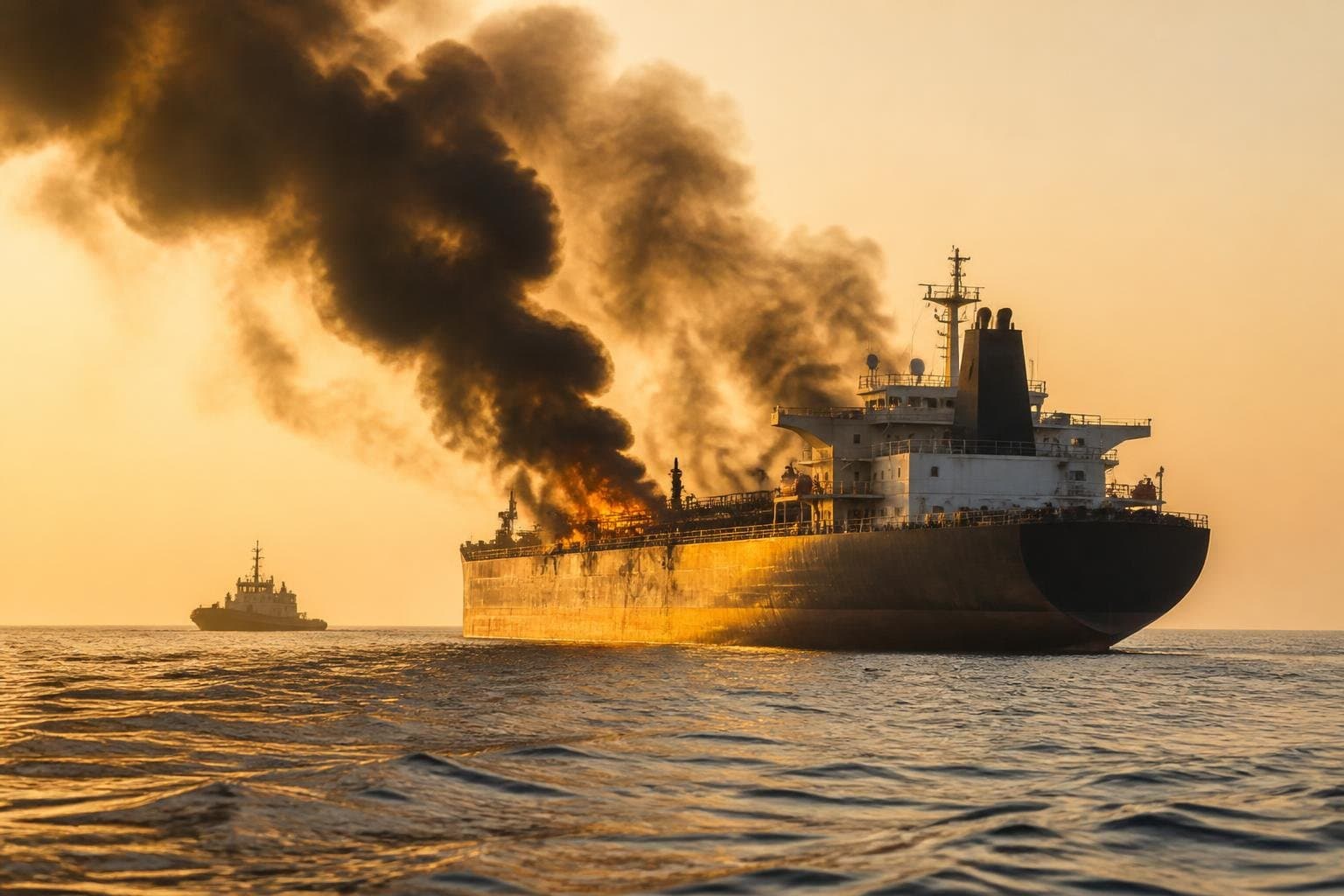
Iran's Revolutionary Guard claims to have stopped and ignited a supertanker using sea mines in the Strait of Hormuz. The incident is the latest in a series of attacks that have halved the flow of oil through the world's most critical shipping lane.
Iran has attacked two American military bases in Jordan with ballistic missiles. The strike escalates an already tense conflict and sends shockwaves through global markets.
Thiel Macro reported zero U.S. equity positions for two consecutive quarters, before the fund suddenly reappeared with a $419 million portfolio – with nearly three-quarters allocated to energy and power companies.
A new report shows that the conflict between the US, Israel, and Iran has driven up the global energy import bill by as much as $330 billion in just six months — and the war is not over.
Washington is in final negotiations on a long-term agreement that could give the US direct access to Venezuela's vast oil reserves — the largest in the world. The deal could reshape global energy markets and push oil prices even lower.
Around 45 million barrels of oil per day are now being produced in regions marked by active armed conflicts. Experts warn that global supply security is more vulnerable than it has been in many years.
Ukrainian drones struck the Afipsky refinery in Krasnodar overnight into Monday, setting the facility ablaze. With a processing capacity of 180,000 barrels per day, the attack worsens an already severe fuel crisis in Russia.
American sanctions pressure is constraining Iranian oil deliveries to Chinese buyers, but a sophisticated network of yuan payments and shadow tankers has kept trade flowing — until now.
The Houthi militia in Yemen is planning to expand its presence along the coast toward the Bab el-Mandeb strait, one of the world's most critical chokepoints for oil transport. Experts are warning of fresh disruptions to global shipping.
Trump's "economic D-Day" rhetoric against Iran triggered sharp moves in the oil market on Thursday, as the Dow Jones fell while energy stocks and ETFs shot higher.
US President Donald Trump has announced the most far-reaching secondary sanctions ever imposed against Iran, with direct consequences for oil markets and countries helping Tehran circumvent the embargo.
The United Arab Emirates has frozen all trade and financial transactions with Iran after two ballistic missiles reportedly landed in Emirati waters. Iran categorically rejects the allegations.
The gold price is climbing toward $4,450 per ounce after weaker U.S. key data dampens expectations of further Federal Reserve rate hikes and pushes the dollar lower.
China's National Bureau of Statistics has unexpectedly postponed the release of July's key economic figures to the afternoon Beijing time, heightening tension in global markets and reinforcing expectations of central bank intervention.

Hope for a US-Iran deal is evaporating fast, and America's Strategic Petroleum Reserve has fallen below 300 million barrels for the first time in decades. Oil prices are reacting sharply to the upside.
Ukraine's military has attacked the Orsknefteorgsintez refinery in the Orenburg region — more than 1,500 kilometres from the front line. The strike is the latest in an escalating campaign that has knocked out more than 30 percent of Russia's refining capacity.
Shipping traffic through the Strait of Hormuz remains severely disrupted, and even an imminent diplomatic breakthrough between Iran and Oman is unlikely to normalize supply chains for several months.
Kazakhstan is considering rerouting significant oil export volumes away from the Russian-controlled port of Novorossiysk following persistent drone threats against Black Sea shipping corridors.
Iran signals that a deal on the Strait of Hormuz is within reach, but tensions persist following an attack on an Emirati oil tanker. Markets are reacting to the uncertainty.
WTI crude oil fell more than 10 percent over the week after traders priced in the possibility of the Strait of Hormuz reopening, but a full resolution has yet to materialise, according to OilPrice.com.
Iran and Oman are, according to Iranian authorities, in the final stages of negotiations over joint management of the Strait of Hormuz – one of the world's most critical oil corridors. Meanwhile, crude oil prices are falling.
The conflict in Iran has choked oil flows through the Strait of Hormuz and triggered a global refinery shock — with record-high margins and renewed geopolitical inflation fears pushing rate expectations higher.
China and Russia have moved from diplomatic support to direct military and intelligence assistance to Iran — with potentially far-reaching consequences for the conflict in the Middle East and global stability.
Oil prices are falling sharply following signals of a possible diplomatic resolution with Iran, while Japanese yen interventions are creating turbulence in currency markets. Experts believe lower energy prices could relieve pressure on central banks.
Iran's Revolutionary Guard reportedly fired a cruise missile at an oil tanker in the Strait of Hormuz – on the same day Trump claims a Hormuz deal is done and nuclear talks are set to begin.
OPEC+ members have agreed to increase oil production quotas from September, a move that could push prices even lower in a market already marked by risk aversion.