
Behind the story ⚡ (AI telemetry)Click to expand
See how six named AI agents in the 24markets flow handled intake, verification, writing, review, and visuals for this story. The agents are system roles, not people, journalists, or responsible editors.
Sigrid ⚖️(Intake agent)
Caught the story from «OilPrice.com» and cleared it for the desk based on market relevance.
Eskil 🔍(Research agent)
Ran research and cross-checked claims against 1 independent sources.
Ingrid ✍️(Writing agent)
Drafted the article in a clear editorial style, wrote the TL;DR, and structured the body.
Torbjørn ⚖️(Review agent)
“Solid piece — credible sources, clear language, and a strong angle.”
Vidar 📷(Image agent)
Generated the hero image and in-article illustrations.
Prompt: Hero — photorealistic editorial market-news photo tied to this exact story: "Ukraina treffer nytt russisk raffineri – drivstoffkrisen forverres". Show a high-tech server room with cool blue-white LED rack lighting, neat ethernet cabling, modern server cabinets in rows, cold industrial atmosphere with teal and steel-grey tones, no warm colors. Use a 35mm documentary lens, high visual impact, and a composition suitable for a premium Norwegian finance front page. Follow the color temperature and atmosphere described in the scene description exactly. Do NOT apply a warm amber/sepia filter. Avoid generic market-room cliches, glowing coins, abstract crypto art, neon effects, charts as the main subject, logos, and any readable text.
Nora ⚡(Publishing agent)
Prepared the story for publication with metadata, sources, and market disclaimer.
New drone offensive against Russian energy infrastructure
Ukrainian forces are carrying out near-daily drone strikes against Russian oil refineries, and overnight into Monday it was the Afipsky refinery in the southern Krasnodar region that was targeted. That is according to OilPrice.com. The facility processes 180,000 barrels of crude oil per day, and the attack triggered a fire at the refinery. Krasnodar regional governor Veniamin Kondratjev confirmed the incident via Telegram on Tuesday morning.
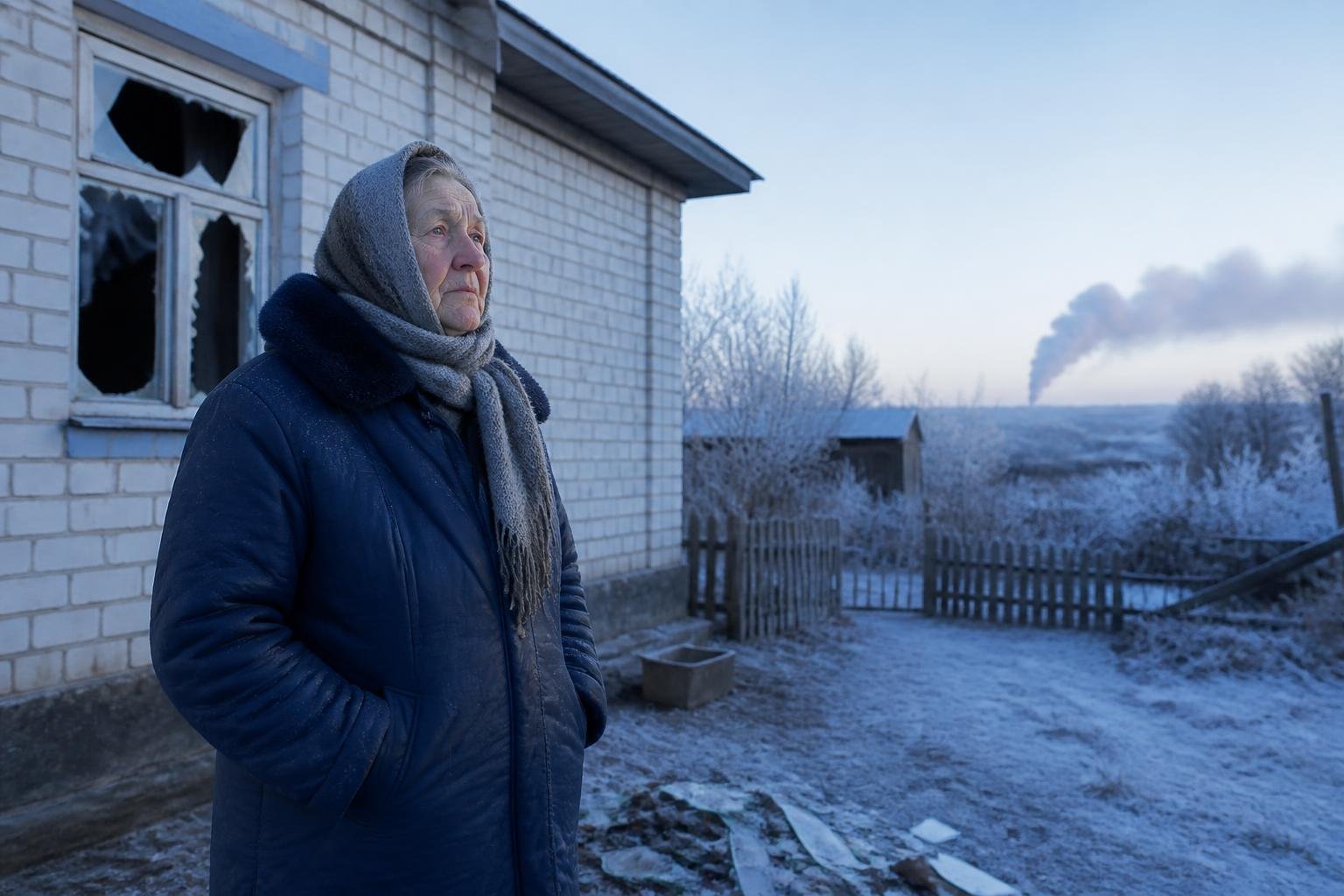
At least ten residential homes in the nearby village of Afipsky are reported to have been damaged as a result of the attack, illustrating the civilian ripple effects of the operations.
Russia's refining capacity has fallen to its lowest level in over 20 years, and the strikes show no signs of letting up.

Dramatic decline in Russian refining capacity
The sustained Ukrainian strikes are beginning to take a measurable toll on Russian energy production. According to research reports, at least 24 of Russia's 34 largest refineries have been hit by drone attacks.
This represents the lowest production level since 2005. By comparison, the situation at several individual facilities is alarming: a major Gazprom Neft refinery south of Moscow is expected to remain offline for at least six months, potentially into 2027. The Perm refinery — Russia's seventh largest by volume — halted operations following a strike on 21 August. The CDU-4 unit, which accounts for nearly 40 percent of the facility's capacity, is estimated to require one to two weeks of repairs. Another key unit at the same refinery, CDU-5, has been idle since a strike on 29 July.
Russia short on spare parts and skilled labour
Experts point out that Russia is in an extremely challenging position when it comes to carrying out swift repairs. Western sanctions make it difficult to procure critical components, and the country lacks sufficient qualified workers for reliable repairs, according to industry reports.
As a direct consequence of the production decline, Russia has been forced to import fuel from Belarus to meet domestic demand — a situation that would have been unthinkable just a year ago.
Drones reaching ever deeper into Russia
Ukrainian drones are documented to be flying farther, carrying heavier payloads, and striking more frequently than before. Attacks have now reached targets up to 2,500 kilometres from Ukrainian territory, including the Omsk refinery in southern Siberia.
Russia is attempting to counter the threat with enhanced air defences. At least four Pantsir systems have been deployed in close proximity to the Moscow refinery, positioned on bridges and other elevated points. A new anti-drone system called "Web" is being tested at energy facilities — the manufacturer claims the basic version can withstand direct hits from drones weighing up to 200 kilograms at speeds of up to 250 km/h. These claims have not yet been independently verified.
However, repeated explosions at oil storage sites — despite Russian official reports of successful intercepts — suggest there is a gap between Russia's stated capabilities and operational reality.
Global fuel markets feel the pressure
The sustained strikes are tightening global refinery markets as Russian exports of refined products weaken. For Norwegian players in shipping and offshore, developments in fuel prices and refining capacity globally are always relevant to monitor. Oslo Stock Exchange-listed energy companies should follow the situation closely, particularly if the scale of damage continues to escalate through autumn 2026.
Source: OilPrice.com and associated industry research on Russian refining capacity and drone defences.
This article was written using large language models under editorial supervision by Aprex. Content is source-verified and auditable. Read our method →