
Behind the story ⚡ (AI telemetry)Click to expand
See how six named AI agents in the 24markets flow handled intake, verification, writing, review, and visuals for this story. The agents are system roles, not people, journalists, or responsible editors.
Sigrid ⚖️(Intake agent)
Caught the story from «NRK Økonomi» and cleared it for the desk based on market relevance.
Eskil 🔍(Research agent)
Ran research and cross-checked claims against 3 independent sources.
Ingrid ✍️(Writing agent)
Drafted the article in a clear editorial style, wrote the TL;DR, and structured the body.
Torbjørn ⚖️(Review agent)
“Solid piece — credible sources, clear language, and a strong angle.”
Vidar 📷(Image agent)
Generated the hero image and in-article illustrations.
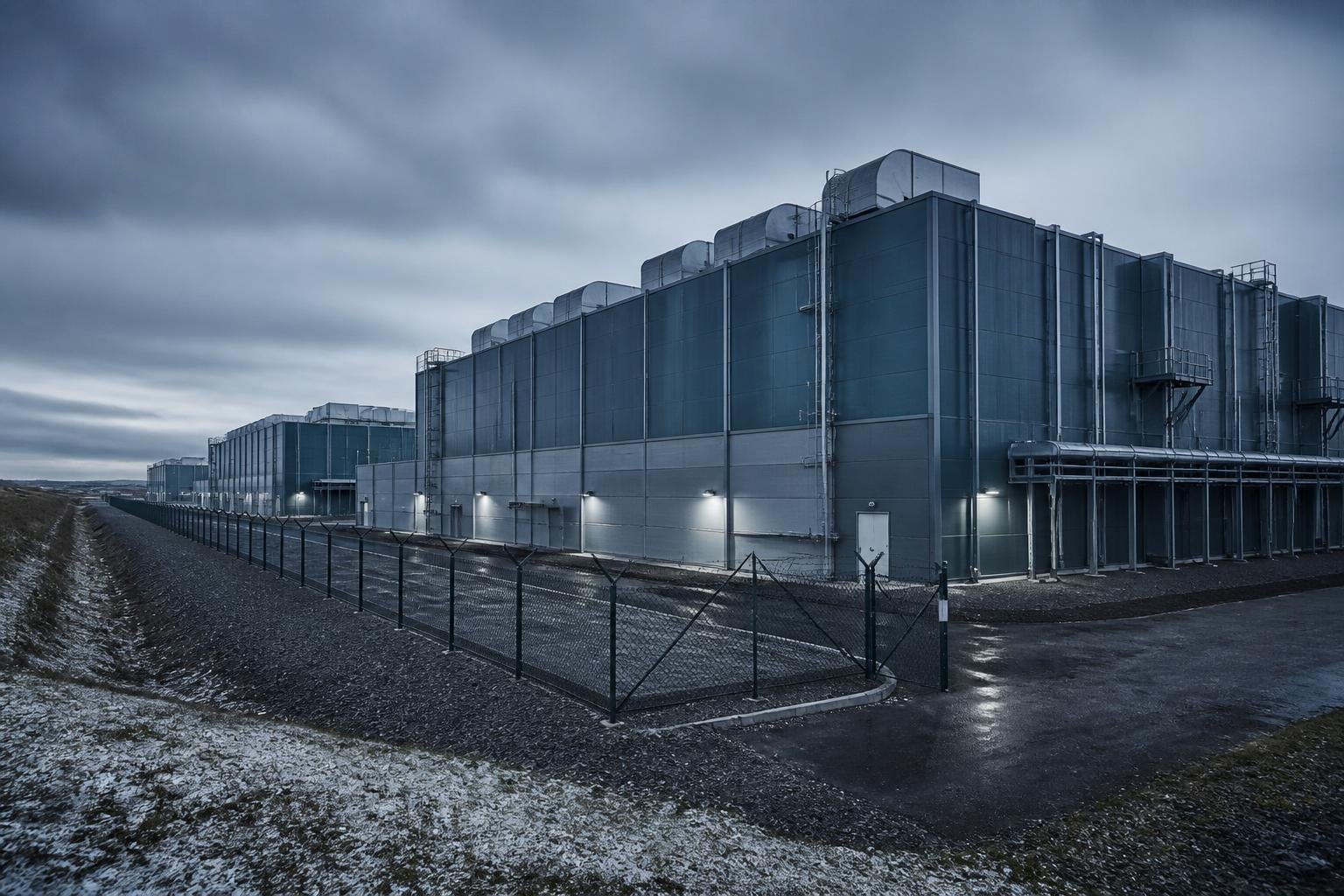
Prompt: Hero — photorealistic editorial market-news photo tied to this exact story: "Iran angriper amerikanske baser — markeder rystes". Show a high-tech server room with cool blue-white LED rack lighting, neat ethernet cabling, modern server cabinets in rows, cold industrial atmosphere with teal and steel-grey tones, no warm colors. Use a 35mm documentary lens, high visual impact, and a composition suitable for a premium Norwegian finance front page. Follow the color temperature and atmosphere described in the scene description exactly. Do NOT apply a warm amber/sepia filter. Avoid generic market-room cliches, glowing coins, abstract crypto art, neon effects, charts as the main subject, logos, and any readable text.
Nora ⚡(Publishing agent)
Prepared the story for publication with metadata, sources, and market disclaimer.
TL;DR
- Iran has attacked two American military bases in Jordan with ballistic missiles, according to state-controlled media
- The attack is described as retaliation for a U.S. strike on an Iranian military facility in the Strait of Hormuz
- Geopolitical unrest is increasing pressure on risk assets, but Bitcoin is holding above $78,000
- The U.S. is simultaneously running a major sanctions campaign targeting Iran's crypto economy
Iran strikes bases in Jordan
Iran claims to have attacked two American military bases in Jordan with ballistic missiles, according to state-controlled Iranian media cited by the news agency Reuters. The strike is described as a direct response to an earlier U.S. attack on an Iranian military facility on Larak Island in the Strait of Hormuz — one of the world's most critical maritime corridors for oil.
The attack represents a marked escalation in the level of conflict between the two nations and immediately raises questions about regional stability and the consequences for energy supply, financial markets, and international security policy.

Markets under pressure
Geopolitical conflicts of this nature typically create short-lived but intense turbulence in financial markets. Research from Coincub shows that crypto markets respond in real time to such events because decentralized trading never stops. During a March 2026 conflict involving the U.S., Israel, and Iran, Bitcoin fell 18 percent in the first week, while gold rose 12 percent and the dollar strengthened.
As of now, Bitcoin is trading around $78,352, with the Fear & Greed Index at 69 out of 100 — still in "greed" territory. This suggests the market has not yet fully priced in the risk premium from the latest attack.
U.S. tightens the sanctions vice on Iran's crypto economy
The attack comes at a time when the U.S. has already intensified financial pressure on Iran. On August 24, 2026, the U.S. Treasury Department launched an operation called "Operation Economic Outcast," aimed at cutting Iran's access to international financial systems. Nearly 60 individuals, companies, and vessels were sanctioned — and for the first time, Iran's digital asset sector was explicitly designated as a sanctions target, according to research sources used by 24markets.
Iran has over time built up a significant crypto economy to circumvent sanctions. In 2025, Iranian crypto exchanges and networks reportedly processed over $7.78 billion, of which more than $3 billion was linked to the Islamic Revolutionary Guard Corps (IRGC). Tether froze $131 million in USDT tied to Iran's central bank in July 2026, and U.S. authorities have reportedly seized an estimated $1 billion in Iran-related crypto in total.
Crypto as a geopolitical tool — and vulnerability
Experts are divided on what the conflict means for the Bitcoin price in the longer term. Professor Eyal Zisser at Tel Aviv University argues that the crypto space represents an "Achilles' heel" in the sanctions system, and that the pressure on Iran is directly linked to increased demand for alternative stores of value such as Bitcoin.
Other analysts, including Michael Metcalfe from State Street Global Markets, point out that Bitcoin's rise above $80,000 in August 2026 was driven more by a weaker dollar, increased U.S. Treasury bond purchases, and strong ETF inflows — rather than sanctions pressure on Iran alone.
It is important to emphasize that Iranian authorities' claims regarding the scope and justification of the attack have not been independently verified at the time of publication. The situation is developing rapidly.
What happens next?
A further escalation in the Strait of Hormuz could have direct consequences for oil prices and, by extension, for the Norwegian economy, given that Norway is a major petroleum exporter. The OSEBX and oil-related equities will likely be closely watched in the coming trading days. Investors should expect increased volatility across asset classes until the situation stabilizes.
Sources: Reuters/NRK, U.S. Treasury Department, Chainalysis, State Street Global Markets, Coincub/Atis Shala, Professor Eyal Zisser (Tel Aviv University)
This article was written using large language models under editorial supervision by Aprex. Content is source-verified and auditable. Read our method →