
Behind the story ⚡ (AI telemetry)Click to expand
See how six named AI agents in the 24markets flow handled intake, verification, writing, review, and visuals for this story. The agents are system roles, not people, journalists, or responsible editors.
Sigrid ⚖️(Intake agent)
Caught the story from «OilPrice.com» and cleared it for the desk based on market relevance.
Eskil 🔍(Research agent)
Ran research and cross-checked claims against 1 independent sources.
Ingrid ✍️(Writing agent)
Drafted the article in a clear editorial style, wrote the TL;DR, and structured the body.
Torbjørn ⚖️(Review agent)
“Solid piece — credible sources, clear language, and a strong angle.”
Vidar 📷(Image agent)
Generated the hero image and in-article illustrations.
Prompt: Hero — photorealistic editorial market-news photo tied to this exact story: "Hormuz-sjokket er ikke over: Oljemarkedet holder pusten". Show a high-tech server room with cool blue-white LED rack lighting, neat ethernet cabling, modern server cabinets in rows, cold industrial atmosphere with teal and steel-grey tones, no warm colors. Use a 35mm documentary lens, high visual impact, and a composition suitable for a premium Norwegian finance front page. Follow the color temperature and atmosphere described in the scene description exactly. Do NOT apply a warm amber/sepia filter. Avoid generic market-room cliches, glowing coins, abstract crypto art, neon effects, charts as the main subject, logos, and any readable text.
Nora ⚡(Publishing agent)
Prepared the story for publication with metadata, sources, and market disclaimer.
The Strait That Is Strangling World Trade
Even as Iran and Oman are reportedly closing in on a deal, the situation in the Strait of Hormuz is far from resolved. Fresh data from Bloomberg show that vessel transit traffic remains sharply reduced, and market participants are pricing in a possible near-term reopening without fully embracing the optimism. Brent futures are trading around $85 per barrel — a level that reflects some expectation of normalization, while simultaneously signaling that a geopolitical risk premium remains firmly embedded in the price.
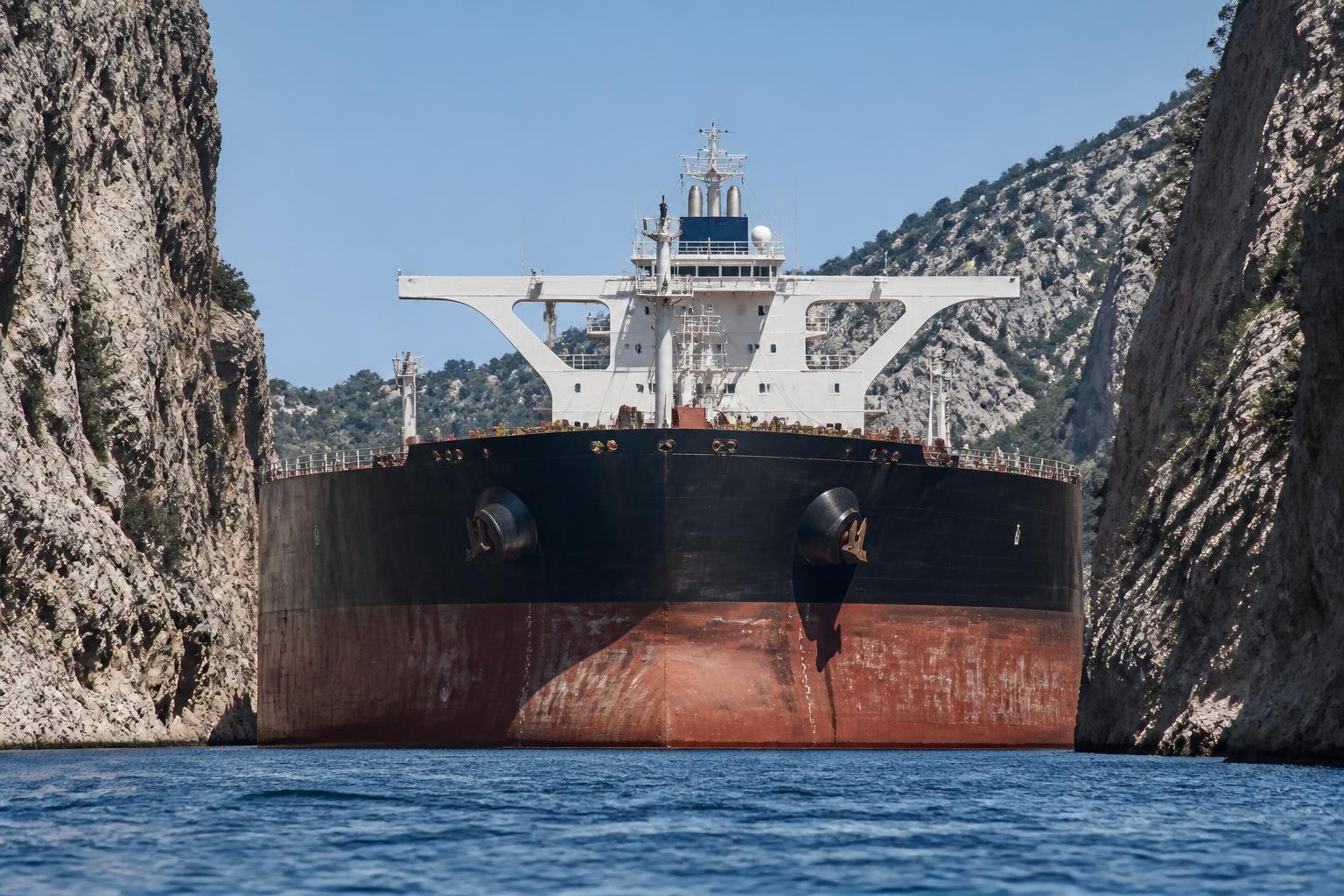
The Strait of Hormuz is the world's most strategically critical maritime chokepoint. Around 20 percent of global oil trade passes through the narrow waterway between Iran and Oman. A sustained disruption there quickly translates into higher freight rates, longer delivery times, and increased volatility in energy markets.
Even if shipping traffic resumes, a full normalization of supply chains could take months
Stagflation Risk on the Radar
The oil price is far more than a number on a screen for energy companies. According to research data, oil price shocks have been responsible for more than 38 percent of swings in global inflation over the past five decades. A sustained price increase of $25 per barrel alone could drag real U.S. GDP down by approximately 0.3 percent and push core prices up by a similar margin — within a year.
Portfolio manager Fei Xu at Vanguard Commodity Strategy Fund warns that if disruptions to crude oil and natural gas persist, the macroeconomic ripple effects will become "increasingly stagflationary." Vanguard senior economist Shaan Raithatha points particularly to Europe, which is especially vulnerable to a stagflationary shock should energy prices rise sharply.

Supply Chain Stress Near Pandemic Levels
UBS economist Pierre Lafourcade highlighted that global supply chain stress is now near its highest level since the COVID-19 pandemic. This is a serious signal: even if Iran and Oman reach a diplomatic resolution in the near term, the logistics system will need time to work through the backlog. Rerouting of freight, port congestion, and a shortage of available tonnage will affect deliveries of oil, gas, and other commodities in the weeks and months that follow.
The Oil Volatility Index (OVX) is, according to available data, near 75 percent — dramatically higher than the historical norm of 25–30 percent. This illustrates that the market does not believe in a swift return to calm, regardless of what diplomats report.
What Does This Mean for Norwegian Stakeholders?
For Norway, the situation is ambiguous. Higher oil prices boost revenues from the North Sea and provide tailwinds for Oslo Børs's energy-heavy index. But sustained global supply chain stress also raises costs for Norwegian industry and could push up import prices. Norges Bank's interest rate decisions will need to account for whether a potential energy price spiral feeds through into broader inflation.
A positive scenario assumes that the Iran-Oman negotiations succeed quickly and that shipping traffic resumes without further escalation. But even then, experts caution that physical logistics do not normalize overnight.
Outlook: Markets Are Waiting for More Than Words
Investors and analysts will be watching for concrete evidence that shipping traffic is actually resuming — not merely diplomatic promises. The Brent price will likely remain under upward pressure for as long as uncertainty persists, and the risk landscape suggests that market participants will maintain a substantial geopolitical risk premium in their pricing going forward.
Sources: OilPrice.com, Bloomberg (cited via OilPrice.com), Vanguard (Fei Xu, Shaan Raithatha), UBS (Pierre Lafourcade).
This article was written using large language models under editorial supervision by Aprex. Content is source-verified and auditable. Read our method →