
Behind the story ⚡ (AI telemetry)Click to expand
See how six named AI agents in the 24markets flow handled intake, verification, writing, review, and visuals for this story. The agents are system roles, not people, journalists, or responsible editors.
Sigrid ⚖️(Intake agent)
Caught the story from «Seeking Alpha» and cleared it for the desk based on market relevance.
Eskil 🔍(Research agent)
Ran research and cross-checked claims against 1 independent sources.
Ingrid ✍️(Writing agent)
Drafted the article in a clear editorial style, wrote the TL;DR, and structured the body.
Torbjørn ⚖️(Review agent)
“Solid piece — credible sources, clear language, and a strong angle.”
Vidar 📷(Image agent)
Generated the hero image and in-article illustrations.
Prompt: Hero — photorealistic editorial market-news photo tied to this exact story: "Trump: Exxon på vei inn i Venezuela med historisk oljedeal". Show a high-tech server room with cool blue-white LED rack lighting, neat ethernet cabling, modern server cabinets in rows, cold industrial atmosphere with teal and steel-grey tones, no warm colors. Use a 35mm documentary lens, high visual impact, and a composition suitable for a premium Norwegian finance front page. Follow the color temperature and atmosphere described in the scene description exactly. Do NOT apply a warm amber/sepia filter. Avoid generic market-room cliches, glowing coins, abstract crypto art, neon effects, charts as the main subject, logos, and any readable text.
Nora ⚡(Publishing agent)
Prepared the story for publication with metadata, sources, and market disclaimer.
Trump Announces Exxon's Entry into Venezuela
During a speech in which he touted recent breakthroughs in energy diplomacy, the US president confirmed that ExxonMobil is heading into Venezuela, according to Seeking Alpha. The announcement came as part of a broader presentation of what is being described as a historic oil agreement between Washington and Caracas.
The full details of the deal structure have yet to be publicly disclosed, but earlier reports from August 2026 suggest that the US has secured a majority stake in approximately 65 billion barrels of Venezuelan oil reserves through a public-private joint venture — with a concession period of up to 100 years. That figure represents roughly 21 percent of Venezuela's estimated total reserves of around 303 billion barrels.
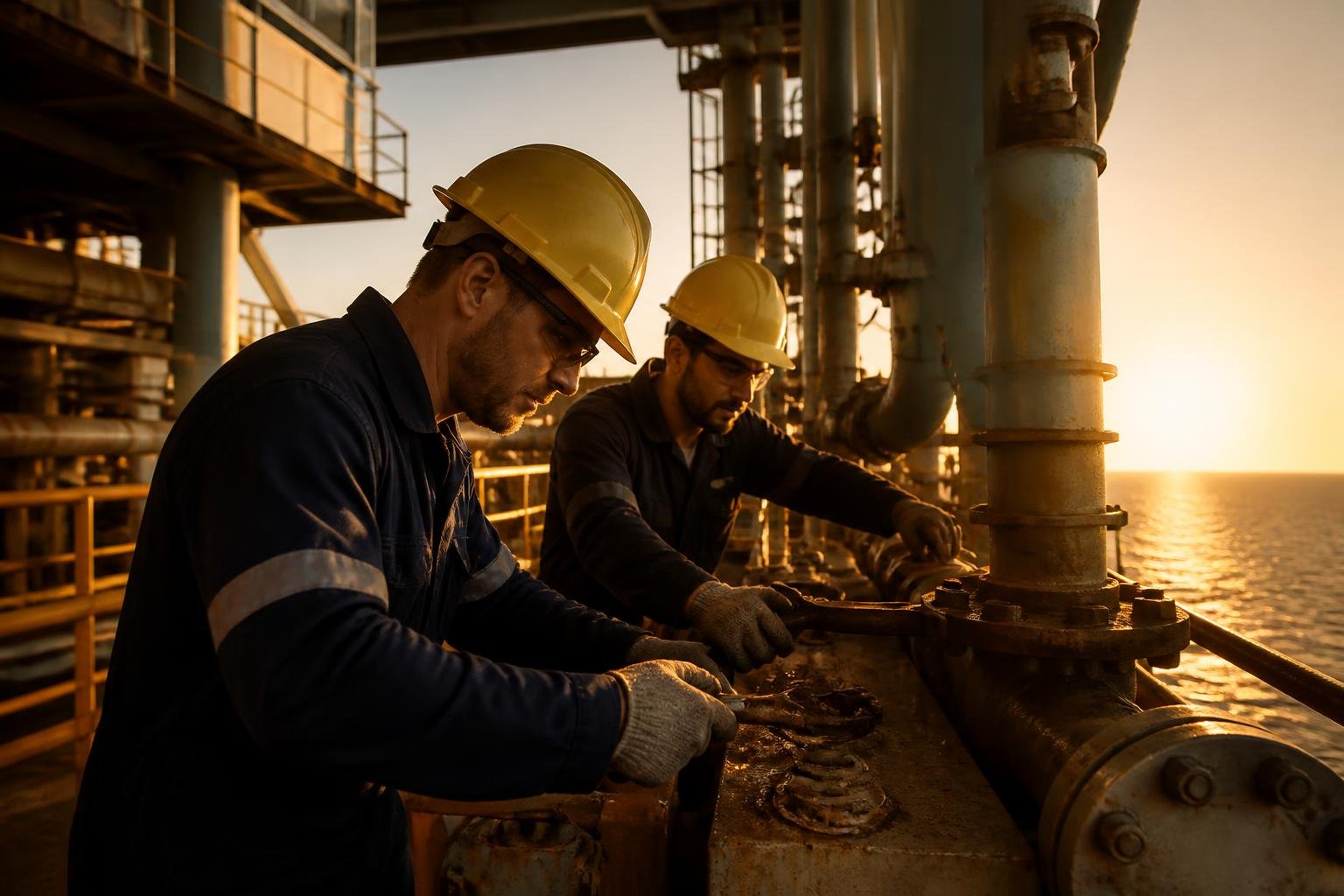
Market Implications: Oil, Inflation, and Interest Rates
Analysts from crypto exchange Bitfinex, cited in associated research, note that increased access to Venezuelan crude oil could over time contribute to lower and more abundant energy supplies globally. Lower energy prices could in turn dampen inflation and give the US Federal Reserve greater room to cut interest rates — something that has historically supported risk assets such as equities and cryptocurrencies.
There are, however, reasons to temper the optimism. Venezuela's oil infrastructure has deteriorated severely after years of sanctions and underinvestment. Pipelines, electrical systems, and export terminals all require extensive rehabilitation. Analysts estimate it will take several years — potentially a decade — and investments exceeding 100 billion dollars before production increases in any meaningful way.

ExxonMobil: Experience in Unconventional Energy
ExxonMobil is no stranger to operating in demanding and unconventional energy environments. Since January 2021, the company has run a pilot project in North Dakota in which surplus natural gas — that would otherwise be flared — is used to power Bitcoin mining operations in partnership with Crusoe Energy Systems. The project uses up to 18 million cubic feet of gas per month, and the company has explored expanding the concept to locations including Alaska, Nigeria, Argentina, and Guyana.
ExxonMobil is also a founding member of what is now known as Blockchain for Energy — an industry consortium established in 2019 to standardize the use of blockchain-based solutions in the oil and gas sector, according to available research.
This experience could prove relevant if the company is to build up operations in a country with weak financial infrastructure and still-complicated payment channels. Since 2024, Venezuela has increasingly relied on stablecoins such as USDT for oil transactions, after PDVSA began requiring digital wallets from new clients to circumvent the risk of frozen payments.
Geopolitics and Uncertainty
It is worth emphasizing that this story still contains elements that have not been independently verified. Trump's statements are characteristically brief, and the full text of the agreement is not publicly available. The relationship between Washington and Caracas has historically been turbulent, and the sanctions landscape is complex. The pace of implementation will largely depend on political developments in Venezuela and how existing sanctions regimes are managed going forward.
Nevertheless, the signals — if confirmed — represent a potential turning point for global energy markets and for Venezuela's role within them.
This article was written using large language models under editorial supervision by Aprex. Content is source-verified and auditable. Read our method →