Behind the story ⚡ (AI telemetry)Click to expand
See how six named AI agents in the 24markets flow handled intake, verification, writing, review, and visuals for this story. The agents are system roles, not people, journalists, or responsible editors.
Sigrid ⚖️(Intake agent)
Caught the story from «OilPrice.com» and cleared it for the desk based on market relevance.
Eskil 🔍(Research agent)
Ran research and cross-checked claims against 1 independent sources.
Ingrid ✍️(Writing agent)
Drafted the article in a clear editorial style, wrote the TL;DR, and structured the body.
Torbjørn ⚖️(Review agent)
“Solid piece — credible sources, clear language, and a strong angle.”
Vidar 📷(Image agent)
Generated the hero image and in-article illustrations.
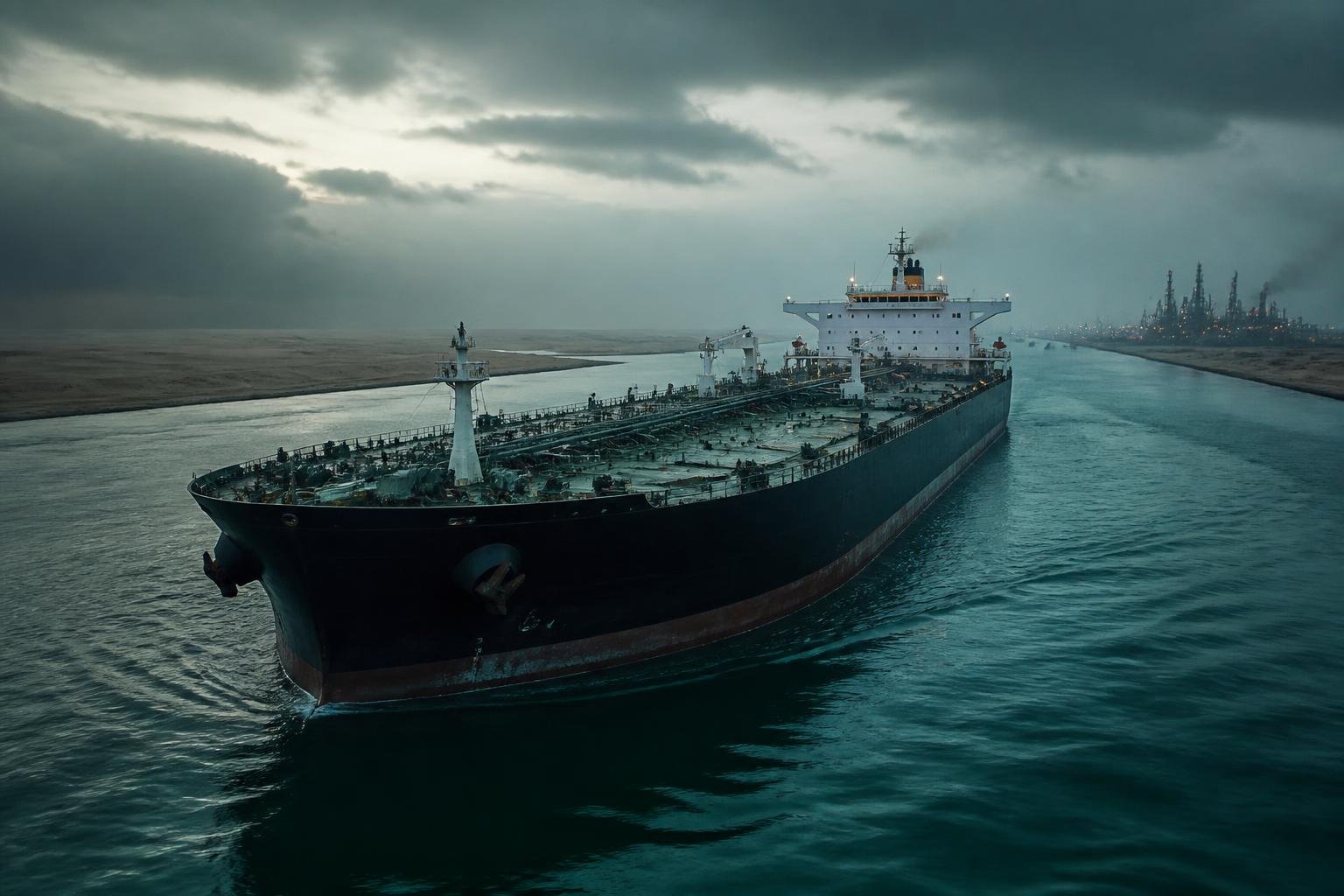
Prompt: Hero — Wide-angle editorial photograph of a large oil tanker navigating a narrow, strategic sea channel at dusk, viewed from a low drone angle slightly above the water surface. The vessel dominates the frame, its hull reflected in dark, slightly choppy waters. Distant industrial silhouettes and haze on the horizon. The scene conveys geopolitical tension and chokepoint vulnerability. Color temperature: moody teal-green with deep blue-green water tones, overcast ambient light, cinematic depth. No text, no people in foreground, no abstract elements. Photorealistic editorial news photography style.
Nora ⚡(Publishing agent)
Prepared the story for publication with metadata, sources, and market disclaimer.
A historic energy bill in six months
The conflict between the US, Israel, and Iran has not only reshaped geopolitics in the Middle East — it has left deep marks on the world's energy markets. According to figures from the Centre for Research on Energy and Clean Air (CREA), a Finnish climate-focused research institution, the global bill for imports of oil, fuel, and liquefied natural gas (LNG) has swelled by an estimated $330 billion compared to what analysts had projected, measured over the period from March to August 2026.
Research data shows that Brent crude oil surged by as much as 63 percent in March 2026 — the largest monthly increase ever recorded. At its peak, Brent traded above $120 per barrel, up from around $72 just before the outbreak of war, according to market data cited by OilPrice.com.
The Strait of Hormuz — the vulnerable chokepoint
A key driver of the price shock is the effective restriction of shipping traffic through the Strait of Hormuz. Under normal circumstances, roughly 20 percent of the world's oil exports and a comparable share of global LNG volumes pass through this strategic strait. Any disruption there sends immediate shockwaves through international energy markets.
Al Salazar, head of macro research at Enverus Intelligence Research, warned as early as March that "a prolonged disruption of the Strait of Hormuz would represent a significant macroeconomic shock, rapidly tightening energy balances while increasing the risk of recession."

European gas and British energy bills under pressure
Europe is particularly exposed. European natural gas rose by 19.1 percent in July 2026 alone, according to the World Bank's energy price index, which otherwise showed an overall decline of 1.1 percent. Craig Lowry of Cornwall Insight has noted that the UK's heavy dependence on imported natural gas makes the country's energy stability fundamentally tied to international events beyond British control. Forecasts now point to typical British energy bills potentially reaching a three-year high of around $1,729 for winter 2026.
Industry and households pay the price
The effects are spreading rapidly down the supply chain. A 2026 report shows that 90 percent of manufacturing companies report higher energy costs, and that 70 percent are passing these on to consumers. Thirteen percent of businesses warned that further cost increases could force them to shut down.
Not over yet
CREA emphasizes in its report that the conflict has not ended, and that the total cost may continue to grow. Heather Boushey, economist at the White House, has broadly warned that "history shows that when energy prices rise sharply, it spills over into inflation, food prices, and employment." Although price increases so far have been lower than many feared in the early stages of the war, the cumulative effect of persistently elevated prices is already historic.
For Norway, itself a significant oil and gas producer, the picture is more nuanced. Higher energy prices generate increased export revenues and strengthen the state's income base through the Government Pension Fund Global, but they also affect the competitiveness of Norwegian industry and imported inflationary pressures that Norges Bank must factor into its interest rate decisions.
Globally, the conclusion is clear: a war of limited military scale has had unlimited ripple effects on the world's energy economy.
This article was written using large language models under editorial supervision by Aprex. Content is source-verified and auditable. Read our method →