Investors Unplug the AI Rally: Is the Bubble About to Burst?
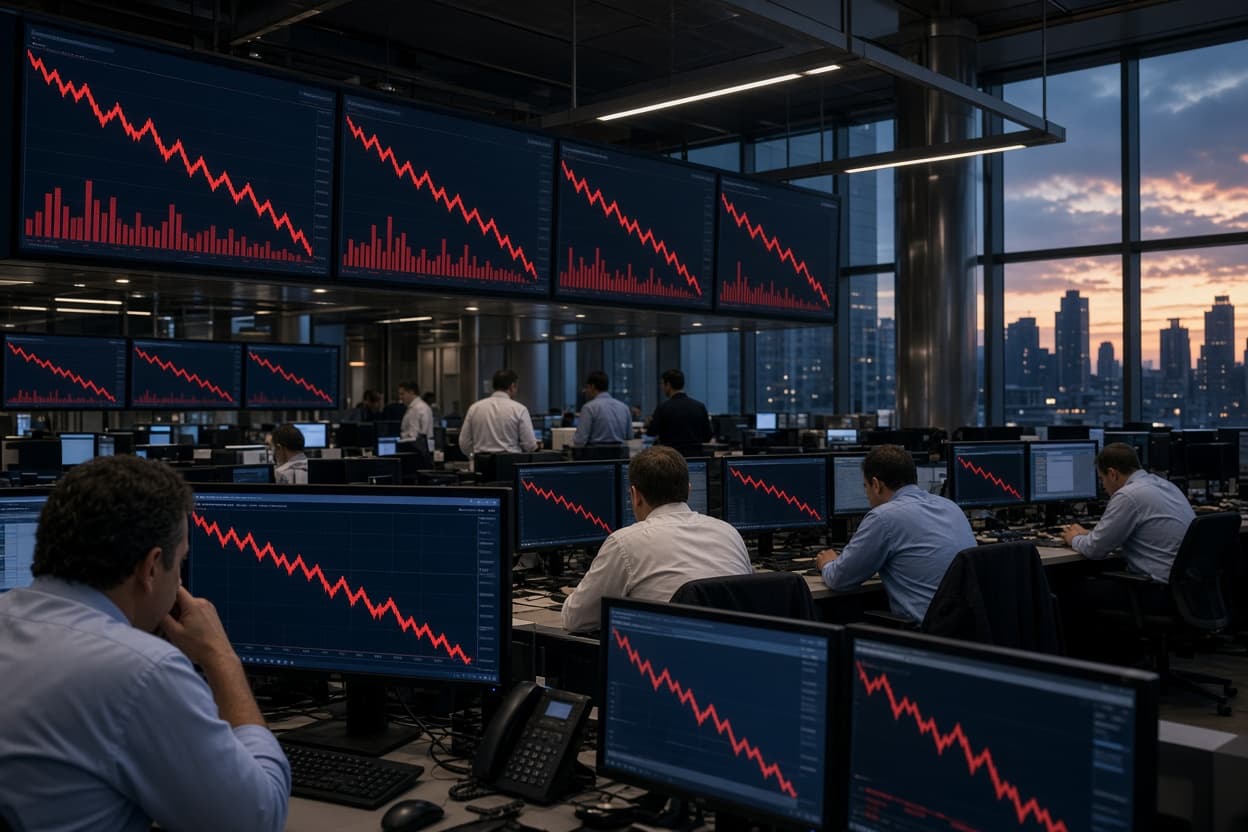
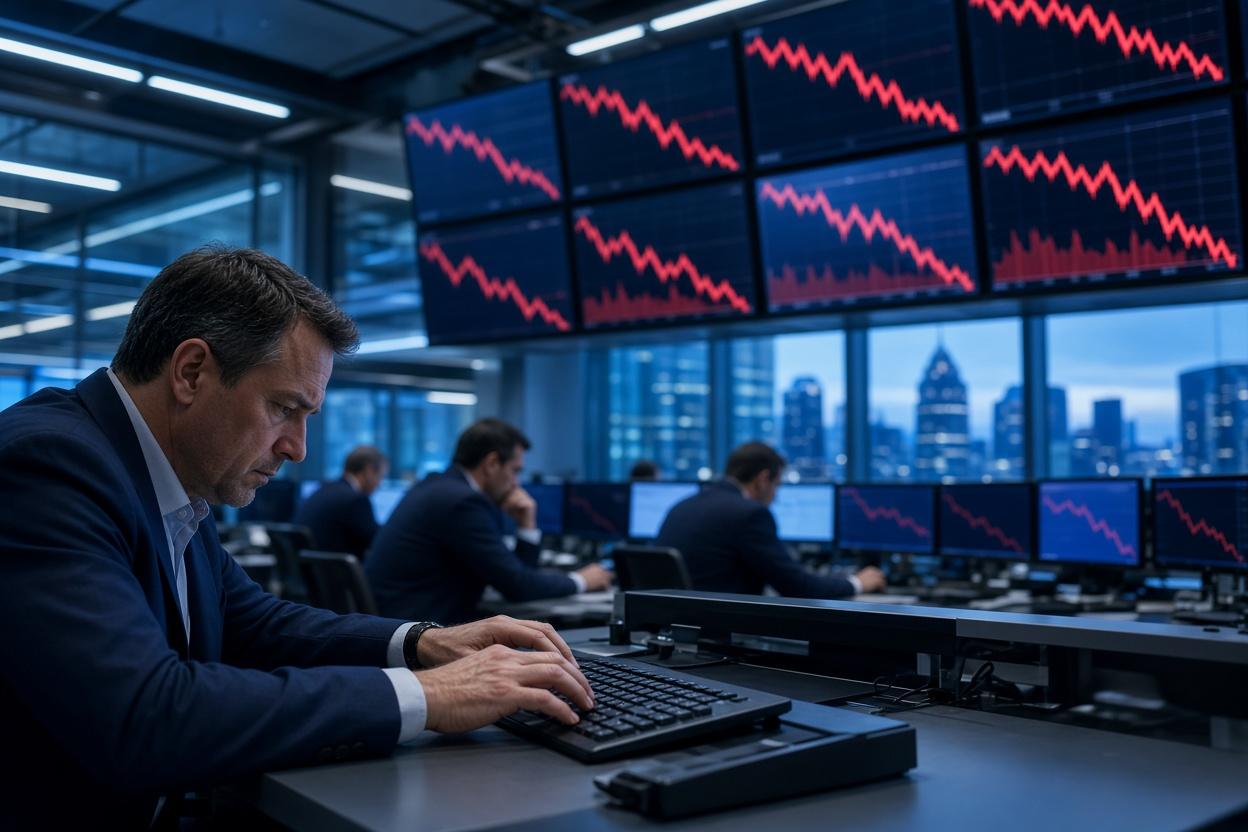
After a sharp tech sell-off, investors are turning their backs on AI stocks and seeking shelter in defensive sectors. The story of the dot-com crash shows how such rotations can unfold.
40 ARTICLES
BlackRock believes the market is wrongly pricing in three new rate hikes from the Fed over the next year, pointing out that the energy shock from the Middle East conflict is already starting to reverse.
After a sharp tech sell-off, investors are turning their backs on AI stocks and seeking shelter in defensive sectors. The story of the dot-com crash shows how such rotations can unfold.
After a brutal wipeout of leveraged positions over the weekend, bitcoin clings on above the $60,000 level, but the fear index shows extreme panic among investors.
Bitcoin climbed back above $60,000 after a 9% rebound from the weekend's lowest level of $55,130, but record IBIT outflows and $800 million in put positions at the $60k strike signal that the rally stands on shaky ground.
Switzerland's CPI rose to 1.5% year-on-year in October, up from 1.0% and clearly above the consensus of 1.3%. Core inflation remains unchanged at 0.5%, with petroleum products accounting for almost the entire increase. The SNB still has room to sit still.
Palantir delivered a quarter that smashed Wall Street's expectations, with U.S. commercial revenue surpassing government revenue for the first time ever. This comes as many other AI stocks struggle in a market climate marked by risk aversion.
Several leading research houses have now modeled what happens if the AI boom turns: the S&P 500 could fall at least 30 percent, tech stocks up to 40 percent, and nearly $20 trillion in market value could disappear.
Bitcoin closed October down 7.32% to $77,860, the weakest 'Uptober' performance since 2018. ETF outflows, the Binance hack, and macro shocks sent the Fear & Greed Index down to 34/100. Here's what traders are watching heading into November.
French CPI rose to 3.4% in October, the highest since December 2023, driven by a 24.1% increase in energy prices. The figures put the ECB in an impossible dilemma between stagflation and fiscal turmoil in France, with ripple effects for the euro, the bond market, and global risk sentiment.
Bitcoin is trading around $80,085 and testing the support level for the fourth time in a week. Spot ETFs have drained $773.5 million in two days, CME open interest has fallen 28% in October, and weak rebounds suggest short covering rather than genuine demand.
Microsoft and Alphabet report quarterly earnings after market close, and investors want to know whether the massive AI investments are actually paying off. Technically, both stocks stand at key crossroads.
Nvidia CEO Jensen Huang reiterates that global AI infrastructure could cost $3,000–4,000 billion by 2030, and believes the company's insight into customers' buildout plans makes the stock attractive.
LME copper dropped 1.8% to its lowest level in five weeks as inventories continue to build. 62% of all LME-registered copper now sits in American warehouses — an echo of last year's COMEX squeeze now reversing in reverse.
Bitcoin loses nearly $3,000 and trades near $81,000 after Nasdaq plunges 2.8%. The $80,100-$81,183 support zone is in play, and a break below $80,000 opens the door to a new drop toward $76,052.
Eurostoxx falls 1.5% and CAC 40 drops 1.4% as French ten-year yields break through the 5% level for the first time in 23 years. The OAT-Bund spread has now reached levels last seen during the eurozone debt crisis, and Moody's review of France's credit rating tomorrow keeps markets on edge.
The US Treasury sold $13 billion in 20-year bonds at a record-high yield of 5.469%, up from 5.420% in the previous round. A tail of 0.9 basis points and weaker indirect bidding point to structural indigestion in long-term rates — with ripple effects for stocks, the dollar, and risk assets.
Nvidia has surpassed $5 trillion in market value, but an increasing number of analysts are questioning whether the hyperscalers' enormous AI investments can continue at the same pace. Here is the bull and bear case.
The US 10-year yield has crossed 5% for the first time since the mid-2000s. History from 2007 shows that a similar rate level preceded a sharp drop in the S&P 500 – but one data point is far from a guarantee.
A 10-minute flash crash in round-the-clock synthetic chip-stock contracts wiped out $52 million in positions while NYSE and Nasdaq were closed — with no real stock price to mark against.
BTC is trading around $82,984 after rejection from the $86–90K zone. The Coinbase Premium Index has turned sharply negative, and CryptoQuant's apparent demand indicator still points downward — a signal that US capital isn't following the price higher.
Ethereum fell 5-6% in a single trading day after spot ETFs recorded a seventh consecutive day of net outflows. Over $160 million flowed out on October 7 alone, while $165 million in long positions were forcibly liquidated as the price broke through key support at $2,630.
QXO stock fell as much as 10% intraday and closed down 6.65% to $11.30 after RBC Capital Markets cut its price target from $27 to $18. Failed inventory destocking and weaker roofing demand in Q3 raise concerns about Q4 numbers.
Long-term US Treasury yields continue rising toward levels not seen since the early 2000s, driven by a combination of AI investments, weak fiscal policy, and geopolitical unrest. Analyst points to seven specific reasons behind the increase.
Bitcoin dived from $85,341 to $83,577 in 20 minutes on Tuesday night, triggering a cascade of forced long liquidations exceeding $400 million. Macro and geopolitical headwinds — an oil shock from Houthi attacks and a Gulf storm — are pushing the dollar and interest rates higher, while BTC now tests critical trendline support at $82,500.
Bitcoin falls 6.8% to $84,511 and triggers nearly $600 million in liquidations in 24 hours — directly contradicting stronger-than-expected US macro figures. CoinGlass data points to a classic leverage flush, not fundamental weakness.
Bitcoin has climbed to $86,290, up more than 11% from the September low, after spot ETFs took in $2.65 billion in net inflows through the month. The Fear & Greed Index stands at 72/100 — the market has moved from doubt to greed within two weeks.
VistaShares Defense Supercycle ETF (AMMO) fell to $24.125 on Tuesday, down around 8.5% from the July peak of $28.66. The Nasdaq article calls the level 'oversold,' but our research shows an RSI of 43.49 — neutral territory. We break down what's actually driving the thinly-traded defense ETF.
Deutsche Bank predicts the copper price could reach $22,050 per ton in the second quarter of 2027, driven by the US and China hoarding most of the world's refined metal.
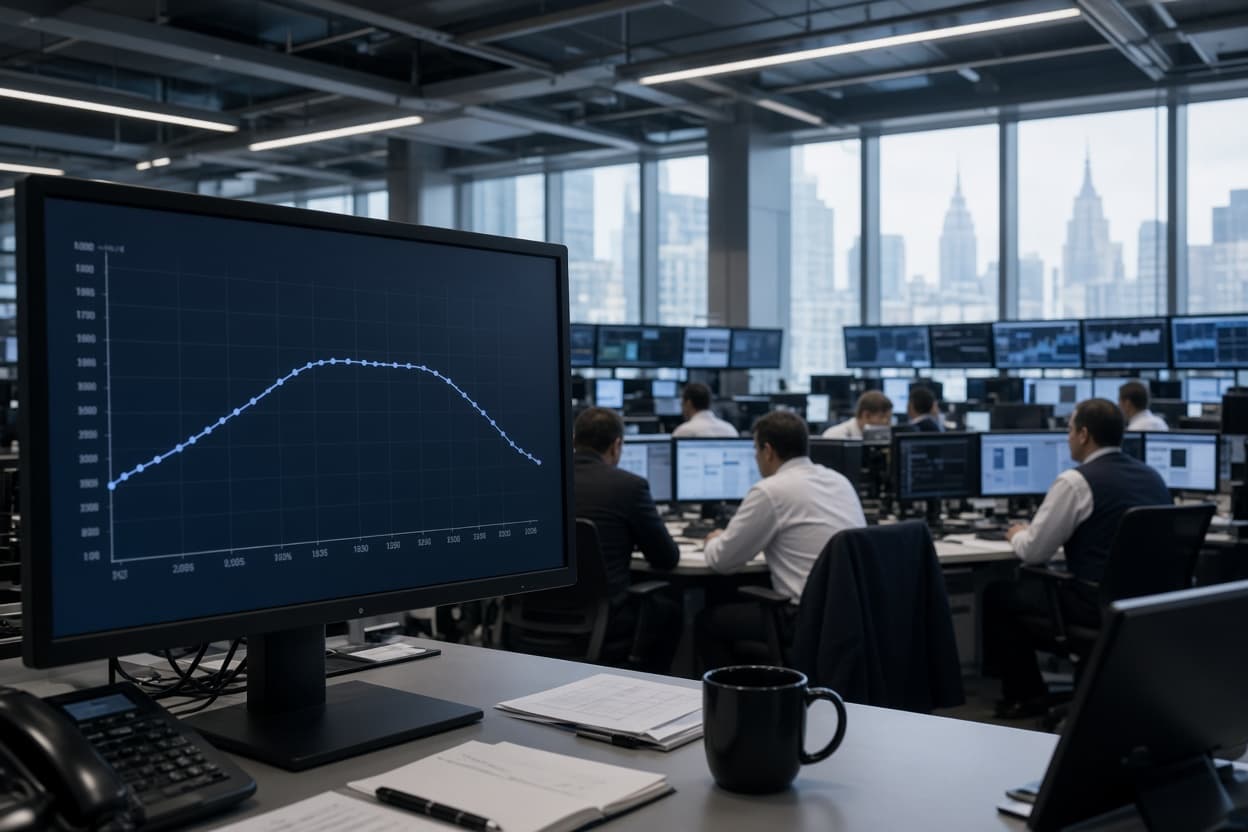
Shiller's CAPE ratio for the S&P 500 has reached its second-highest level in history, surpassed only by the peak during the dot-com bubble in 1999. History shows that such levels are rarely good news for stocks with low value growth and high dividends.
Quant Network (QNT) rises 75% in 24 hours and 180% in a week after The Clearing House selected the company's Overledger technology for its On-Chain Money Initiative. 25 major US banks, including JPMorgan and Citi, are behind the deal, which covers over $2 trillion in daily payment volume.
Spot Bitcoin ETFs pulled in $2.4 billion last week, the largest weekly inflow since October, dragging YTD flows back into positive territory after sitting at negative $5.8 billion just two months ago. But research points to a significant portion of the movement being hedge fund arbitrage, not genuine directional demand.
A new analysis from Seeking Alpha points to a rare combination of signals — sky-high AI investments, rising bond yields and geopolitical unrest — that have historically been precursors to sharp corrections in risk assets, including cryptocurrency.
Bitcoin handles rundt $83 787 mens amerikanske statsrenter treffer nivåer ikke sett siden 2007. $1,7 milliarder i derivat-leverage er likvidert, men spot-ETF-er og whales kjøper videre gjennom uroen.
BTC is trading near $86,200 after roughly $650 million in short positions were forcibly liquidated. Paradoxically, total open interest rose 7.6% to around $156 billion — a signal that leverage was reshuffled, not removed from the market.
LME copper trades at $14,730/tonne, down 1% from the all-time high set on September 10. Cancelled warrants make up 45% of inventories, the arb spread against COMEX has collapsed 92%, and speculative net-long positions above 90,000 contracts set up a classic double-top scenario.
The Federal Reserve surprises markets with its first rate hike in three years. Dow Jones falls 1.21% to 51,462, while the S&P 500 and Nasdaq remain relatively stable. Bitcoin falls in tandem with the stock market — a signal that the risk-on correlation from 2022 is back.
British CPI rose to 3.1% in August, driven by petrol and diesel, while core inflation held flat at 2.6%. Markets are now pricing in the risk of a rate hike from the Bank of England instead of a cut — GBP/USD holds above 1.347 and 2-year gilt yields approach 4.86%.
Bitcoin fell intraday to $74,888 as the Senate blocked the Clarity Act 49-50, but the price quickly recovered to $75,433. Around $300 million in long positions were liquidated in 20 minutes, while the $76,500 level is now the technical tipping point.
The Shiller CAPE ratio for the S&P 500 is approaching levels last seen during the dotcom bubble. History shows such readings have often preceded sharp corrections — and crypto tends to swing even harder than the stock market when that happens.
LSK rocketed over 500% intraday and climbed into the top 100 by market cap after a massive short squeeze, while Bitcoin continues to struggle to break through the $77,000 resistance.