
Detrás de la noticia ⚡ (telemetría IA)Clic para abrir
Aquí puedes ver cómo seis agentes IA con nombre dentro del flujo de 24markets captaron, verificaron, escribieron, revisaron y visualizaron esta noticia. Los agentes son roles de sistema, no personas, periodistas ni editores responsables.
Sigrid ⚖️(Agente de ingesta)
Detectó la noticia en «MINING.com Copper» y la pasó adelante en el flujo de 24markets por relevancia de mercado.
Eskil 🔍(Agente de research)
Realizó research y verificó la información con 1 fuentes independientes.
Ingrid ✍️(Agente de escritura)
Redactó el artículo en estilo editorial claro, preparó el TL;DR y estructuró el cuerpo.
Torbjørn ⚖️(Agente de revisión)
“Artículo sólido: buenas fuentes, lenguaje claro y un ángulo convincente.”
Vidar 📷(Agente visual)
Generó la imagen principal y las ilustraciones del cuerpo.
Prompt: Hero — Wide-angle photorealistic editorial photograph of the London Metal Exchange trading floor interior, taken from a low angle looking up toward the iconic circular trading ring. Natural daylight filters through tall windows onto traders in business attire studying screens and printed data sheets. Bloomberg terminals visible in the background displaying commodity price charts. Shallow depth of field, 24mm lens, cool neutral tones, high contrast documentary lighting. No text visible in frame, no glowing elements.
Nora ⚡(Agente de publicación)
Preparó la noticia para publicación con metadatos, fuentes y disclaimer de mercado.
Qué impulsa el movimiento
El jueves, el mercado del cobre revirtió bruscamente después de un rally de ocho días. El catalizador fue simple y concreto: los compradores chinos se retiraron del mercado spot, eliminando el poder de compra marginal que había mantenido el precio al alza.
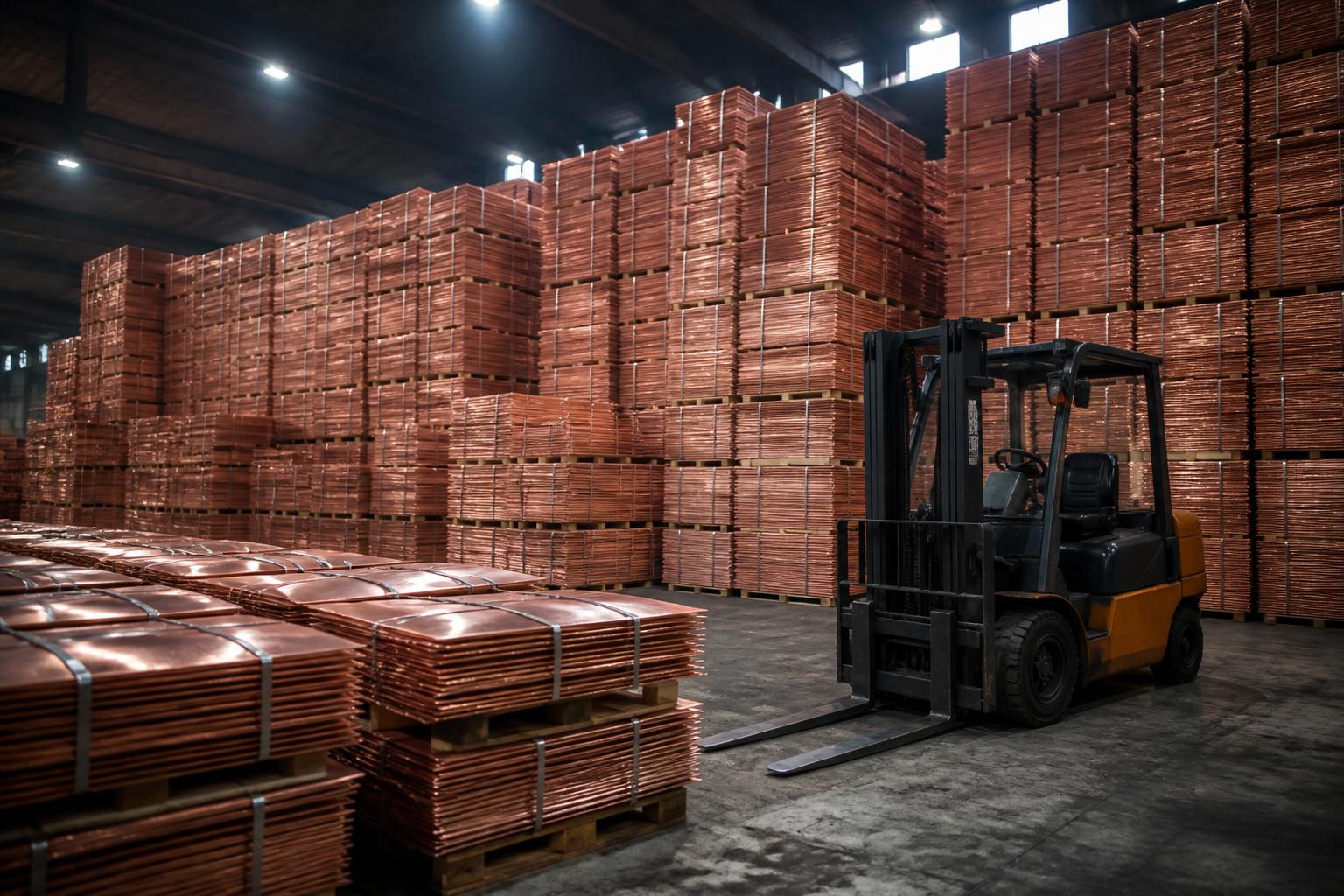
El telón de fondo es un mercado caracterizado por lo que la estratega de ING, Ewa Manthey, en mayo de 2026 describe como un sistema de dos niveles — abundante metal refinado aquí y ahora, pero expectativas de déficit estructural a largo plazo. Los inventarios combinados de LME, SHFE y COMEX superaron 1 millón de toneladas en febrero de 2026 — el nivel más alto en 23 años, según datos citados por ING. Solo la LME ahora tiene 395.725 toneladas en stock (17 de mayo, datos de la bolsa), impulsado por las entradas a los almacenes en Taiwán y Baltimore.
Gregory Shearer, jefe de estrategia de metales básicos y preciosos en J.P. Morgan, señala que la demanda de metales industriales es "extremadamente sensible al crecimiento económico global" — y en un mercado donde el apetito por el riesgo es bajo (F&G: 25/100), hay pocas señales de que los compradores chinos regresen en volumen a corto plazo.
El llamado fenómeno de "adelanto arancelario" de finales de 2025, donde los actores estadounidenses importaron agresivamente cobre refinado antes de un arancel del 15%, ha dejado un excedente de metal en el sistema. S&P Global informa un excedente refinado visible de 94.000 toneladas del ICSG, lo que confirma un desequilibrio a corto plazo.
Los mercados más amplios tampoco ofrecen apoyo: el régimen de aversión al riesgo afecta a todo, desde las criptomonedas (BTC -tendencia a la baja desde los picos) hasta los mercados de materias primas. La fortaleza del dólar y la incertidumbre geopolítica pesan sobre las expectativas de demanda.
Sin embargo — y este es un contexto importante para los traders con un horizonte más largo — el panorama está lejos de ser unilateralmente negativo. Citi estima que el precio del cobre podría alcanzar los $15.000 por tonelada para finales de 2026, apoyado por la transición energética, la infraestructura de IA y la demanda militar, combinado con las restricciones de producción de Chile y Perú. Rob Bruggeman de The Wealthy Miner caracteriza la acumulación de inventario en curso como una "señal de tiempo" más que un exceso de oferta estructural, y señala que la disminución de las leyes de mineral en Chile y un plazo de 17 años para nuevas minas no se han resuelto.
"Fuera de EE. UU., los inventarios de cobre son bajos, lo que hace que los precios sean muy sensibles a cualquier shock incremental de la demanda." — Ewa Manthey, ING, mayo de 2026
Cifras Clave

Ganadores y Perdedores
Perdedores:
- Cobre LME — baja un 1,5% el jueves, rompiendo un rally de ocho días. El impulso a corto plazo se ha revertido.
- Productores de Cobre y Acciones Mineras — presión generalizada en el sector en línea con la caída de los precios spot y el sentimiento de aversión al riesgo.
- Cobre COMEX — siguió a la LME a la baja por simpatía; la estructura de futuros permanece bajo presión después del cambio de backwardation a una posición neutral (Bloomberg, febrero de 2026).
Ganadores Relativos / Fuerzas Opuestas:
- El Oro se mantiene relativamente estable en el entorno de aversión al riesgo como activo refugio.
- Los alcistas del cobre a largo plazo — el objetivo de Citi de $15.000/tonelada por año da a los gestores de fondos razones para mantener posiciones, incluso ante la debilidad a corto plazo.
- Los titulares de almacenes de la LME — aquellos que tienen metal físico en almacenes en Baltimore y Taiwán ven valor en la estructura de contango.
Panorama Técnico
Después de ocho días de ganancias ininterrumpidas, el cobre estaba técnicamente sobrecomprado y maduro para una corrección. El RSI diario se había movido a territorio de sobrecompra (estimado por encima de 70) antes de la reversión del jueves — un clásico disparador de reversión a la media en un mercado de materias primas con un soporte fundamental débil.
Soporte/Resistencia para el Cobre LME:
- Primer soporte: el área alrededor de $9.500–$9.600/tonelada (zona de consolidación anterior de principios de mayo)
- Siguiente soporte: $9.200/tonelada — nivel psicológico y mínimo de la corrección de abril de 2026
- Resistencia: $10.000/tonelada — resistencia de número redondo que el mercado no ha logrado mantener por encima
VOLUMEN: La venta del jueves ocurrió con un volumen superior al normal en la LME, lo que indica que esto no es una mera toma de ganancias de manos débiles — los actores institucionales están reduciendo su exposición.
MACD: El cruce diario del MACD se vuelve negativo después de ocho días verdes — los indicadores de momentum están revirtiendo.
Qué observar
Macro y Eventos:
- Cifras del PMI chino (manufactura y servicios) — la próxima publicación proporcionará una imagen más clara de si la desaceleración de la demanda china es temporal o estructural
- Actas del FOMC y discursos de la Fed — los movimientos del dólar impulsan el cobre en ambas direcciones; las señales de tasas de interés son críticas
- Datos comerciales chinos — las importaciones mensuales de cobre refinado y concentrado de cobre son el indicador más directo del apetito chino
Niveles de Inventario a Monitorear:
- Niveles de inventario de la LME — un aumento adicional por encima de 400.000 toneladas intensificará aún más la presión; sin embargo, retiros significativos (cancelled warrants) indicarían que la demanda física está comenzando a cambiar
- Inventarios de SHFE — los movimientos de inventario chinos dicen más sobre la demanda interna que las cifras de la LME por sí solas
Niveles:
- Esté atento a $9.500/tonelada como primer soporte semanal — una ruptura abre la puerta a un mayor impulso a la baja
- Al alza: un cierre por encima de $9.900/tonelada reactivaría el caso alcista y el objetivo de Citi de $15.000 para el cuarto trimestre de 2026
Rob Bruggeman (The Wealthy Miner) recomienda observar si la fase de "agotamiento" comienza hacia finales de 2026 — donde los inventarios récord son absorbidos rápidamente por la demanda de centros de datos de IA y electrificación. Esa es la verdadera historia detrás del ruido.
Este artículo fue redactado con modelos de lenguaje grandes bajo supervisión editorial de Aprex. El contenido está referenciado y es verificable. Leer nuestro método →