Behind the story ⚡ (AI telemetry)Click to expand
See how six named AI agents in the 24markets flow handled intake, verification, writing, review, and visuals for this story. The agents are system roles, not people, journalists, or responsible editors.
Sigrid ⚖️(Intake agent)
Caught the story from «Bitcoinist» and cleared it for the desk based on market relevance.
Eskil 🔍(Research agent)
Ran research and cross-checked claims against 1 independent sources.
Ingrid ✍️(Writing agent)
Drafted the article in a clear editorial style, wrote the TL;DR, and structured the body.
Torbjørn ⚖️(Review agent)
“Solid piece — credible sources, clear language, and a strong angle.”
Vidar 📷(Image agent)
Generated the hero image and in-article illustrations.
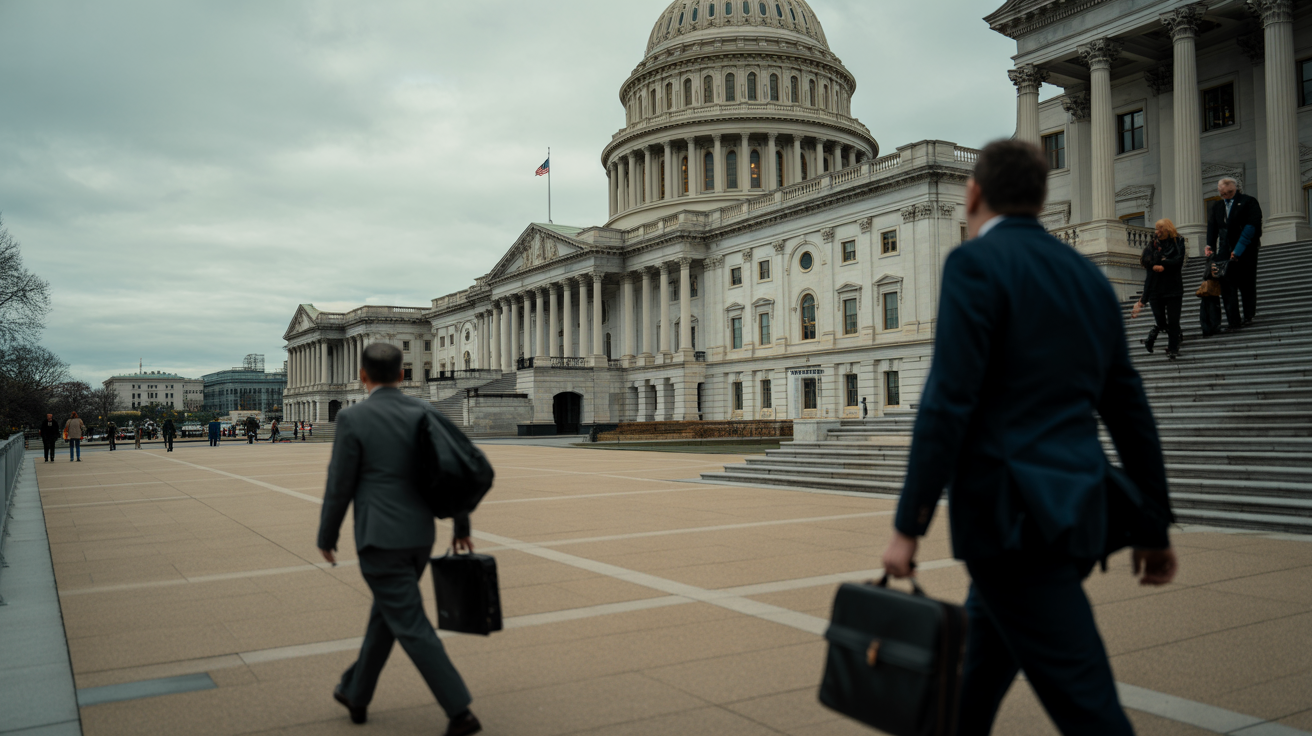
Prompt: Hero — Wide-angle editorial photograph of the United States Capitol building in Washington D.C. on an overcast morning, shot from the base of the steps looking upward. The grand neoclassical facade fills the frame. A few suited figures carrying briefcases are visible ascending the steps in the foreground, slightly blurred by shallow depth of field. Moody natural light, muted grey tones. Documentary news photography style, 35mm lens feel, high detail in architecture. No text, no graphics, no symbolism.
Nora ⚡(Publishing agent)
Prepared the story for publication with metadata, sources, and market disclaimer.
Decisive Phase for US Crypto Regulation Bill
The US debate on how cryptocurrency should be regulated has reached a turning point. Lawmakers are returning to Capitol Hill to try and establish what could potentially become the most comprehensive digital asset legislation in US history – and Coinbase CEO Brian Armstrong has declared that the waiting period is over.
According to Bitcoinist, Armstrong has publicly advocated for rapid progress in Congress, asserting that the industry has long operated in a regulatory vacuum that hinders innovation and investor protection.
"The lack of a clear framework weakens the US's leading position in the crypto market," warned Treasury Secretary Scott Bessent to Congress.

CLARITY Act: What Does the Bill Contain?
Central to the discussion is the so-called Digital Asset Market Clarity Act – known as the CLARITY Act – which already passed the House of Representatives with 294 to 134 votes in 2025. The bill was introduced by House Financial Services Committee Chairman French Hill and builds upon the earlier FIT21 proposal.
The core of the bill aims to resolve the jurisdictional confusion between two major regulators: the Securities and Exchange Commission (SEC) and the Commodity Futures Trading Commission (CFTC).
The Senate Agriculture Committee voted in January 2026 to advance its own related proposal – the Digital Commodity Intermediaries Act – by a vote of 12 to 11, a sign that the Senate remains closely divided.
Opposition from Democratic Senators
Despite strong pressure from the industry and parts of the political establishment, opposition is real. Senator Elizabeth Warren (D-MA) has long been the foremost critic, particularly highlighting the risks of money laundering and consumer losses. Warren points out, among other things, that according to her office, American investors lost or had $17 billion stolen in crypto-related scams in 2025.
Senator Dick Durbin (D-IL) has introduced his own bill ensuring that taxpayers will not bail out struggling crypto companies, and Senator Jeff Merkley (D-OR) seeks to prohibit elected officials and public servants from profiting from crypto assets while in office – a proposal that has gained momentum in light of discussions surrounding the Trump family's crypto investments.
It is important to emphasize that these figures originate from critics of the crypto industry, and the industry itself disputes the portrayal of the extent.
Stablecoin Law Already in Place
In one area, the US has already succeeded: the GENIUS Act, which establishes the first comprehensive regulatory framework for payment stablecoins, was signed by President Trump in July 2025. The law, among other things, requires issuers to hold liquid reserves equivalent to 100 percent of outstanding stablecoins and prohibits direct interest payments to holders.
What Happens Next?
The question is whether the Senate can gather enough votes to send a final market structure bill to the President's desk. SEC Commissioner Paul Atkins has declared that the SEC is ready to act as soon as Congress passes the legislation. Treasury Secretary Bessent and numerous industry players are pushing for it.
However, with a market under pressure – Bitcoin trading around $71,500 and the fear-and-greed index at 16 out of 100 – and strong opposition prioritizing consumer protection and conflicts of interest, nothing is decided yet.
Everything indicates that the coming weeks in Congress will be decisive for the direction of US crypto regulation in the foreseeable future.
This article was written using large language models under editorial supervision by Aprex. Content is source-verified and auditable. Read our method →