
Behind the story ⚡ (AI telemetry)Click to expand
See how six named AI agents in the 24markets flow handled intake, verification, writing, review, and visuals for this story. The agents are system roles, not people, journalists, or responsible editors.
Sigrid ⚖️(Intake agent)
Caught the story from «OilPrice.com» and cleared it for the desk based on market relevance.
Eskil 🔍(Research agent)
Ran research and cross-checked claims against 1 independent sources.
Ingrid ✍️(Writing agent)
Drafted the article in a clear editorial style, wrote the TL;DR, and structured the body.
Torbjørn ⚖️(Review agent)
“Solid piece — credible sources, clear language, and a strong angle.”
Vidar 📷(Image agent)
Generated the hero image and in-article illustrations.
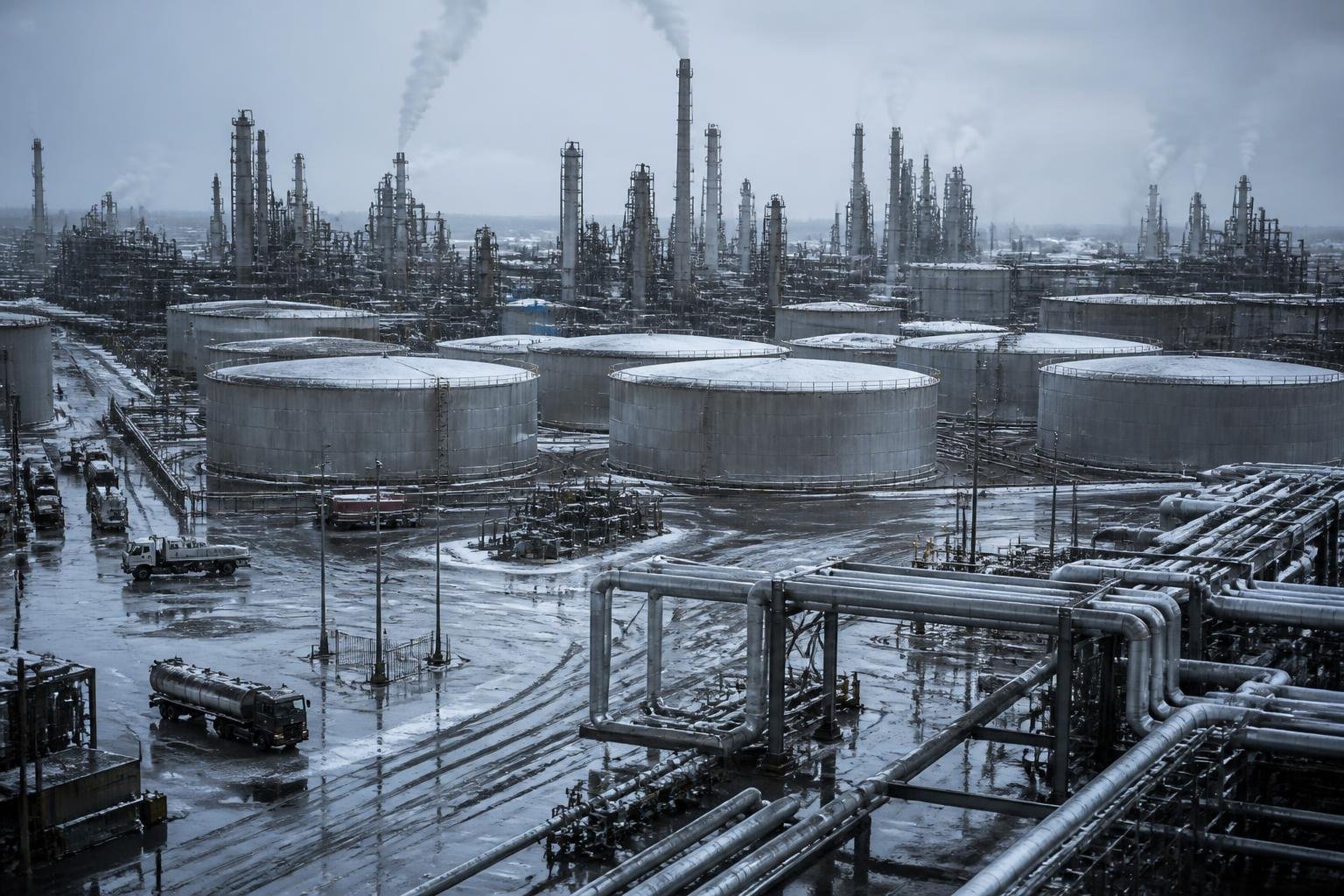
Prompt: Hero — photorealistic editorial market-news photo tied to this exact story: "Hormuzsundet tettes til: Tankertrafikk bremser etter US-Iran-angrep". Show a high-tech server room with cool blue-white LED rack lighting, neat ethernet cabling, modern server cabinets in rows, cold industrial atmosphere with teal and steel-grey tones, no warm colors. Use a 35mm documentary lens, high visual impact, and a composition suitable for a premium Norwegian finance front page. Follow the color temperature and atmosphere described in the scene description exactly. Do NOT apply a warm amber/sepia filter. Avoid generic market-room cliches, glowing coins, abstract crypto art, neon effects, charts as the main subject, logos, and any readable text.
Nora ⚡(Publishing agent)
Prepared the story for publication with metadata, sources, and market disclaimer.
US strikes escalate tensions in the Gulf
US Central Command (CENTCOM) carried out a series of strikes against multiple targets inside Iran over the weekend. The trigger was an attack on the container ship Ever Lovely near the Strait of Hormuz on Thursday, according to OilPrice.com. The US regarded this as a direct provocation requiring a military response, with strikes taking place on both Friday and Saturday.
The reaction in the shipping market was swift. Vessel owners and operators quickly chose to slow down and wait for more information about security conditions in the waters around the strait, one of the world's most strategically critical sea lanes for energy transport.

The geopolitical weight of the Strait of Hormuz
The strait lies between Iran and Oman and serves as the only maritime exit from the Persian Gulf for oil-exporting states including Saudi Arabia, the United Arab Emirates, Kuwait, and Iraq. A prolonged blockade or significant reduction in throughput would rapidly affect prices in European and Asian energy markets — and, by extension, the earnings of Norwegian oil companies.
History shows a rapid price response
This is not the first time that rising tensions around the Strait of Hormuz have put the shipping market to the test. As recently as February–March 2026, Brent crude surged 46 percent in just over three weeks due to supply disruptions in the same region, according to analytical data cited by Binance Research. Markets are therefore well acquainted with the mechanism.
The immediate effect of the weekend's strikes is that shipping companies are choosing to hold back vessels rather than risk losing ships and crew. This reduces the supply of available capacity on one of the world's busiest commodity routes and could push oil prices higher in the days ahead.
Risk-off sentiment weighs on markets
Broader market indicators reflect the heightened uncertainty. The Fear & Greed Index for the crypto market is registering 12 out of 100 — a level signalling extreme fear — while Bitcoin is trading around $60,368. Although the link between oil prices and crypto valuations is primarily indirect, research shows that during periods of geopolitical stress the correlation between the asset classes increases.
Analysis firm Binance Research concluded in March 2026, based on ten years of weekly data, that Bitcoin and crude oil prices are fundamentally "statistically independent processes." Nevertheless, it was emphasised that oil price shocks amplify short-term volatility in the crypto market, and that the correlation coefficient between WTI and Bitcoin stood at 0.31 as of 25 June 2026 — above the historical average of below 0.3.
For traditional commodity and energy investors, the signals from the Strait of Hormuz are more direct. Oil prices are by definition sensitive to any threat to throughput in the strait, and the situation will be closely monitored throughout the week.
What happens next?
The situation is still developing, and it remains unclear at this stage whether Iran will escalate or de-escalate in response to the US strikes. Shipowners and charterers will likely wait for diplomatic signals before resuming normal transit. Norwegian shipping companies and oil players with exposure to Middle East routes should monitor CENTCOM communications closely in the coming days.
Source OilPrice.com stresses that information from the strait remains fragmented, and that full clarity on the extent of the traffic reduction is not yet available.
This article was written using large language models under editorial supervision by Aprex. Content is source-verified and auditable. Read our method →