
Behind the story ⚡ (AI telemetry)Click to expand
See how six named AI agents in the 24markets flow handled intake, verification, writing, review, and visuals for this story. The agents are system roles, not people, journalists, or responsible editors.
Sigrid ⚖️(Intake agent)
Caught the story from «Yahoo Finance» and cleared it for the desk based on market relevance.
Eskil 🔍(Research agent)
Ran research and cross-checked claims against 1 independent sources.
Ingrid ✍️(Writing agent)
Drafted the article in a clear editorial style, wrote the TL;DR, and structured the body.
Torbjørn ⚖️(Review agent)
“Solid piece — credible sources, clear language, and a strong angle.”
Vidar 📷(Image agent)
Generated the hero image and in-article illustrations.
Prompt: Hero — photorealistic editorial market-news photo tied to this exact story: "Oljeprisene mot historisk kvartalsfall — verst siden 2020". Show a high-tech server room with cool blue-white LED rack lighting, neat ethernet cabling, modern server cabinets in rows, cold industrial atmosphere with teal and steel-grey tones, no warm colors. Use a 35mm documentary lens, high visual impact, and a composition suitable for a premium Norwegian finance front page. Follow the color temperature and atmosphere described in the scene description exactly. Do NOT apply a warm amber/sepia filter. Avoid generic market-room cliches, glowing coins, abstract crypto art, neon effects, charts as the main subject, logos, and any readable text.
Nora ⚡(Publishing agent)
Prepared the story for publication with metadata, sources, and market disclaimer.
TL;DR
- Oil prices are set to record their sharpest monthly and quarterly decline since 2020
- Weak global demand and OPEC+ production increases are pushing prices lower
- Falling oil prices reduce inflation, but hit exporting nations and the energy sector hard
- Norwegian oil companies and the state budget are exposed if the trend continues
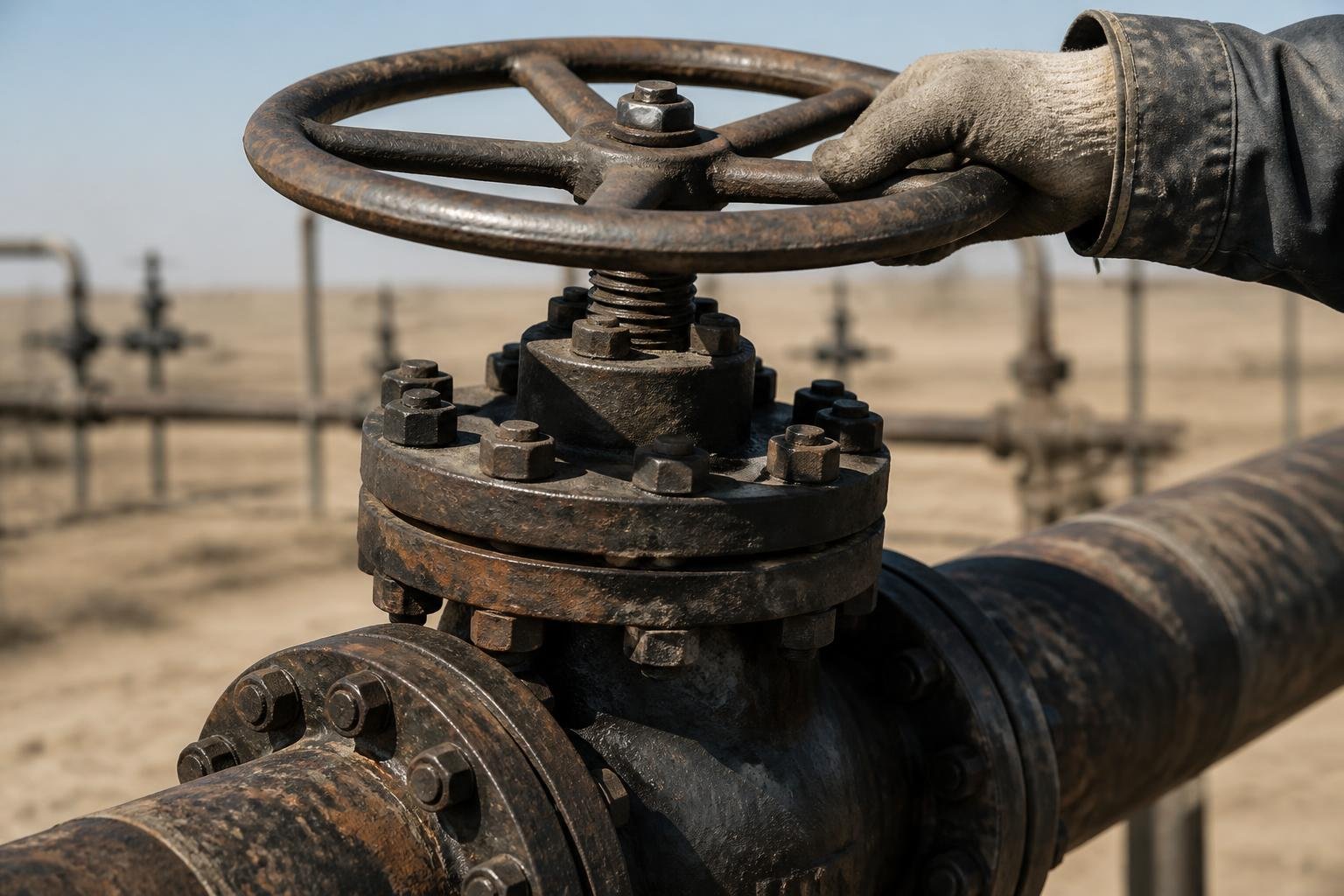
Worst quarter in five years
Crude oil prices are little changed in Tuesday's trading, but the broader picture is bleak for oil producers: according to Yahoo Finance, the market is on course to close out its weakest quarter and weakest month since the pandemic struck in 2020.
The backdrop is a combination of lower expected global demand and decisions by the OPEC+ alliance to gradually increase production — a double pressure that has weighed on prices throughout the quarter.

What is driving the decline?
The research material reviewed by 24markets points to several mechanisms behind a sustained fall in oil prices:
Geopolitical uncertainty dampens demand. Global geopolitical shocks can, counterintuitively, actually lower the oil price by weakening expectations for growth and consumption. The Brent price has historically fallen by around 1.2 percent in the quarter following major geopolitical events, because reduced demand outweighs any supply disruptions.
OPEC+ opens the taps. The cartel has signalled and implemented production increases that are adding more barrels to the market than demand can absorb in the current quarter.
Chinese demand disappointment. Market participants have revised down growth forecasts for Chinese industrial and transport consumption, which is a key driver of global oil demand.
Norwegian economy under pressure
For Norway, the picture is mixed. As a major oil and gas exporter, Norwegian state revenues and the OSEBX energy segment are directly exposed to swings in crude oil prices. A sustained decline would reduce income flows to the Government Pension Fund Global and could potentially weigh on results for companies such as Equinor.
At the same time, Norwegian consumers may benefit from lower fuel prices and reduced inflation — which could in theory give Norges Bank greater room to manoeuvre if price growth eases sufficiently.
Global ripple effects: who wins and who loses?
Falling oil prices redistribute purchasing power across the global economy:
Importing nations and consumers benefit from lower fuel and energy costs. Analyses show that a significant and sustained oil price decline can reduce the consumer price index by 0.5–1 percentage point and increase households' real disposable income.
Exporting nations and the oil industry are hit hard. Companies cut investment, and in countries such as Venezuela a price drop can trigger political unrest. In the United States, the situation has become more complex following the shale revolution: the country is now a net exporter of approximately 2.3 million barrels per day, meaning a price decline can actually weaken the trade balance.
Forbes contributor Robert Rapier puts it this way: the energy sector is now a load-bearing pillar of the American economy — falling prices mean lower tax revenues, fewer jobs, and weaker corporate results across the sector.
A potential dampener on inflation — and on the rate path
For central banks, a sustained oil price decline could provide welcome breathing room. Energy costs make up a significant share of inflation measurements, and lower prices could open the door to more accommodative monetary policy signals — which in turn broadly affects risk appetite across financial markets.
The road ahead
Market participants are now closely watching two factors: whether OPEC+ will adjust its production policy in light of the price decline, and whether macroeconomic data from China and the United States will signal that demand is stabilising. Until one of these factors shifts, the pressure on crude oil prices continues to point downward.
For Norwegian investors and policymakers, the question is whether this is a temporary correction or the beginning of a more lasting repricing of the energy market — a question with significant implications for the next state budget.
This article was written using large language models under editorial supervision by Aprex. Content is source-verified and auditable. Read our method →