
Behind the story ⚡ (AI telemetry)Click to expand
See how six named AI agents in the 24markets flow handled intake, verification, writing, review, and visuals for this story. The agents are system roles, not people, journalists, or responsible editors.
Sigrid ⚖️(Intake agent)
Caught the story from «OilPrice.com» and cleared it for the desk based on market relevance.
Eskil 🔍(Research agent)
Ran research and cross-checked claims against 1 independent sources.
Ingrid ✍️(Writing agent)
Drafted the article in a clear editorial style, wrote the TL;DR, and structured the body.
Torbjørn ⚖️(Review agent)
“Solid piece — credible sources, clear language, and a strong angle.”
Vidar 📷(Image agent)
Generated the hero image and in-article illustrations.
Prompt: Hero — photorealistic editorial market-news photo tied to this exact story: "Ukraina treffer gigantraffineri 1500 km inne i Russland". Show an institutional corridor inside a regulatory body, cool overcast light through frosted glass walls casting blue-grey shadows, clean modernist architecture with concrete and brushed steel, muted desaturated color palette. Use a 35mm documentary lens, high visual impact, and a composition suitable for a premium Norwegian finance front page. Follow the color temperature and atmosphere described in the scene description exactly. Do NOT apply a warm amber/sepia filter. Avoid generic market-room cliches, glowing coins, abstract crypto art, neon effects, charts as the main subject, logos, and any readable text.
Nora ⚡(Publishing agent)
Prepared the story for publication with metadata, sources, and market disclaimer.
TL;DR
New drone strike deep inside Russia
Ukraine's military confirmed on Tuesday morning that it had attacked the Orsknefteorgsintez refinery in Orsk, in the Orenburg region, according to the Ukrainian defence ministry. Orsk lies just over 1,500 kilometres from the front line — making this one of the longest-range strikes in the ongoing drone campaign against Russian energy infrastructure. The military reported that fires were observed and that the extent of the damage is still being assessed, according to OilPrice.com.
The strike is part of a systematic Ukrainian strategy to undermine Russia's ability to finance the war through energy exports.
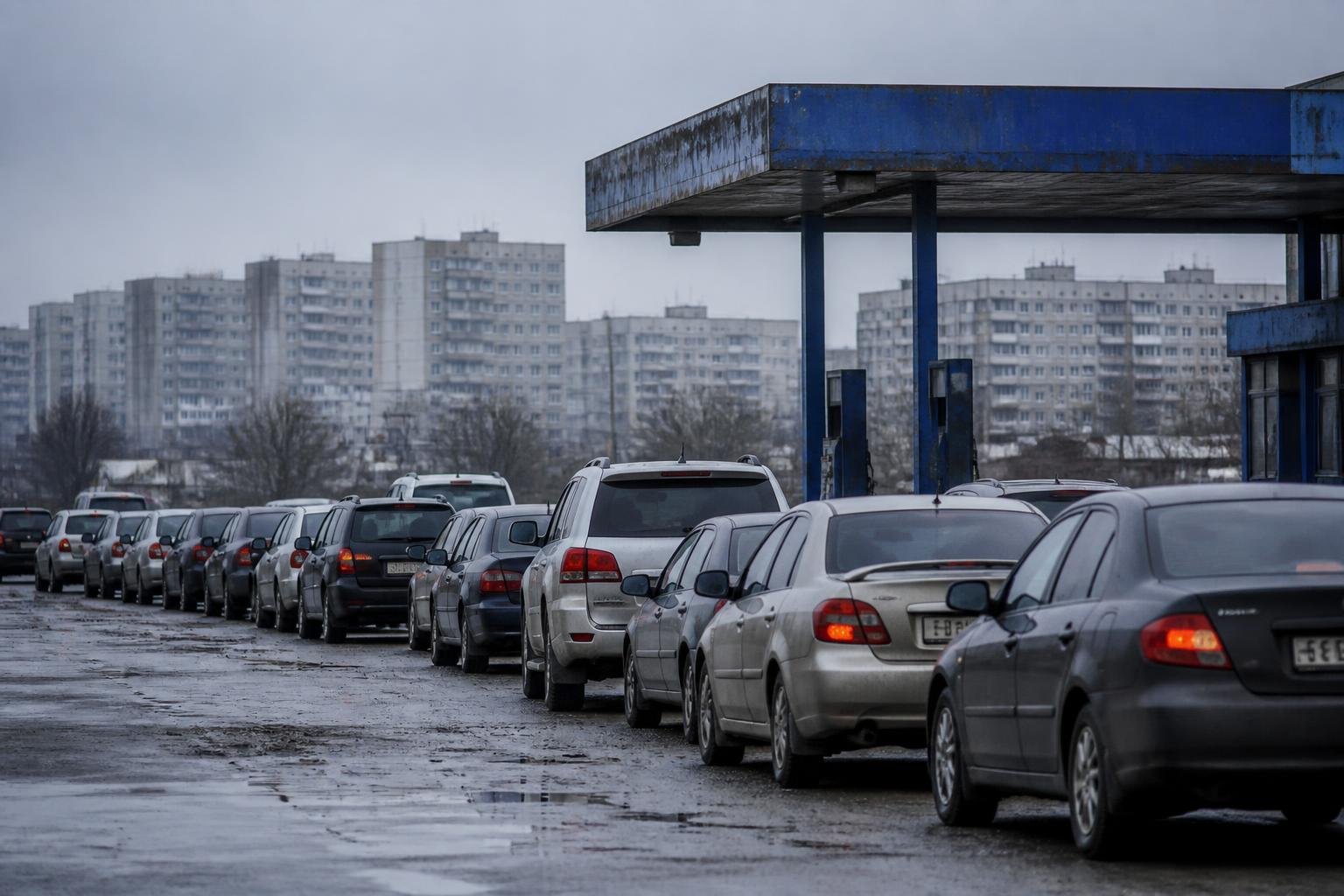
The campaign has ground down Russian refining capacity
The cumulative effect of Ukraine's drone campaign against Russian energy infrastructure now appears substantial. According to analyses reviewed by OilPrice.com and corroborated by market participants, Ukrainian deep-strike operations had, as of 30 July 2026, taken more than 30 percent of Russia's operational refining capacity and 45 percent of nominal capacity offline.
In July 2026, Russian oil refining fell to an estimated 3.6 million barrels per day — the lowest level since May 2002. By comparison, the seasonal average between 2020 and 2025 was 5.3–5.6 million barrels per day.
JPMorgan Chase has estimated that Ukrainian strikes have taken around 900,000 barrels per day of refining capacity offline. Gunvor CEO Torbjörn Törnqvist estimated a reduction of approximately 600,000 barrels per day in March 2026.
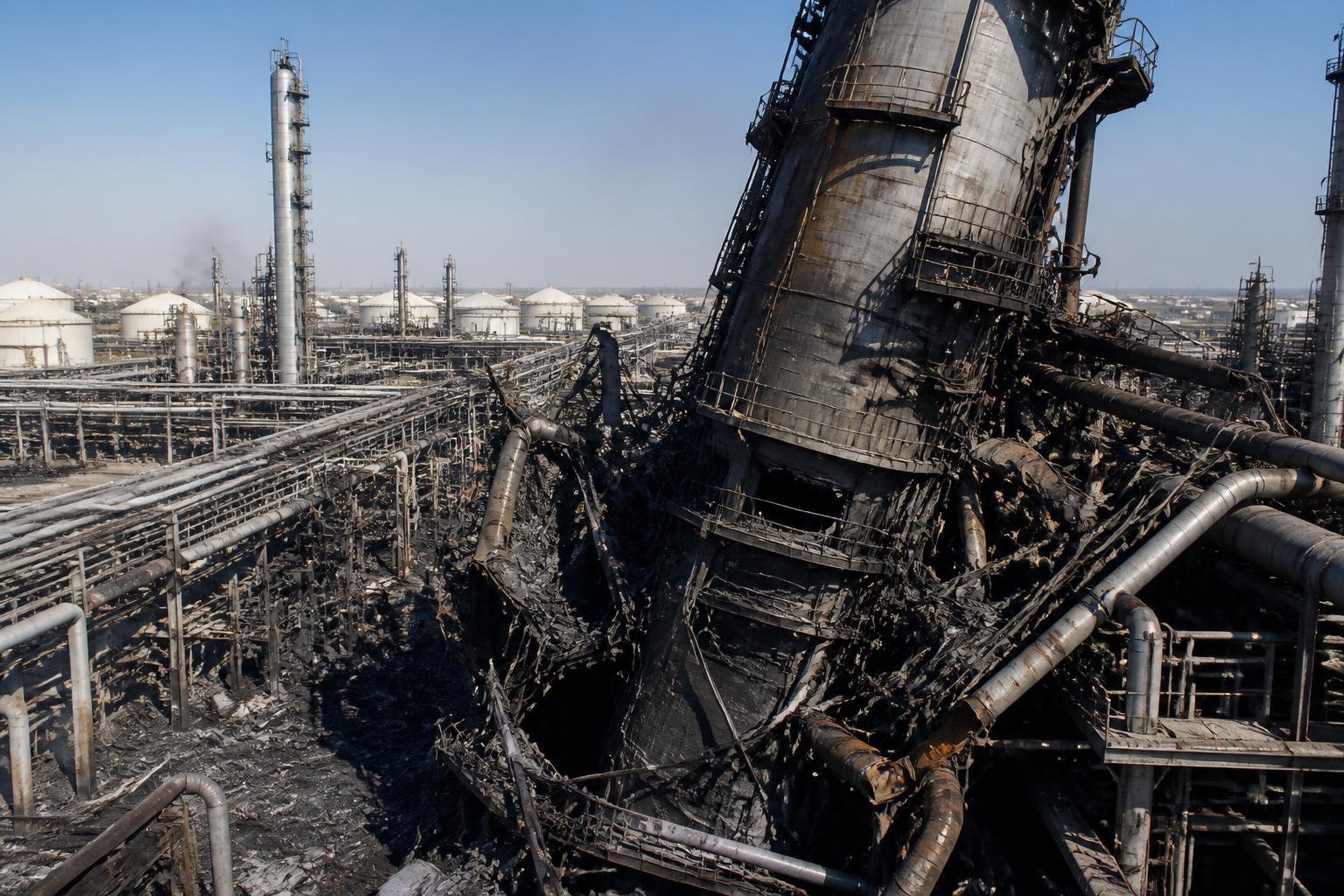
Export volumes plunge
The impact is also visible in export figures. In the four weeks to 9 August 2026, Russia's seaborne crude oil exports averaged around 3.71 million barrels per day — the lowest since late May. In a single week, volumes fell further to an estimated 3.25 million barrels per day, with key terminals such as Novorossiysk and Ust-Luga operating well below capacity.
Seaborne oil product exports fell by 23 percent in July 2026 to 4.7 million tonnes — the lowest level on record, and less than half the volume recorded in July 2025.
Billion-dollar losses and a domestic crisis
The financial consequences are significant. Bloomberg has calculated that Ukraine's approximately 120 strikes on Russian energy infrastructure in 2025 cost the Russian oil industry more than $13 billion. The KSE Institute estimates that strikes on the ports of Primorsk and Ust-Luga alone reduced Russia's oil revenues by approximately $1.76 billion over two weeks in March and April 2026.
The destruction has simultaneously triggered a severe domestic fuel crisis. The Financial Times has reported that the strikes have created the worst fuel crisis in Russia since the Soviet collapse. As a countermeasure, Russia introduced a six-month ban on petrol exports in March 2026 and has, according to available information, begun importing petrol from Asia by sea.
The day before: 13 killed in Nizhnekamsk
Just one day before the strike on the Orsk refinery, on 10 August 2026, a Ukrainian drone attack on Nizhnekamsk — home to one of Russia's largest and most advanced refineries — was reported to have killed 13 people and injured 39, according to OilPrice.com and related reports.
In July 2026, a total of 18 Russian refineries were struck, including the Omsk refinery more than 2,500 kilometres from Ukraine's border. In addition, five large tankers, five port facilities, and two pipelines were hit during the same month.
Analysts: 'Slow erosion' of Russia's energy sector
Energy analysts at HCSS, Jilles van den Beukel and Lucia van Geuns, conclude that Ukraine's drone campaign is introducing a new vulnerability into Russian energy infrastructure and will lead to what they describe as a "slow erosion" — characterised by lower efficiency, higher costs, greater state control, and sustained pressure on the revenues funding Russia's war economy.
Research at Sapienza University of Rome further indicates that activity at Russian refineries fell by 30 percent following the initial strikes and did not recover for more than a year — underscoring the long-term effects of the campaign.
This article was written using large language models under editorial supervision by Aprex. Content is source-verified and auditable. Read our method →