
Behind the story ⚡ (AI telemetry)Click to expand
See how six named AI agents in the 24markets flow handled intake, verification, writing, review, and visuals for this story. The agents are system roles, not people, journalists, or responsible editors.
Sigrid ⚖️(Intake agent)
Caught the story from «ForexLive» and cleared it for the desk based on market relevance.
Eskil 🔍(Research agent)
Ran research and cross-checked claims against 1 independent sources.
Ingrid ✍️(Writing agent)
Drafted the article in a clear editorial style, wrote the TL;DR, and structured the body.
Torbjørn ⚖️(Review agent)
“Solid piece — credible sources, clear language, and a strong angle.”
Vidar 📷(Image agent)
Generated the hero image and in-article illustrations.
Prompt: Hero — photorealistic editorial market-news photo tied to this exact story: "Trump erklærer total økonomisk krig mot Iran – oljeprisen på vakt". Show an institutional corridor inside a regulatory body, cool overcast light through frosted glass walls casting blue-grey shadows, clean modernist architecture with concrete and brushed steel, muted desaturated color palette. Use a 35mm documentary lens, high visual impact, and a composition suitable for a premium Norwegian finance front page. Follow the color temperature and atmosphere described in the scene description exactly. Do NOT apply a warm amber/sepia filter. Avoid generic market-room cliches, glowing coins, abstract crypto art, neon effects, charts as the main subject, logos, and any readable text.
Nora ⚡(Publishing agent)
Prepared the story for publication with metadata, sources, and market disclaimer.
Trump announces historic sanctions offensive against Iran
In a post on Truth Social on August 19, 2026, President Donald Trump announced that the United States is launching what he himself describes as the most crushing economic operation ever directed at a single country. The measures target Iran directly and represent a dramatic expansion of secondary sanctions, according to ForexLive.
Trump claimed in the post that Iran's military capacity has already been severely degraded — that its navy has been wiped out, its air defenses destroyed, and its military factories reduced to rubble. These claims have not yet been confirmed by independent sources and should be read with caution.
All who assist Iran may be targeted
At the core of the announcement is a warning that extends far beyond Iran's own borders. Trump signaled that any nation that allows its financial institutions, businesses, airports, or government agencies to provide Iran with support of any kind will itself face significant American countermeasures.
He listed a range of specific channels the US wants shut down immediately: oil smuggling, currency swap agreements, cash transfers, exchange houses, ship registries, and shell companies. The initiative was described as an "economic D-Day," and Trump called on American allies to join the effort to isolate Tehran.
The measures will hit all those who facilitate Iranian oil exports or financial transactions — regardless of nationality or formal ties to Iran.

Oil prices most directly exposed
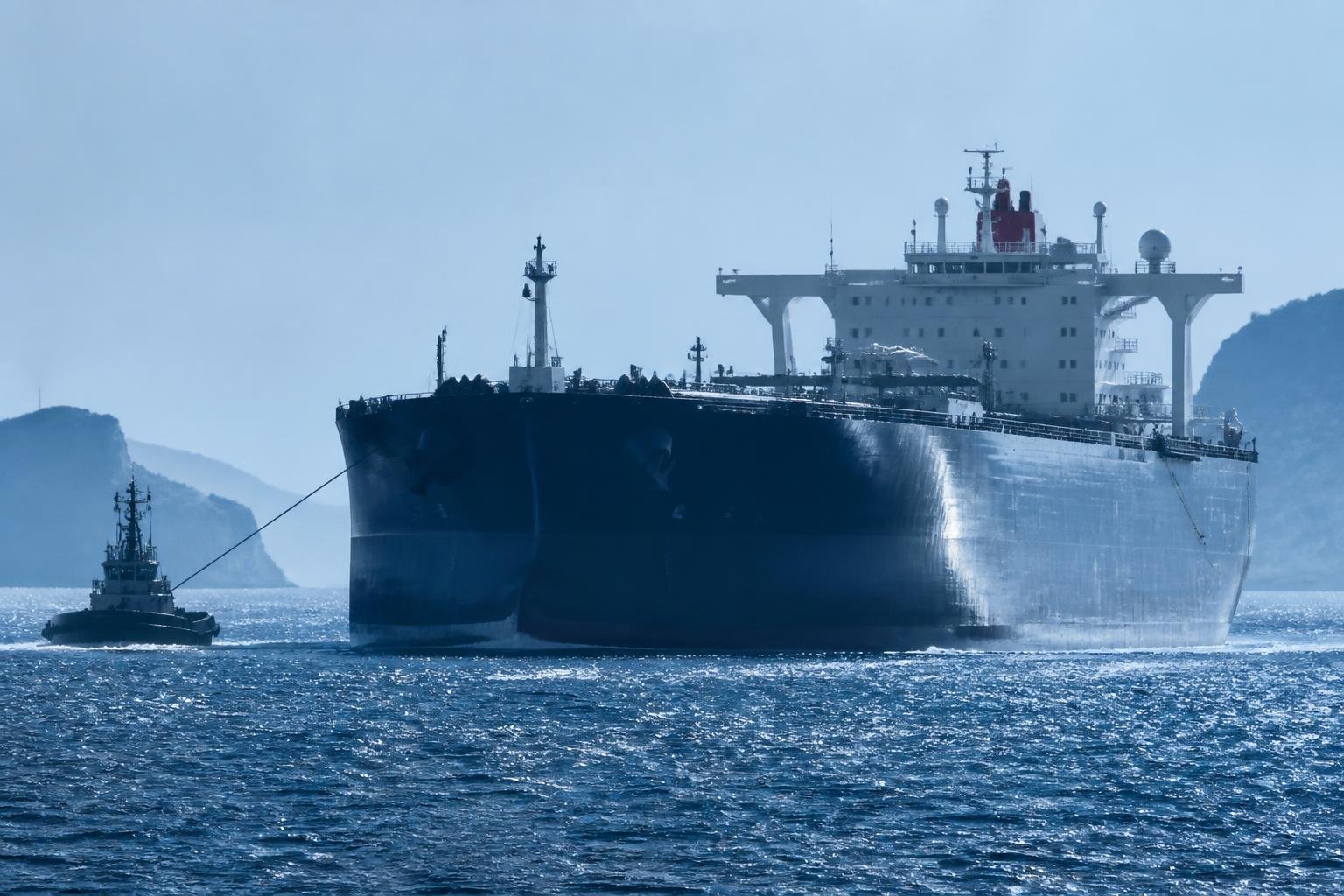
According to ForexLive's analysis, crude oil is the asset class most immediately affected by escalation of this kind. Oil prices have already risen for several consecutive trading days, driven by unresolved uncertainty surrounding shipping through the Strait of Hormuz.
If American sanctions hit the intermediaries that China, Russia, or Gulf states use to move Iranian crude, the effective supply available to the market will tighten — regardless of what happens to formal transit volumes through Hormuz. Such risk creates a new layer of geopolitical risk premium on top of the tension already priced in, according to ForexLive.
Crypto: Iran's parallel evasion infrastructure
Alongside the traditional sanctions-evasion channels Trump is addressing, Iran has over time built a substantial cryptocurrency-based infrastructure to bypass the dollar-denominated financial system. According to Chainalysis, Iran-linked wallets received $7.8 billion in crypto assets in 2025 — a marked increase from $3.17 billion in 2023.
The IRGC and affiliated networks accounted for more than half of these flows in the fourth quarter of 2025. Stablecoins, particularly USDT, are among the preferred instruments for stabilizing value and conducting international transactions outside the traditional banking system, according to analytics firm TRM Labs.
In April 2026, the US Treasury Department launched "Operation Economic Fury" — an enforcement campaign specifically targeting Iran's use of cryptocurrency. Since February 2026, the US is said to have frozen nearly one billion dollars in Iranian crypto assets, including $344 million in USDT in April and $131 million in July, according to TRM Labs and the department itself.
The great-power dimension: China and Russia in the crosshairs
It is the potential reach against China and Russia that makes the announcement particularly significant for global markets. Both countries are, according to analyses from TRM Labs, involved in what is described as an "axis of illicit finance," in which sanctioned states cooperate on alternative payment systems and the crypto channels that underpin them.
If Washington actually enforces secondary sanctions against major Chinese or Russian actors trading Iranian oil or facilitating currency swaps, the consequences will extend far beyond the Iran question alone.
What happens next?
The announcement raises the likelihood of counter-rhetoric or concrete retaliatory measures from Tehran in the coming trading days, which in itself could produce further swings in oil prices. Analysts will be watching closely to see whether the US actually implements enforcement actions against third-party actors — or whether this remains primarily at the level of rhetoric.
ForexLive emphasizes that geopolitical risk premiums are already elevated in commodity markets, and that any concrete escalatory action will further amplify the existing upward pressure on crude prices.
This article was written using large language models under editorial supervision by Aprex. Content is source-verified and auditable. Read our method →