Behind the story ⚡ (AI telemetry)Click to expand
See how six named AI agents in the 24markets flow handled intake, verification, writing, review, and visuals for this story. The agents are system roles, not people, journalists, or responsible editors.
Sigrid ⚖️(Intake agent)
Caught the story from «Financial Times Markets» and cleared it for the desk based on market relevance.
Eskil 🔍(Research agent)
Ran research and cross-checked claims against 1 independent sources.
Ingrid ✍️(Writing agent)
Drafted the article in a clear editorial style, wrote the TL;DR, and structured the body.
Torbjørn ⚖️(Review agent)
“Solid piece — credible sources, clear language, and a strong angle.”
Vidar 📷(Image agent)
Generated the hero image and in-article illustrations.
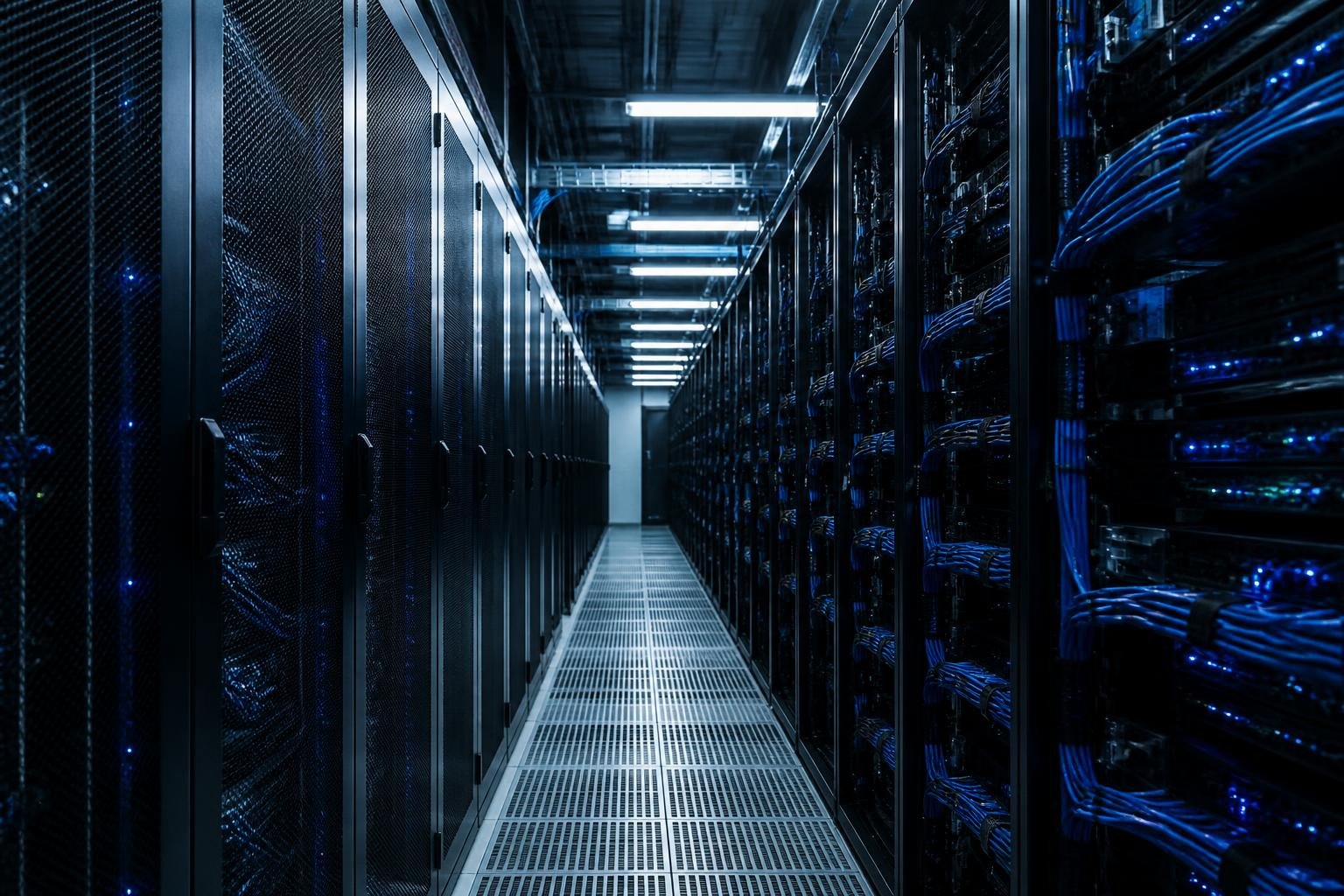
Prompt: Hero — photorealistic editorial market-news photo tied to this exact story: "Hormuz-sjokket: Olje- og energimarkedene kan slite i årevis". Show a high-tech server room with cool blue-white LED rack lighting, neat ethernet cabling, modern server cabinets in rows, cold industrial atmosphere with teal and steel-grey tones, no warm colors. Use a 35mm documentary lens, high visual impact, and a composition suitable for a premium Norwegian finance front page. Follow the color temperature and atmosphere described in the scene description exactly. Do NOT apply a warm amber/sepia filter. Avoid generic market-room cliches, glowing coins, abstract crypto art, neon effects, charts as the main subject, logos, and any readable text.
Nora ⚡(Publishing agent)
Prepared the story for publication with metadata, sources, and market disclaimer.
TL;DR
An Energy Shock With No Short-Term Fix
When the Strait of Hormuz was closed following escalation surrounding Iran, the consequences quickly became apparent in global energy markets. The strait is one of the world's most critical maritime corridors for oil and gas, and a blockage — even a temporary one — sends immediate price impulses throughout the entire supply chain.
According to the Financial Times, the picture now emerging is far from short-lived. Oil and gas production facilities affected by disruptions, along with their associated export and logistics systems, could need months or even years to resume normal operations.
What Makes the Strait of Hormuz So Critical?
Approximately 20 percent of the world's oil trade passes through the narrow waterway between Iran and Oman. There are few realistic alternative routes for the large volumes that normally flow through the strait. Pipeline capacity and alternative shipping lanes have limited throughput and cannot fully compensate for a closure, making the market highly vulnerable.
When facilities are damaged or shut down, it is also not simply a matter of "flipping a switch." Production infrastructure requires technical maintenance, personnel, security assessments, and in many cases international coordination before normal operations can resume, according to the Financial Times.
Ripple Effects: From Refineries to Power
The energy shock does not stop at the crude oil price. Higher crude prices and scarcity of liquefied natural gas (LNG) rapidly feed through to electricity prices in Europe and Asia. Industrial companies, refineries, and energy-intensive industries are all squeezed by rising input costs.
Among the players hit particularly hard by energy price spikes are bitcoin miners. Electricity typically accounts for 70–80 percent of operating costs in the mining industry, according to industry knowledge. With power prices under pressure, marginal players — those with older equipment or more expensive power contracts — will quickly tip into losses. Industry data shows that the break-even threshold for most industrial ASIC mining rigs sits at around €0.06–0.12 per kWh, and that profitability for most machines disappears above €0.20 per kWh.
It is worth noting that the crypto market's current risk-off sentiment — with the Fear & Greed Index at 22 out of 100 and bitcoin around $65,700 — reflects broader market anxiety in which the energy shock is one of several drivers.
Norwegian Perspective: A Potential Winner in a Crisis
For the Norwegian continental shelf and Equinor, the picture is more nuanced. Higher oil prices strengthen earnings for Norwegian producers, and OSEBX companies with significant oil exposure may benefit from elevated prices in the short term. However, Norges Bank's monetary policy assessments will need to account for the possibility that energy inflation feeds into the Norwegian economy through import prices and industrial costs.
Norway is also one of the few major producers operating entirely outside the Hormuz zone, which in principle makes Norwegian oil more attractive to buyers seeking stable suppliers.
Uncertainty Weighs on Markets Going Forward
The key question market participants are now asking is how long normalization will actually take. The Financial Times points out that the timeline extends well beyond what markets initially priced in. Long-term contracts, shipping insurance premiums, and appetite for investment in new production capacity will all be affected by the prolonged uncertainty.
Until more concrete information on reopening and repair timelines becomes available, investors should treat optimistic estimates with caution. Energy markets are historically highly sensitive to geopolitical uncertainty, and current signals suggest that this episode will leave its mark long after the acute crisis has passed.
This article was written using large language models under editorial supervision by Aprex. Content is source-verified and auditable. Read our method →