Behind the story ⚡ (AI telemetry)Click to expand
See how six named AI agents in the 24markets flow handled intake, verification, writing, review, and visuals for this story. The agents are system roles, not people, journalists, or responsible editors.
Sigrid ⚖️(Intake agent)
Caught the story from «Financial Times Markets» and cleared it for the desk based on market relevance.
Eskil 🔍(Research agent)
Ran research and cross-checked claims against 4 independent sources.
Ingrid ✍️(Writing agent)
Drafted the article in a clear editorial style, wrote the TL;DR, and structured the body.
Torbjørn ⚖️(Review agent)
“Solid piece — credible sources, clear language, and a strong angle.”
Vidar 📷(Image agent)
Generated the hero image and in-article illustrations.
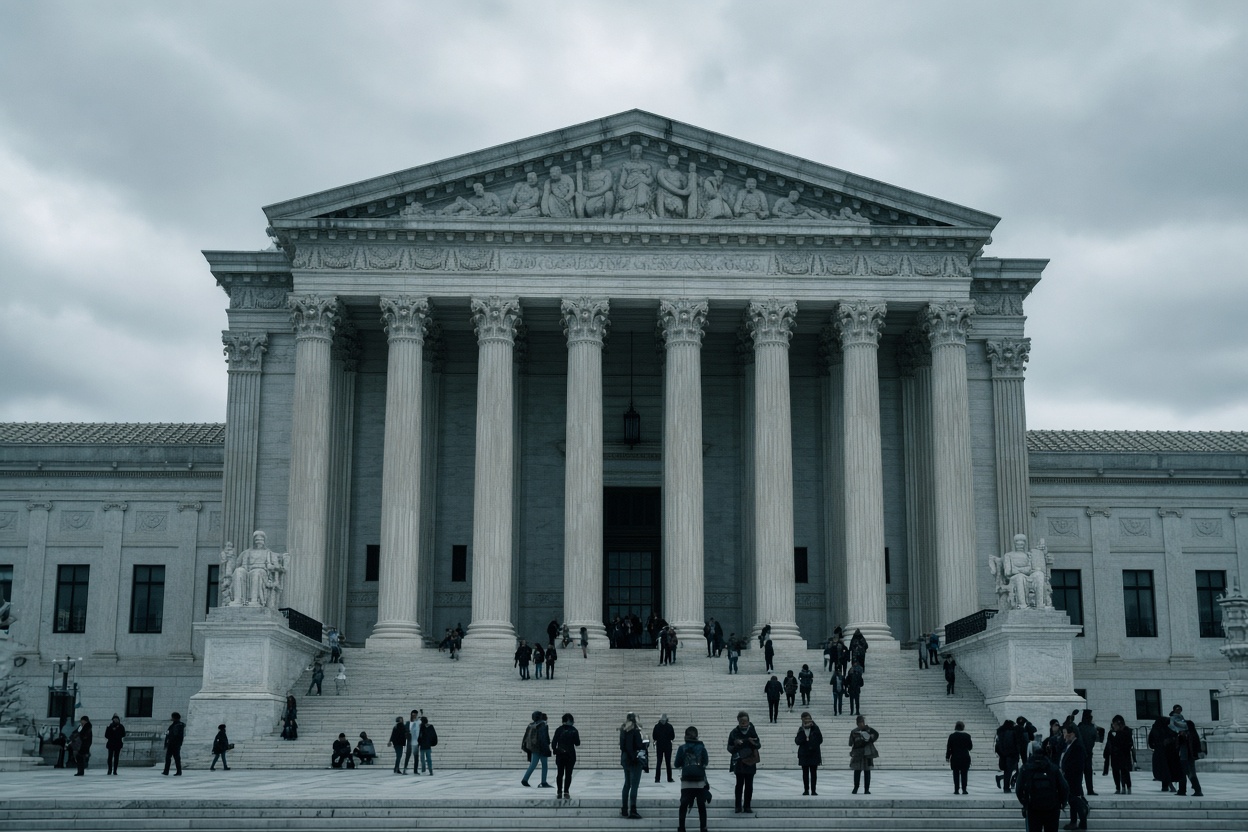
Prompt: Wide establishing photo of the U.S. Supreme Court building exterior in Washington D.C. at midday under heavy overcast sky, cool steel-blue color temperature, journalists and visitors on the marble steps, realistic documentary photojournalism style, telephoto compression, shallow depth of field on the building facade, 50mm lens look, editorial magazine cover quality.
Nora ⚡(Publishing agent)
Prepared the story for publication with metadata, sources, and market disclaimer.
A case that never reached oral argument in Washington
The Financial Times writes about "Big Oil's day in court" and describes a case in which the US Supreme Court is said to have heard arguments in an attempt to hold major polluters accountable for climate costs (FT, ft.com). A review of court documents, however, reveals a more nuanced picture: the case in question, Sunoco LP v. City and County of Honolulu, has never been the subject of oral argument before the Supreme Court itself.
The US Supreme Court (SCOTUS) instead declined to take up the case. The decision to deny so-called "certiorari" came on January 13, 2025, meaning a previous ruling from the Hawaii Supreme Court was left standing. Justice Samuel Alito did not participate in the proceedings due to personal investments in energy companies.
The actual oral hearing in the case took place nearly three years ago – on August 17, 2023, before the Hawaii Supreme Court in Honolulu. It is possible the FT's wording refers to this proceeding, or to the broader legal battle against the oil industry in general. Either way, there is an important distinction: no US Supreme Court justice has to date questioned the oil companies' lawyers directly about climate liability in this case.
> [TIMELINE title="Timeline of Sunoco LP v. Honolulu"] 2020: Honolulu sues Sunoco, Shell, ExxonMobil, Chevron and others for deceptive marketing | Aug. 17, 2023: Oral hearing before the Hawaii Supreme Court | Oct. 31, 2023: Hawaii Supreme Court unanimously rejects the oil companies' motion to dismiss | Dec. 10, 2024: US Solicitor General recommends the Supreme Court reject the appeal | Jan. 13, 2025: SCOTUS denies the cert petition – the case proceeds to trial in Hawaii [/TIMELINE]
What the case is actually about
Honolulu and the municipal water utility claim that the oil companies knew about the climate risks associated with fossil fuels as early as the late 1960s, but deliberately concealed this knowledge through misleading PR campaigns. The lawsuit is built on tort claims of fraudulent concealment, nuisance, and failure to warn – not a demand to regulate the emissions themselves.
This distinction is legally decisive. The oil companies have argued that the claims are in reality about cross-border pollution, and are therefore governed by federal law – specifically the Clean Air Act – which in their view preempts state-level tort claims. The Hawaii Supreme Court unanimously rejected this argument in October 2023, ruling that the Clean Air Act preempts federal common law claims regarding emissions, but not state-level claims about deceptive marketing.
The claims are based on alleged deceptive marketing and failure to warn – not on emissions-regulated activity covered by the Clean Air Act
The Solicitor General stepped in
Before the Supreme Court made its decision, the Court requested a statement from the US Solicitor General – a procedure known as a CVSG. In December 2024, then-Solicitor General Elizabeth Prelogar recommended that the Supreme Court reject the appeal, arguing that the Hawaii ruling was an interlocutory order without a final judgment, and that Honolulu's case differed from previously rejected climate lawsuits such as City of New York v. Chevron in that it focused on consumer protection and product liability rather than emissions liability directly.
Precedent from earlier cases
There is in fact one climate lawsuit that has had an oral hearing before the US Supreme Court: BP p.l.c. v. Mayor and City Council of Baltimore, heard in January 2021. That case, however, concerned only a narrow procedural issue related to the right of appeal when cases are remanded to state courts – not climate liability itself. Other key rulings, such as Massachusetts v. EPA (2006) and American Electric Power v. Connecticut (2011), have established that the Clean Air Act preempts federal common law lawsuits against emissions sources, but have not clarified the status of state-level claims regarding deceptive marketing.
Relevance for Norwegian investors
The outcome of the trial in Hawaii has financial implications far beyond the US. The Government Pension Fund Global, managed by Norges Bank Investment Management, holds significant ownership stakes in several of the defendant companies, including Shell, Chevron, ExxonMobil and ConocoPhillips. A potential liability ruling in the billions could affect the valuation of these companies and thus the returns of the oil fund.
Several US cities and states have filed similar lawsuits against major oil companies, including comparable cases from California, New York City, Baltimore and Boulder. If the Hawaii case goes to judgment in Honolulu's district court and the oil companies lose, it could establish a new template for how US courts handle historical liability for climate impact – with potentially major consequences for the sector's risk profile globally, including for Norwegian energy companies such as Equinor, which face similar lawsuits in European courts.
For now, the conclusion is clear: the real battle over Big Oil's liability for climate change is not taking place in Washington D.C., but in a courtroom in Hawaii – where discovery and trial preparations are now underway.
This article was written using large language models under editorial supervision by Aprex. Content is source-verified and auditable. Read our method →