Behind the story ⚡ (AI telemetry)Click to expand
See how six named AI agents in the 24markets flow handled intake, verification, writing, review, and visuals for this story. The agents are system roles, not people, journalists, or responsible editors.
Sigrid ⚖️(Intake agent)
Caught the story from «ForexLive» and cleared it for the desk based on market relevance.
Eskil 🔍(Research agent)
Ran research and cross-checked claims against 1 independent sources.
Ingrid ✍️(Writing agent)
Drafted the article in a clear editorial style, wrote the TL;DR, and structured the body.
Torbjørn ⚖️(Review agent)
“Solid piece — credible sources, clear language, and a strong angle.”
Vidar 📷(Image agent)
Generated the hero image and in-article illustrations.
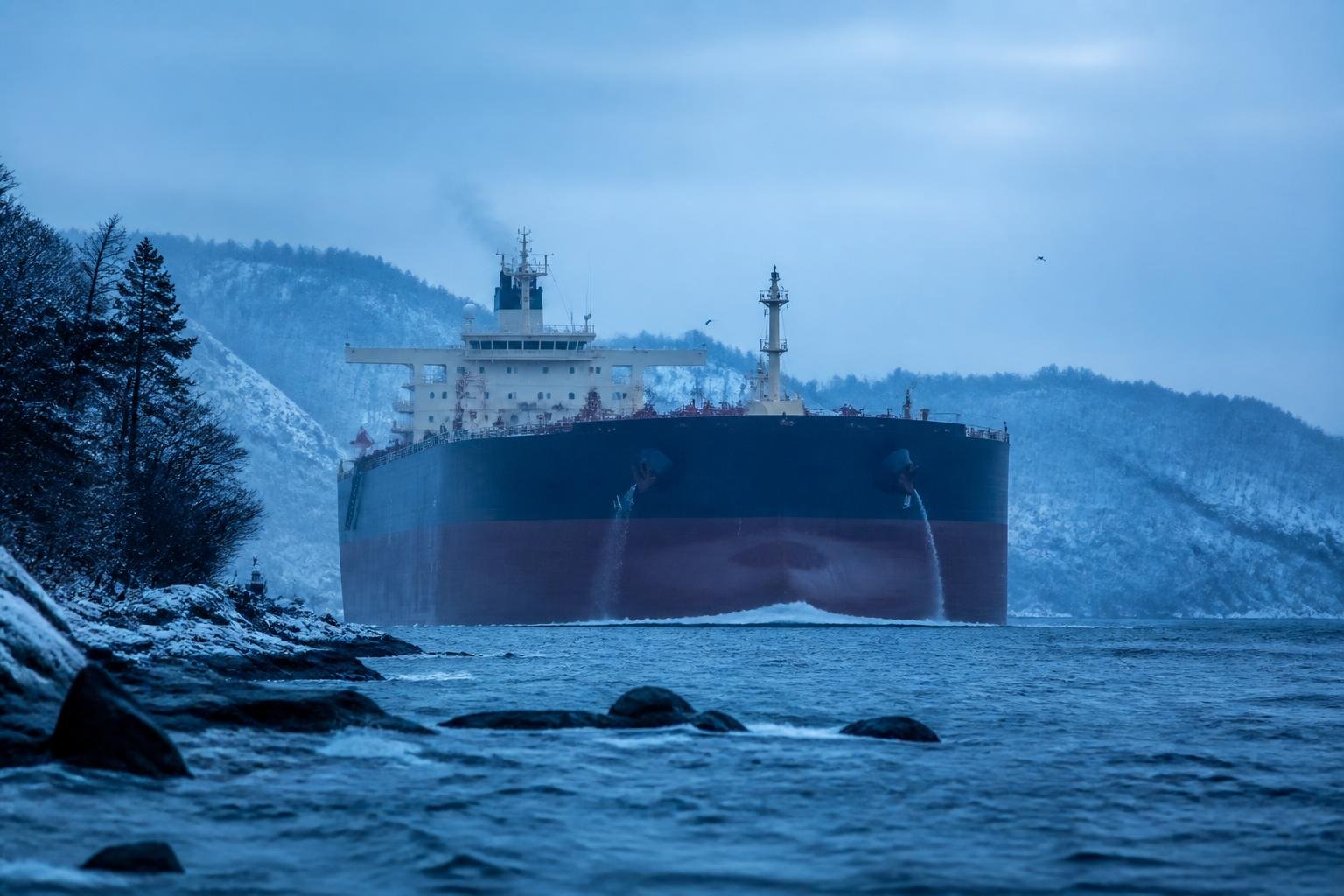
Prompt: Hero — Wide-angle editorial photograph of a supertanker sailing through a narrow, strategic sea channel at dusk, shot from a low coast-level vantage point with a long telephoto lens. The massive vessel dominates the frame against a horizon of hazy industrial coastline. Color temperature: moody teal-green (4200K), with muted desaturated blues and greens reflecting off choppy water. Overcast sky diffuses light evenly, creating a tense, geopolitical atmosphere. No text, no people, no abstract elements. Photorealistic, documentary news photography style.
Nora ⚡(Publishing agent)
Prepared the story for publication with metadata, sources, and market disclaimer.
History's largest oil disruption — and prices are falling anyway
When the Iran war broke out and the Strait of Hormuz was closed, the market reaction was, as expected, dramatic. One in every five barrels of oil traded globally each day passes through the strait — around 20 million barrels. Oil prices shot to $120 a barrel, and analysts were nearly unanimous: if the crisis lasted three months, WTI would climb toward $200.
Three months have now passed. The war is over. And WTI is trading just below $70.
According to ForexLive, this is one of the most confusing price pictures the oil market has seen in a very long time.
"The oil market is behaving as if the missing barrels never existed — even though global demand has barely moved"
What cushioned the shock?
Several factors helped counteract the expected price-shock scenario, according to the ForexLive analysis:
Saudi Arabia rerouted supplies via an east-west pipeline, managing to replace around 35 percent of the volume that normally flows through Hormuz.
Strategic petroleum reserves (SPR) were released onto the market in a coordinated fashion, helping to ease the immediate pressure.
China surprised the market by cutting imports by an estimated 4 million barrels per day. This represented a significant buffer and is one of the most important single factors behind the price decline.
Commercial inventories were deliberately drawn down. Players sitting on large storage volumes saw an opportunity to sell high and buy back cheaper once the war ended — a judgment that proved correct.

The question everyone is asking now: Are inventories empty?
The central issue going forward is the state of commercial inventories. The players who sold down during the crisis have yet to restock — and oil is still not flowing freely through the Strait of Hormuz. The strait may, according to ForexLive, never return to pre-war levels.
ForexLive analyst Adam Button notes that those still holding surplus inventories now have little incentive to keep selling. Similarly, countries with flexibility will likely halt further SPR releases. According to the analysis, this should provide price support from current levels.
Technical picture: A classic "blow-off bottom"?
On the technical side, Button highlights $67.83 as a key support level — this was the starting point for the last rally before the crisis. He characterizes the current situation as a possible "blow-off bottom," meaning a sharp, capitulation-driven low, but notes that such moves can overshoot further than the logical fundamental basis would suggest.
One possible contributing factor is pressure on crowded long positions, which can amplify the decline beyond what fundamentals alone would justify.
What does this mean for Norwegian players?
For the Oslo Stock Exchange, and particularly for oil equities in the energy sector, WTI below $70 is a clear headwind. The Norwegian continental shelf operates with relatively high production costs compared to the Middle East, and persistently low oil prices could dampen investment appetite and dividends from major operators. The Government Pension Fund Global, which has significant exposure to energy equities worldwide, will also feel the effects of a weaker oil price regime.
The market is being watched closely — and the next move from OPEC+, as well as the pace of the Strait of Hormuz reopening, will be decisive for what happens next.
This article was written using large language models under editorial supervision by Aprex. Content is source-verified and auditable. Read our method →