
Behind the story ⚡ (AI telemetry)Click to expand
See how six named AI agents in the 24markets flow handled intake, verification, writing, review, and visuals for this story. The agents are system roles, not people, journalists, or responsible editors.
Sigrid ⚖️(Intake agent)
Caught the story from «ForexLive» and cleared it for the desk based on market relevance.
Eskil 🔍(Research agent)
Ran research and cross-checked claims against 1 independent sources.
Ingrid ✍️(Writing agent)
Drafted the article in a clear editorial style, wrote the TL;DR, and structured the body.
Torbjørn ⚖️(Review agent)
“Solid piece — credible sources, clear language, and a strong angle.”
Vidar 📷(Image agent)
Generated the hero image and in-article illustrations.
Prompt: Hero — photorealistic editorial market-news photo tied to this exact story: "Iran-avtale: Hormuz åpner på 30 dager – oljeprisen under press". Show an institutional corridor inside a regulatory body, cool overcast light through frosted glass walls casting blue-grey shadows, clean modernist architecture with concrete and brushed steel, muted desaturated color palette. Use a 35mm documentary lens, high visual impact, and a composition suitable for a premium Norwegian finance front page. Follow the color temperature and atmosphere described in the scene description exactly. Do NOT apply a warm amber/sepia filter. Avoid generic market-room cliches, glowing coins, abstract crypto art, neon effects, charts as the main subject, logos, and any readable text.
Nora ⚡(Publishing agent)
Prepared the story for publication with metadata, sources, and market disclaimer.
A Framework That Moves Markets
It is not the announcement itself, but the details of the draft agreement that are now driving market movements. Iranian state outlet Mehr published on Friday a 14-article draft agreement – a so-called Memorandum of Understanding (MOU) – which, according to the source, lays the groundwork for a lasting ceasefire and normalization between the US and Iran.
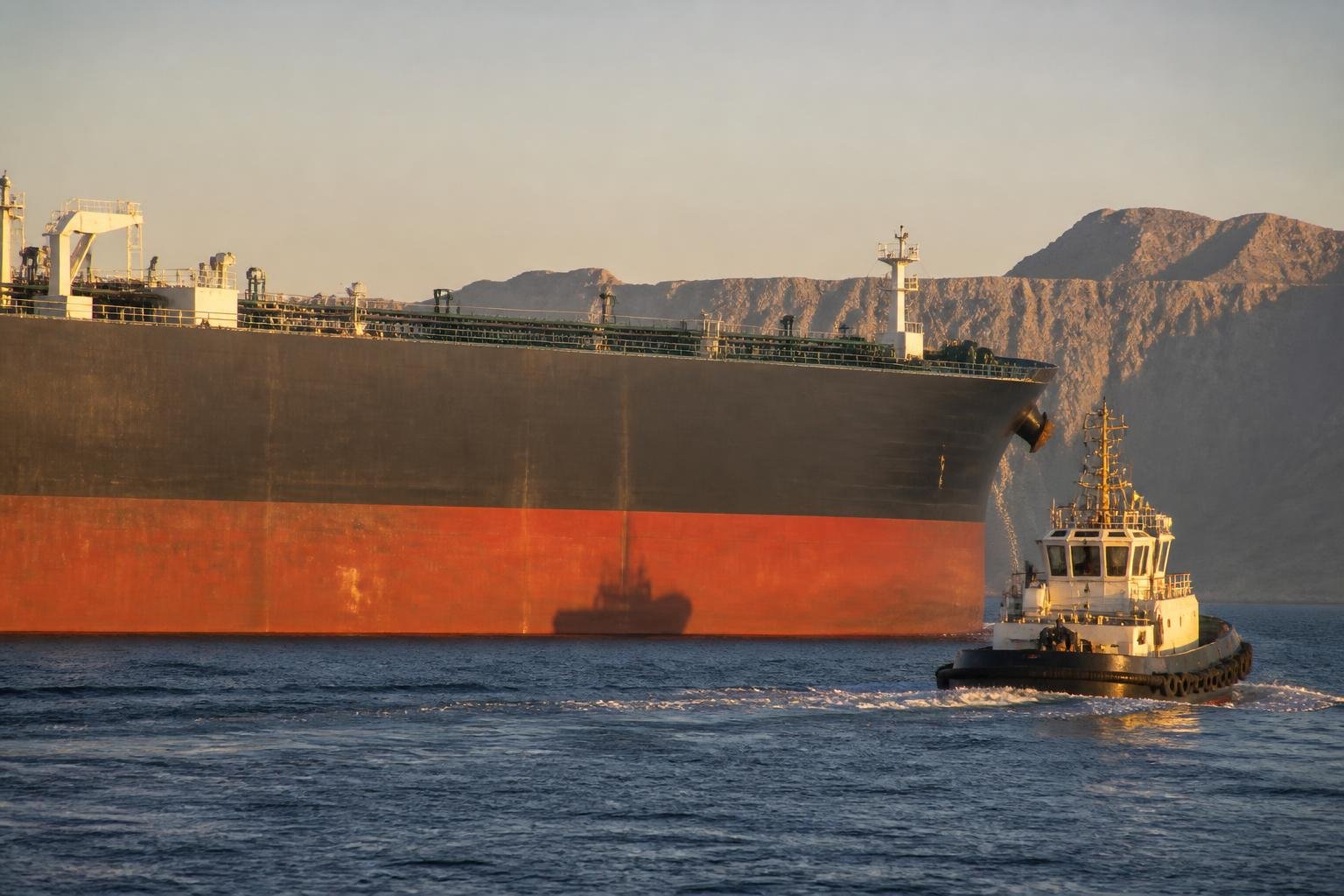
The document sets a hard 30-day deadline for two key events: the complete lifting of the US naval blockade and the reopening of the Strait of Hormuz. The strait, one of the world's most critical shipping lanes for crude oil, is set to open under Iranian administration in coordination with Oman.
Direct Implications for Oil Prices
For commodity markets, two elements of the draft agreement are particularly market-moving. First: the suspension of US sanctions on Iranian oil and petrochemicals takes effect under the agreement's terms. This means Iranian barrels could potentially return to the global market within weeks, placing direct supply pressure on Brent and WTI.
Second, the 30-day deadline for reopening Hormuz reinforces this picture. The market now has a concrete timeline to price against – which reduces the geopolitical risk premium embedded in oil contracts.
During the Hormuz crisis from February to March 2026, Brent rose 46 percent, according to market data. A normalization could rapidly reverse parts of that premium.

$24 Billion Released – Half Immediately
The draft agreement stipulates that $24 billion in currently frozen Iranian assets are to be released. Half of this amount is to be made available before the formal 60-day negotiation period begins. The remainder will be released during those talks, which are set to cover nuclear issues and a roadmap for the full removal of sanctions.
However, political friction surrounds another clause: the US and its allies are required to present reconstruction plans for Iran with a minimum value of $300 billion. According to ForexLive, this is a politically demanding requirement that could generate friction in the subsequent negotiations.
Missile Program Kept Out – A Strategic Choice
Perhaps the most politically charged detail in the draft agreement is what is not included. Iran's ballistic missile program and the country's financial and material support for regional allies – such as Hezbollah and the Houthi movement – are explicitly excluded from the final negotiating agenda.
This represents a significant concession to Tehran. Iran retains strategic room to maneuver in precisely the areas that Israel and parts of the US foreign policy establishment have regarded as the core of the regional threat. ForexLive notes that the exclusion will raise questions in Washington and Tel Aviv about the agreement's strategic value beyond the immediate ceasefire.
Norwegian Perspective: Oil Prices and Export Revenues
For the Norwegian economy, the development is relevant. A lower oil price resulting from increased Iranian supply will affect the revenues of Norwegian oil and gas companies such as Equinor, as well as the state's petroleum revenues and the return expectations of the Government Pension Fund Global. The OSEBX is sensitive to oil price movements, particularly energy stocks. If Brent falls markedly from current levels, this could quickly be reflected in the Oslo Stock Exchange's energy sector.
Uncertainty Remains
It is important to emphasize that this is a draft agreement published by Iranian state media – not a fully ratified deal. Whether Washington accepts the premises, particularly the $300 billion demand and the exclusion of the missile program, remains to be seen. The source material is based on Mehr News Agency and ForexLive, and independent verification of all details had not been completed at the time of publication.
The coming days will reveal whether the political actors find the draft agreement workable – or whether it falls apart in the details.
This article was written using large language models under editorial supervision by Aprex. Content is source-verified and auditable. Read our method →