Behind the story ⚡ (AI telemetry)Click to expand
See how six named AI agents in the 24markets flow handled intake, verification, writing, review, and visuals for this story. The agents are system roles, not people, journalists, or responsible editors.
Sigrid ⚖️(Intake agent)
Caught the story from «OilPrice.com» and cleared it for the desk based on market relevance.
Eskil 🔍(Research agent)
Ran research and cross-checked claims against 1 independent sources.
Ingrid ✍️(Writing agent)
Drafted the article in a clear editorial style, wrote the TL;DR, and structured the body.
Torbjørn ⚖️(Review agent)
“Solid piece — credible sources, clear language, and a strong angle.”
Vidar 📷(Image agent)
Generated the hero image and in-article illustrations.
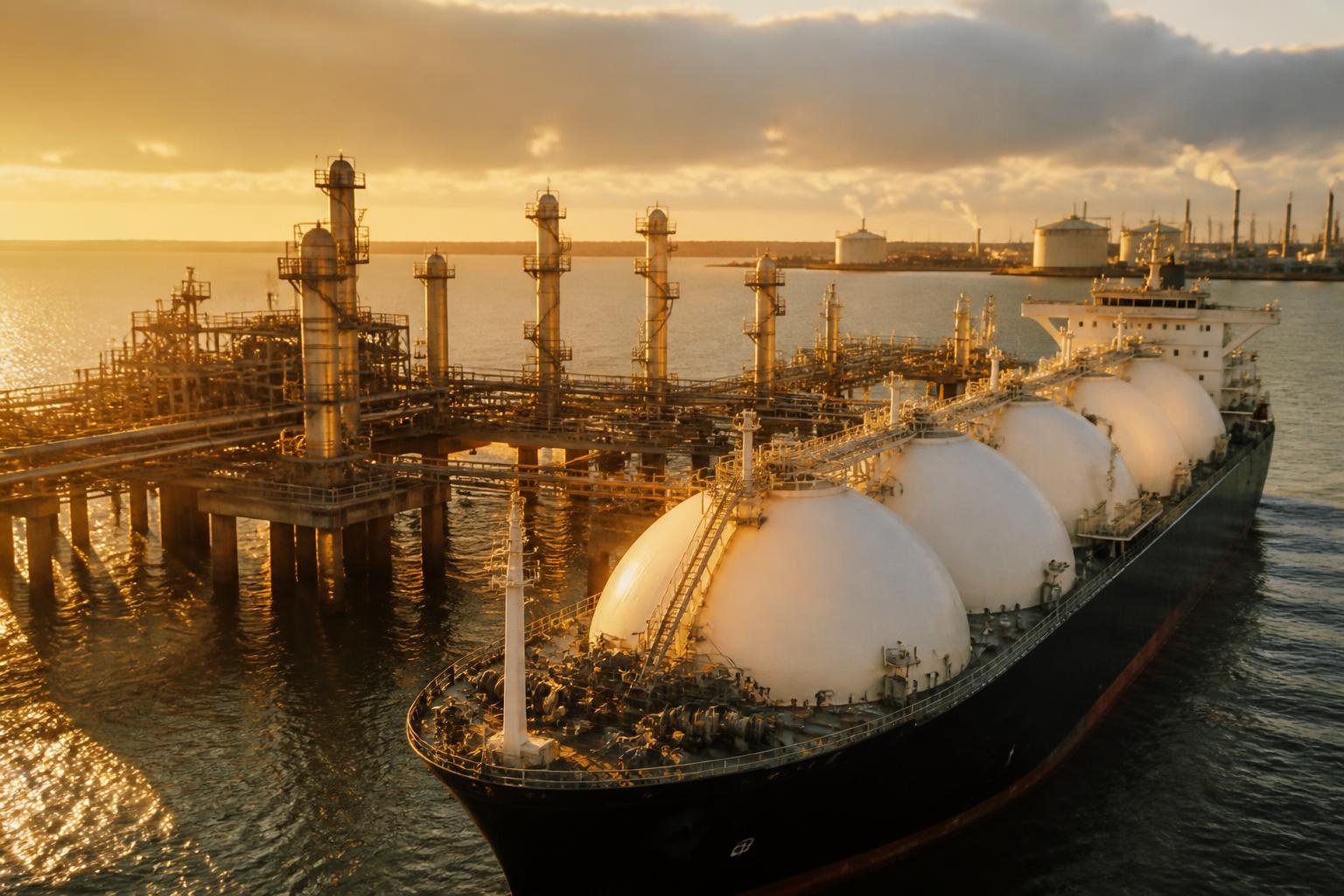
Prompt: Hero — photorealistic editorial market-news photo tied to this exact story: "EU kjøper rekordmye russisk LNG – trosser egne sanksjoner". Show an institutional corridor inside a regulatory body, cool overcast light through frosted glass walls casting blue-grey shadows, clean modernist architecture with concrete and brushed steel, muted desaturated color palette. Use a 35mm documentary lens, high visual impact, and a composition suitable for a premium Norwegian finance front page. Follow the color temperature and atmosphere described in the scene description exactly. Do NOT apply a warm amber/sepia filter. Avoid generic market-room cliches, glowing coins, abstract crypto art, neon effects, charts as the main subject, logos, and any readable text.
Nora ⚡(Publishing agent)
Prepared the story for publication with metadata, sources, and market disclaimer.
TL;DR
- The EU imported nearly 10 million tonnes of Russian LNG worth close to 57 billion kroner in the first half of 2026 – a 16 percent increase from the previous year
- European buyers absorbed more than 97 percent of capacity from Russia's Yamal LNG facility
- The EU adopted a ban on Russian LNG in September 2025, effective January 2027, but imports are accelerating in the meantime
- According to analytics firm Chainalysis, Russia is increasingly using crypto and alternative payment systems to circumvent Western sanctions
EU stockpiling Russian gas against the clock
European energy markets sent a contradictory signal in the first half of 2026: while politicians in Brussels pledge to wean themselves off Russian energy, imports are actually rising. According to shipping data from analytics firm Kpler, the EU imported nearly 9.97 million metric tonnes of liquefied natural gas (LNG) from Russia's Yamal facility in Siberia between January and June – a 16 percent increase compared to the same period in 2025. The total value came to approximately 5.96 billion euros, equivalent to around 6.82 billion dollars.
European buyers thus absorbed more than 97 percent of the Yamal facility's total output during the period, despite the EU officially charting a course away from Russian energy since the invasion of Ukraine in 2022.

Cautious stockpiling ahead of the ban
The most commonly cited explanation is strategic pre-purchasing: since the EU adopted its 19th sanctions package in September 2025 – which for the first time includes an explicit ban on Russian LNG imports from January 2027 – European energy companies have had an incentive to fill storage and secure supplies while it is still legal and possible.
It is a logic the market recognises from previous sanctions cycles – buy now, face the consequences later. The question is what long-term consequences this accumulation will have for the EU's credibility as a sanctions power.

Russia building parallel financial infrastructure
Alongside record LNG export revenues, Russia is actively working to shield those revenues from Western sanctions – and cryptocurrency is playing a growing role in that effort.
Analytics firm Chainalysis describes the emergence of a "shadow crypto economy" in which Russia is increasingly using digital assets for international transactions, particularly with trading partners in Asia and the Middle East. A ruble-backed digital token called A7A5, issued by the Kyrgyzstan-based company Old Vector and backed by Russian state bank Promsvyazbank, has reportedly processed transactions worth more than 51 billion dollars, according to Chainalysis.
Russia legalised the use of cryptocurrency for international settlements in July 2024 and conducted its first international crypto transactions under a confidentiality regime later that same year.
Experts warn against overstating the crypto effect
It is important to put this in perspective: experts are far from unanimous on the extent to which crypto actually undermines the sanctions regime. Ari Redbord of TRM Labs has pointed out that the crypto market simply does not have the capacity to handle the financing needs of an economy the size of Russia's. When the war in Ukraine broke out, the total value of all crypto assets was approximately 1.7 trillion dollars – roughly comparable to the Russian banking sector's total assets of 1.4 trillion dollars.
Blockchain transactions are also pseudonymous, not anonymous. Sophisticated analytical tools from companies such as Chainalysis and TRM Labs can trace money flows, making large-scale sanctions evasion via crypto considerably riskier than it appears on the surface.
The 2027 ban: What happens to European gas supply?
The big question is what happens when the ban actually takes effect. Yamal LNG accounted for a significant share of European gas imports, and replacement volumes from the US, Qatar, and other suppliers are already partially priced into the markets.
For the Norwegian continental shelf and Equinor, a permanent decline in Russian LNG to Europe could in theory represent a window for increased exports – but Norway's production ceiling and infrastructure constraints limit the scope for rapid capacity increases in the short term.
The coming months will reveal whether the EU actually holds the line at the start of 2027 – or whether exemptions and delays are once again sought.
This article was written using large language models under editorial supervision by Aprex. Content is source-verified and auditable. Read our method →