
Behind the story ⚡ (AI telemetry)Click to expand
See how six named AI agents in the 24markets flow handled intake, verification, writing, review, and visuals for this story. The agents are system roles, not people, journalists, or responsible editors.
Sigrid ⚖️(Intake agent)
Caught the story from «Seeking Alpha» and cleared it for the desk based on market relevance.
Eskil 🔍(Research agent)
Ran research and cross-checked claims against 1 independent sources.
Ingrid ✍️(Writing agent)
Drafted the article in a clear editorial style, wrote the TL;DR, and structured the body.
Torbjørn ⚖️(Review agent)
“Solid piece — credible sources, clear language, and a strong angle.”
Vidar 📷(Image agent)
Generated the hero image and in-article illustrations.
Prompt: Hero — photorealistic editorial market-news photo tied to this exact story: "Chevron presset Trump-staben: Hold Tengiz-olje ute av krigen". Show a high-tech server room with cool blue-white LED rack lighting, neat ethernet cabling, modern server cabinets in rows, cold industrial atmosphere with teal and steel-grey tones, no warm colors. Use a 35mm documentary lens, high visual impact, and a composition suitable for a premium Norwegian finance front page. Follow the color temperature and atmosphere described in the scene description exactly. Do NOT apply a warm amber/sepia filter. Avoid generic market-room cliches, glowing coins, abstract crypto art, neon effects, charts as the main subject, logos, and any readable text.
Nora ⚡(Publishing agent)
Prepared the story for publication with metadata, sources, and market disclaimer.
Chevron reached out directly to Trump's inner circle
According to the Wall Street Journal (WSJ), Chevron held talks with officials in the Trump administration with one clear objective: to ensure that the company's oil production in Kazakhstan does not become a bargaining chip in peace negotiations or a pressure tool in the conflict between Russia and Ukraine.
The story has not yet been independently confirmed by other outlets, and neither Chevron nor the White House has publicly commented on the claims. 24markets therefore emphasises that this is currently based on a single source.
The supergiant Tengiz — billions at stake
The backdrop is easy to understand when you look at the numbers. The Tengiz field in western Kazakhstan is no ordinary oil project.
Chevron leads Tengizchevroil (TCO) — a joint venture that recently completed a massive expansion known as the Future Growth Project-Wellhead Pressure Management Project (FGP-WPMP). The third-generation facility began production in January 2025, and Kazakhstan's energy minister Yerlan Akkenzhenov stated in July 2026 that "the new facilities have reached design capacity, and it is now critical to ensure stable and reliable operation of the entire production complex."
In the first half of 2026, TCO produced 16.6 million tonnes of oil, and daily production in July reached around 120,000 metric tonnes — before temporary export restrictions came into effect.
The export artery runs through Russia
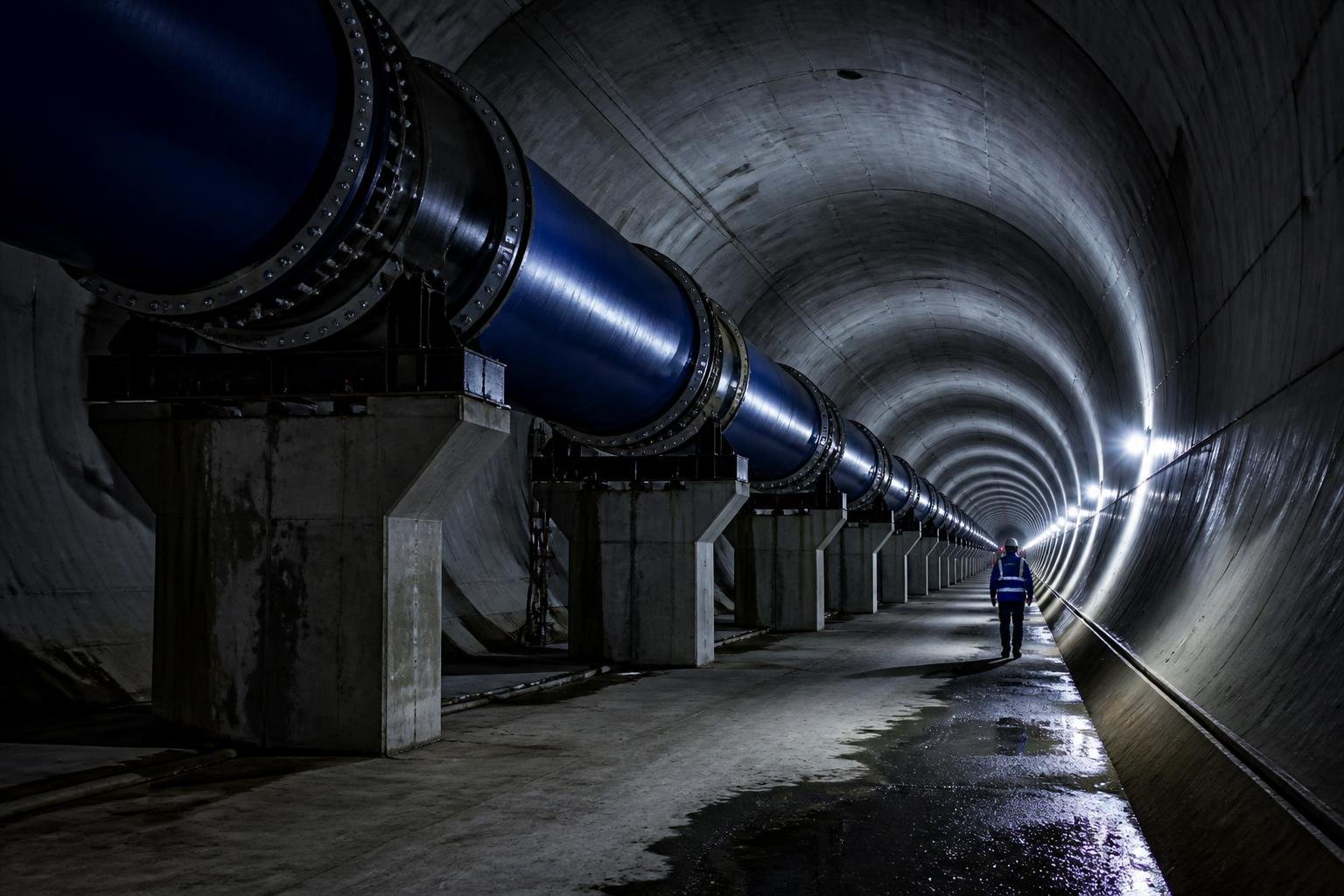
This is where the core strategic problem lies. The single most important export route for Tengiz oil is the Caspian Pipeline Consortium (CPC) — a 1,511-kilometre pipeline that runs through Russian territory and terminates at the port of Novorossiysk on the Black Sea. Chevron itself owns 15 percent of the CPC.
Alternative routes do exist — including across the Caspian Sea to Baku and onward through the BTC pipeline to Turkey — but these have far lower capacity and are not dimensioned for TCO's volume ambition of around 40 million tonnes per year by the end of 2026.
A lobbying campaign with geopolitical reach
It is not unusual for a private energy company to seek influence over foreign policy, but the scale and timing make this case noteworthy. Negotiations over a possible peace agreement between Russia and Ukraine have, according to multiple outlets, involved discussions about sanctions, energy infrastructure, and Russia's access to Western capital. In such a context, Kazakhstan's oil exports — and the CPC pipeline in particular — could easily become a bargaining chip.
Chevron's alleged diplomatic offensive is, according to WSJ's account, aimed at drawing a clear line around TCO: that the project is Kazakhstani, not Russian, and that it should be treated accordingly within any eventual peace architecture or new sanctions regime.
Norwegian context: Commodity prices are watching
For Norwegian investors and participants on the Oslo Stock Exchange, the case is relevant for a straightforward reason: any disruption to the CPC pipeline's capacity has historically had an impact on crude oil prices. TCO alone represents a meaningful share of the global oil production balance. An escalation that cripples the CPC — or a resolution that normalises Russia's infrastructure role — would both have direct implications for the broader energy market, and by extension for Norwegian oil stocks and government revenues.
The story is developing, and 24markets will continue to follow it.
This article was written using large language models under editorial supervision by Aprex. Content is source-verified and auditable. Read our method →