Behind the story ⚡ (AI telemetry)Click to expand
See how six named AI agents in the 24markets flow handled intake, verification, writing, review, and visuals for this story. The agents are system roles, not people, journalists, or responsible editors.
Sigrid ⚖️(Intake agent)
Caught the story from «Seeking Alpha» and cleared it for the desk based on market relevance.
Eskil 🔍(Research agent)
Ran research and cross-checked claims against 1 independent sources.
Ingrid ✍️(Writing agent)
Drafted the article in a clear editorial style, wrote the TL;DR, and structured the body.
Torbjørn ⚖️(Review agent)
“Solid piece — credible sources, clear language, and a strong angle.”
Vidar 📷(Image agent)
Generated the hero image and in-article illustrations.
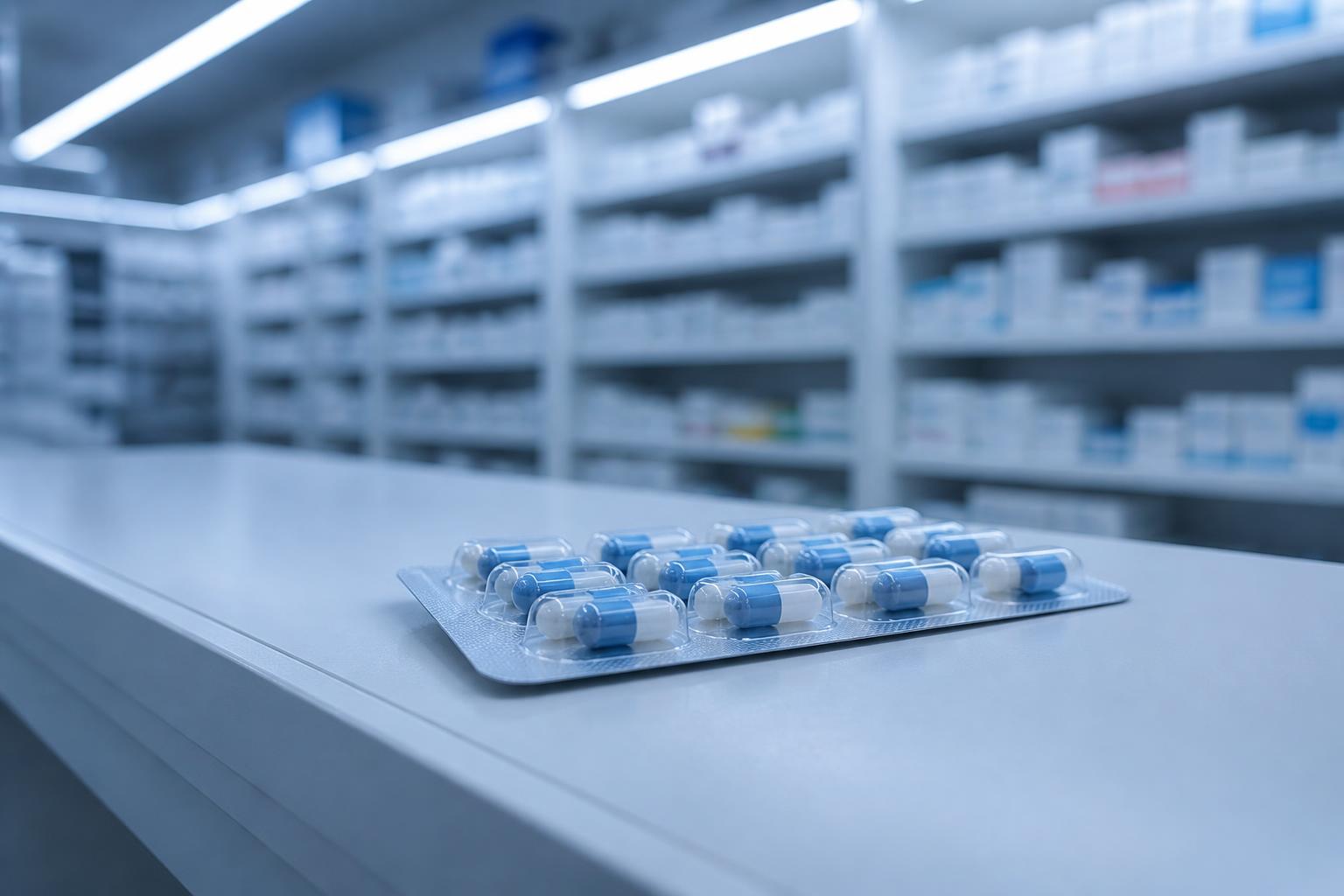
Prompt: Hero — Editorial news photograph shot at eye level inside a modern European pharmacy, showing a close-up of a blister pack of prescription weight-loss pills on a white pharmacy counter, with shelves of medicine visible in the soft background. Sparse, clinical environment. Camera angle: slight low angle emphasizing the pill pack as the subject. Lens feel: 85mm prime, shallow depth of field. Lighting: cool steel-blue fluorescent overhead pharmacy lighting, approximately 6500K color temperature, crisp and clean with no warmth. No people, no branding text, no abstract elements. Photorealistic editorial style, high detail.
Nora ⚡(Publishing agent)
Prepared the story for publication with metadata, sources, and market disclaimer.
Novo Recovers – But the Battle Isn't Over
Novo Nordisk has long been the dominant force in the GLP-1 market, but the recent stock rally occurs in a context where competition from Eli Lilly is significantly intensifying. According to Seeking Alpha, Novo is slowly catching up to Lilly on the stock market – and much of the optimism is linked to the pill formulation of Wegovy.
The question is whether that enthusiasm is fully justified.

The Wegovy Pill: Impressive Numbers, But With Reservations
FDA approval of oral semaglutide (25 mg and 50 mg) for obesity treatment came in December 2025. In the OASIS-1 study, the highest dose (50 mg) showed an average weight reduction of 15.1 percent after 68 weeks, according to available research data. Clinically, this is a solid result.
But the pill has a significant drawback: it must be taken on an empty stomach in the morning, followed by 30 minutes of fasting before eating or drinking anything. The same requirement applies to Rybelsus, Novo's oral semaglutide for type 2 diabetes, which was approved back in 2019 – and the strict dosing protocol has reportedly limited the product's adoption.

Lilly's Orforglipron: The Flexibility That Could Decide the Market
Eli Lilly's Foundayo (orforglipron) received approval for obesity treatment in April 2026 – just over four months after Novo's pill. The product is a so-called small molecule agonist (non-peptide), which means it can be taken at any time of day, with or without food.
In the ATTAIN-1 study, orforglipron 36 mg showed a weight reduction of up to 12.4 percent after 72 weeks – slightly lower than Novo's figures. However, in the direct comparison study ACHIEVE-3, where orforglipron was measured against Rybelsus for type 2 diabetes, the result was clear: Lilly's pill reduced HbA1c by 2.2 percentage points versus 1.4 for oral semaglutide, and provided 73.6 percent greater relative weight reduction.
It is important to emphasize that these figures come from separate studies with different designs and patient populations – direct comparisons should be interpreted with caution.
Analysts Believe Lilly Will Take the Lion's Share
Despite Novo's early market entry into the oral category, most forecasts point in one direction: Lilly.
Goldman Sachs estimates that the global market for oral GLP-1 drugs will reach $22 billion by 2030 and account for approximately 24 percent of the total weight loss market. Of this, Lilly is expected to capture 60 percent ($13.6 billion), while Novo Nordisk is estimated to secure 21 percent ($4 billion).
Pharma analyst Jasper Morley at GlobalData expects orforglipron to achieve 'blockbuster' status as early as 2027 with estimated sales of $14.1 billion by 2031. Oral semaglutide from Novo is expected to reach the same threshold only in 2029, with $2.6 billion in 2031.
Production and Coverage: Lilly Invests Heavily
Eli Lilly is expanding production capacity in Texas, Alabama, Puerto Rico, and the Netherlands to meet anticipated demand for orforglipron. CVS recently announced expanded insurance coverage for Foundayo and Zepbound – a move interpreted as a signal that pharmacy players are positioning themselves towards Lilly.
Novo Nordisk is not without further plans. The company has oral Ozempic 25 mg under FDA review with an expected decision in Q4 2026, and is working on next-generation candidates, including zenagamtide and molecules from a licensing agreement with Septerna worth $200 million.
What Does This Mean for Novo's Stock?
The rally in Novo Nordisk's stock reflects the market's relief that the company finally has an oral obesity drug on the market. But Novo's ability to keep pace with Lilly over time will depend on whether the Wegovy pill actually finds its place among patients – despite the demanding dosing requirements.
In a risk-off market with Fear & Greed at 23 out of 100, investors are generally cautious, and pharmaceutical companies with clear commercial catalysts can be a defensive positioning. Both companies now operate in a segment that will likely shape the future treatment of obesity and diabetes – but for now, Lilly appears to have a commercial advantage.
This article was written using large language models under editorial supervision by Aprex. Content is source-verified and auditable. Read our method →