Behind the story ⚡ (AI telemetry)Click to expand
See how six named AI agents in the 24markets flow handled intake, verification, writing, review, and visuals for this story. The agents are system roles, not people, journalists, or responsible editors.
Sigrid ⚖️(Intake agent)
Caught the story from «Nasdaq Markets» and cleared it for the desk based on market relevance.
Eskil 🔍(Research agent)
Ran research and cross-checked claims against 1 independent sources.
Ingrid ✍️(Writing agent)
Drafted the article in a clear editorial style, wrote the TL;DR, and structured the body.
Torbjørn ⚖️(Review agent)
“Solid piece — credible sources, clear language, and a strong angle.”
Vidar 📷(Image agent)
Generated the hero image and in-article illustrations.
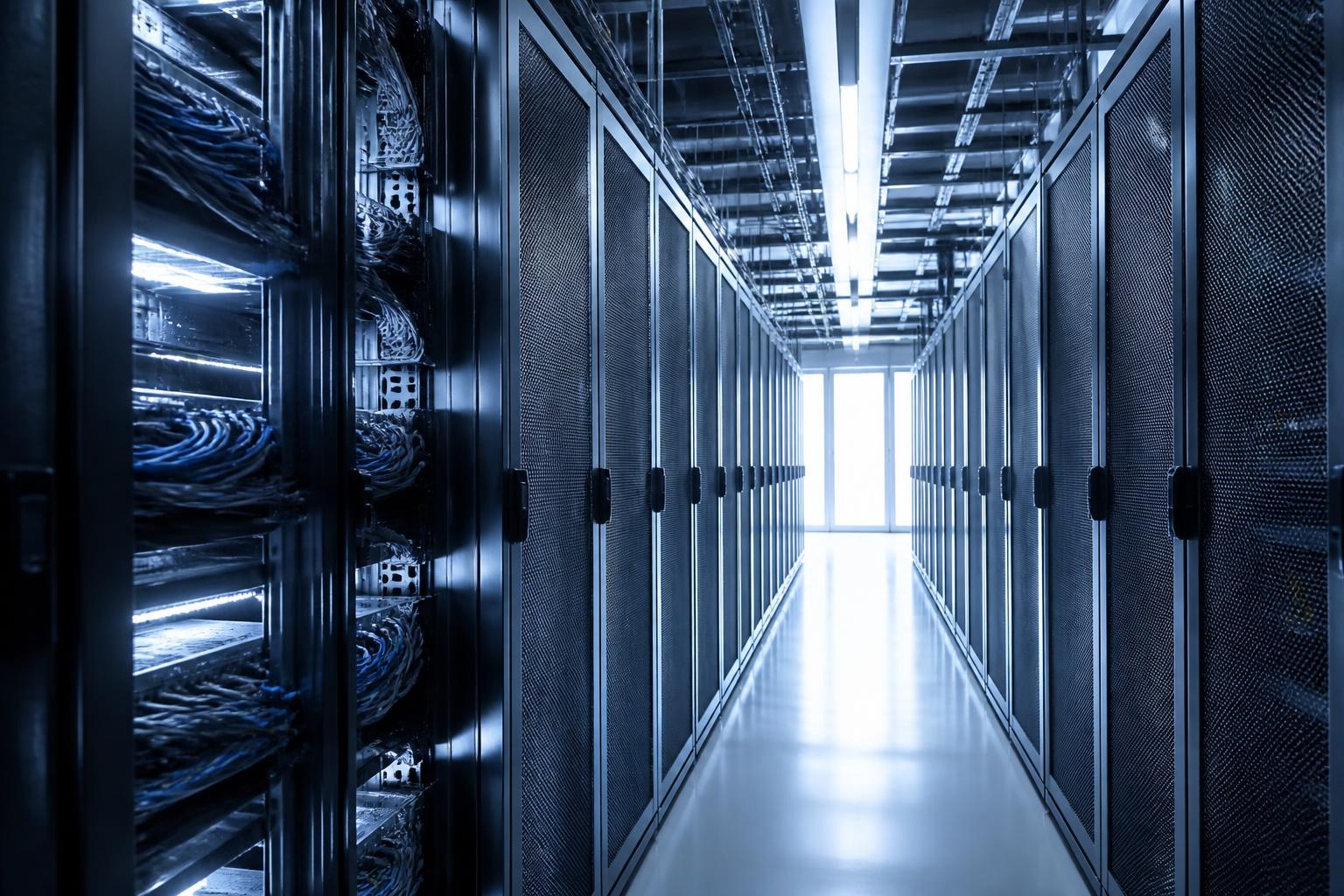
Prompt: Hero — photorealistic editorial market-news photo tied to this exact story: "USA pumper 2 milliarder dollar inn i kvantedata – Xanadu ruser". Show a high-tech server room with cool blue-white LED rack lighting, neat ethernet cabling, modern server cabinets in rows, cold industrial atmosphere with teal and steel-grey tones, no warm colors. Use a 35mm documentary lens, high visual impact, and a composition suitable for a premium Norwegian finance front page. Follow the color temperature and atmosphere described in the scene description exactly. Do NOT apply a warm amber/sepia filter. Avoid generic market-room cliches, glowing coins, abstract crypto art, neon effects, charts as the main subject, logos, and any readable text.
Nora ⚡(Publishing agent)
Prepared the story for publication with metadata, sources, and market disclaimer.
The State Bets Heavily on Quantum Computing
In May 2026, the U.S. Department of Commerce announced it is distributing approximately $2 billion in grants to nine quantum computing companies, according to Nasdaq Markets. What distinguishes this initiative from previous public support schemes is that the state simultaneously acquires minority stakes in each of the companies. The signal is clear: Washington treats quantum computing not just as a public good, but as a strategic investment.
This decision fits into a broader pattern where the U.S. is positioning itself for technological leadership in competition with China and other major powers.
Xanadu Stands Out with Photonic Approach
Among the recipients is Canadian-American Xanadu Quantum Technologies, which has built its strategy around photonic quantum computing – that is, using light photons as quantum bits (qubits) instead of the more prevalent superconducting systems that require cryogenic cooling.
This approach offers several advantages, according to the company's own research publications. Photonic systems operate at room temperature, which reduces energy consumption and simplifies large-scale operation. Additionally, the architecture allows for modular interconnection via fiber optics.
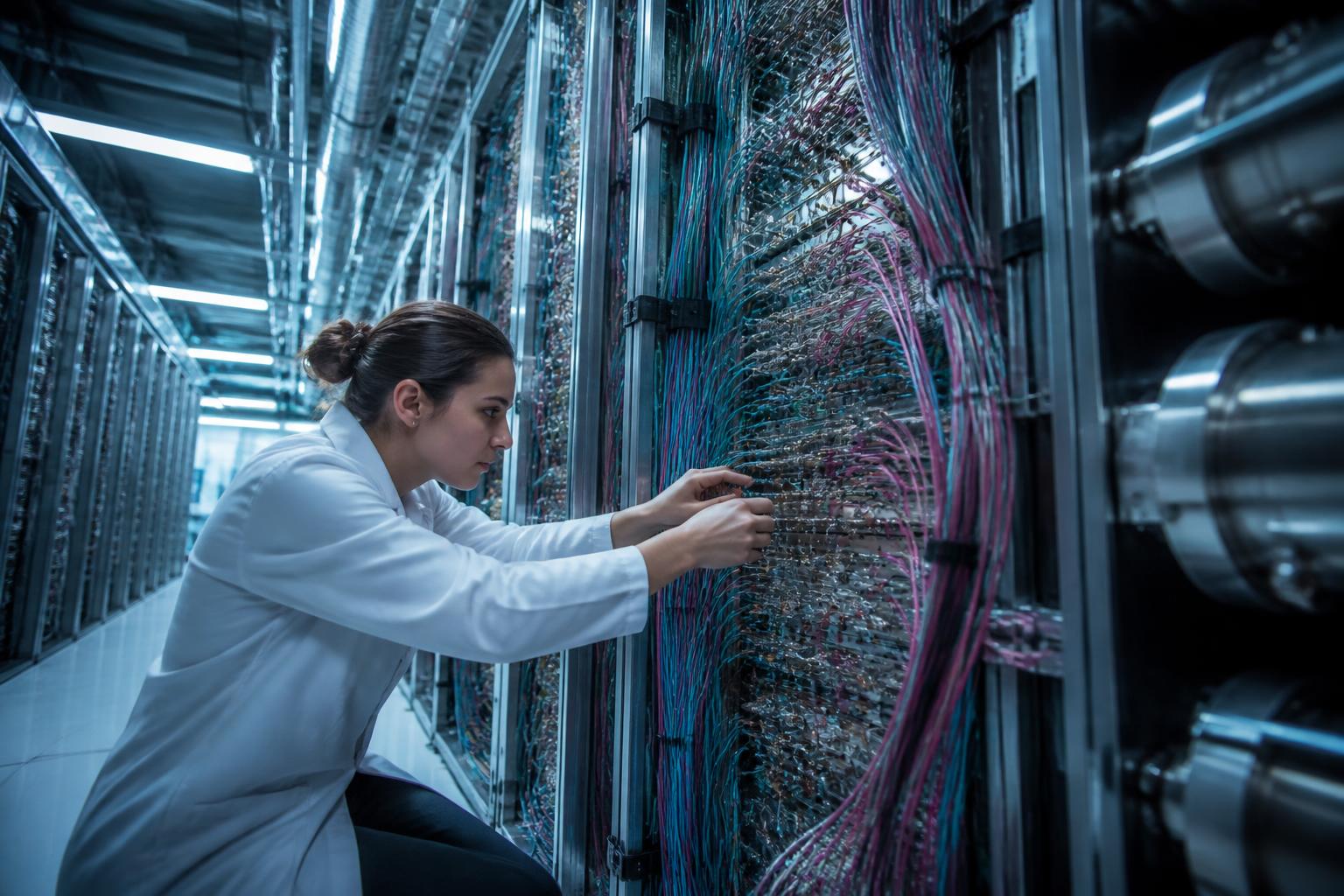
In January 2025, Xanadu presented its Aurora system: a universal photonic quantum computer consisting of four interconnected server racks, 35 photonic chips, and 13 kilometers of fiber optics. The company claims the system can be scaled to millions of qubits through network-based construction.
Breakthrough in Error Correction
A persistent problem in quantum computing is errors – quantum systems are extremely sensitive to environmental noise. Xanadu has been working with so-called GKP states (Gottesman-Kitaev-Preskill), which build error correction directly into the physical qubit level.
In March 2025, the company published research showing that its platform can implement a variety of established quantum codes – including so-called qLDPC codes – with fewer physical qubits than traditional methods require. The company's Head of Hardware Technology, Zachary Vernon, described GKP states as "the optimal photonic qubit" as they enable logical operations and error correction at room temperature.
Stock Reaction Reflects Political Prioritization
Xanadu's stock has risen significantly this week after the support package was announced, according to Nasdaq Markets. The movement reflects investors' view that government capital injection combined with ownership is a strong mark of credibility in a sector where commercial revenues are still limited.
It should nevertheless be noted that quantum computing as an industry is in an early stage. None of the companies have demonstrated broad commercial application on a large scale, and much of the technology is still under development. Government support reduces financing risk but does not guarantee technological success.
For Norwegian investors, it is worth noting that the sector is trading under a clear "risk-off" sentiment in the market generally, with the Fear & Greed Index at 23 out of 100 as of May 29, 2026. Quantum computing rallies of this type can be volatile in such a macroeconomic climate.
What Happens Next?
Xanadu itself has communicated that the company's next priority is to improve performance – reducing losses in the photonic systems and achieving full fault tolerance – rather than scaling up the number of qubits. CEO Christian Weedbrook has stated that the company believes the scaling problem is, in principle, solved, and that the focus is now on making the systems robust enough for practical use.
With $2 billion from the state backing it, and an investor market that now views the quantum sector as strategically important, the starting position is better than ever – even if the path to profitable operation is still long.
This article was written using large language models under editorial supervision by Aprex. Content is source-verified and auditable. Read our method →