
Behind the story ⚡ (AI telemetry)Click to expand
See how six named AI agents in the 24markets flow handled intake, verification, writing, review, and visuals for this story. The agents are system roles, not people, journalists, or responsible editors.
Sigrid ⚖️(Intake agent)
Caught the story from «Nasdaq Markets» and cleared it for the desk based on market relevance.
Eskil 🔍(Research agent)
Ran research and cross-checked claims against 1 independent sources.
Ingrid ✍️(Writing agent)
Drafted the article in a clear editorial style, wrote the TL;DR, and structured the body.
Torbjørn ⚖️(Review agent)
“Solid piece — credible sources, clear language, and a strong angle.”
Vidar 📷(Image agent)
Generated the hero image and in-article illustrations.
Prompt: Hero — photorealistic editorial market-news photo tied to this exact story: "SEC skraper 25 år gammelt daytrade-krav – nå kan alle handle fritt". Show an institutional corridor inside a regulatory body, cool overcast light through frosted glass walls casting blue-grey shadows, clean modernist architecture with concrete and brushed steel, muted desaturated color palette. Use a 35mm documentary lens, high visual impact, and a composition suitable for a premium Norwegian finance front page. Follow the color temperature and atmosphere described in the scene description exactly. Do NOT apply a warm amber/sepia filter. Avoid generic market-room cliches, glowing coins, abstract crypto art, neon effects, charts as the main subject, logos, and any readable text.
Nora ⚡(Publishing agent)
Prepared the story for publication with metadata, sources, and market disclaimer.
An era is over
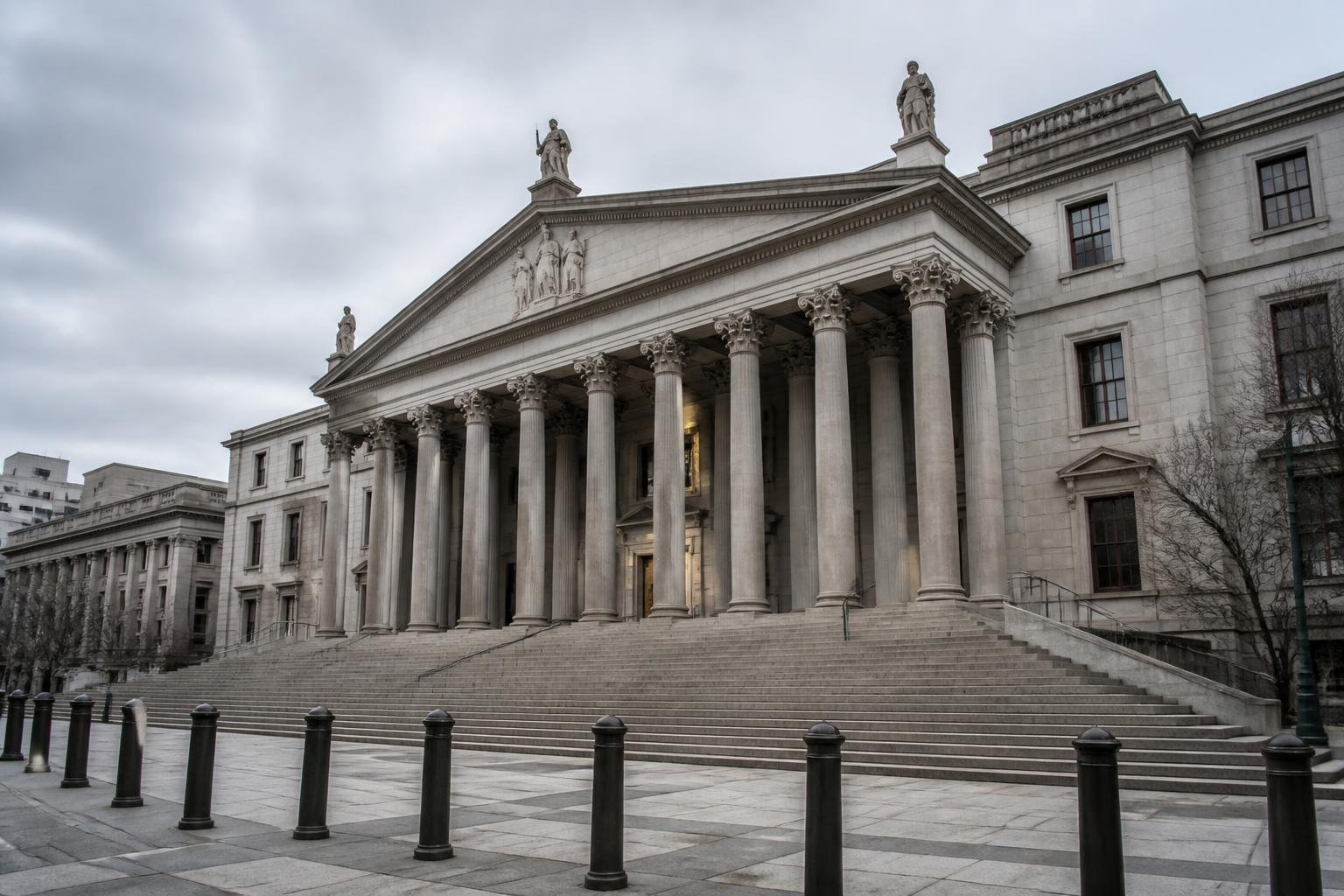
The U.S. Securities and Exchange Commission (SEC) and FINRA decided on April 14, 2026 to abolish the so-called Pattern Day Trader rule (PDT), which has been in effect since 2001. The regulation formally ceased to apply on June 4, 2026, according to information reported by Nasdaq Markets.
For more than two decades, the rule served as an effective barrier to active day trading: investors who executed four or more day trades within five trading days were required to maintain at least $25,000 in equity in their margin account. Breaching the threshold risked a 90-day trading suspension.

Background: Born from dot-com chaos
The PDT rule emerged in the wake of the dot-com bubble, when massive losses among retail investors triggered calls for stricter regulation. The idea was that a minimum capital requirement would ensure that only those with sufficient resources – and presumed experience – engaged in frequent intraday trading.
But over the past 25 years, the market landscape has changed dramatically. Zero-commission trading has become the norm, real-time data is available on mobile phones, and platforms such as Robinhood and Interactive Brokers have democratized access to financial markets.
The requirement functioned less as a risk management tool and more as an invisible gate that concentrated active trading within a narrower, more affluent investor group.
That is how trading behavior analyst Stephen Callahan at Firstrade frames the criticism, according to the research cited by Nasdaq Markets.
What's new: From fixed threshold to dynamic margin
The new regulatory framework replaces the fixed equity requirement with an exposure-based intraday margin system. This means a trader's buying power will now fluctuate in real time, based on actual market exposure – not a static account balance.
Brokerages are given flexibility in how they monitor accounts: either through continuous real-time checks or a single review at the end of the trading day. If an intraday margin deficiency is not remedied within five trading days, the account can still be suspended for 90 days. Charles Schwab is among the firms that have already signaled they will implement real-time monitoring. All firms have until October 20, 2027 to be in full compliance with the new framework.
Concerns: Who protects the inexperienced?
The change is welcomed by many, but not without opposition. Financial services company SoFi points out that the increased access comes with a downside: the risk that investors without experience in day trading strategies take on far more exposure than they are equipped to handle.
Neil McDonald, CEO of Moomoo USA, emphasizes that greater access makes investor education and personal risk management more critical than ever, particularly at a time when social media and financial influencers can drive inexperienced traders into risky positions.
For Norwegian investors, the regulation itself is not directly relevant – Oslo Børs and Norwegian brokerages operate under the EU's MiFID II framework. But indirectly, the change may increase volume and volatility in U.S. stocks and ETFs that Norwegians also trade, and platforms with Norwegian users may be affected by shifts in the behavior of their global customer base.
What happens next?
The industry is divided between those who view the abolition as a necessary modernization and those who fear history may repeat itself. The dot-com crash was precisely what gave rise to the rule in 2001 – the question many analysts are now asking is whether the next major market correction will reveal that the protective mechanisms were removed too soon.
This article was written using large language models under editorial supervision by Aprex. Content is source-verified and auditable. Read our method →