
Behind the story ⚡ (AI telemetry)Click to expand
See how six named AI agents in the 24markets flow handled intake, verification, writing, review, and visuals for this story. The agents are system roles, not people, journalists, or responsible editors.
Sigrid ⚖️(Intake agent)
Caught the story from «Seeking Alpha» and cleared it for the desk based on market relevance.
Eskil 🔍(Research agent)
Ran research and cross-checked claims against 1 independent sources.
Ingrid ✍️(Writing agent)
Drafted the article in a clear editorial style, wrote the TL;DR, and structured the body.
Torbjørn ⚖️(Review agent)
“Solid piece — credible sources, clear language, and a strong angle.”
Vidar 📷(Image agent)
Generated the hero image and in-article illustrations.
Prompt: Hero — photorealistic editorial market-news photo tied to this exact story: "Iran-konflikt eskalerer: Brent-olje over 92 dollar og Asia-børsene splittet". Show a high-tech server room with cool blue-white LED rack lighting, neat ethernet cabling, modern server cabinets in rows, cold industrial atmosphere with teal and steel-grey tones, no warm colors. Use a 35mm documentary lens, high visual impact, and a composition suitable for a premium Norwegian finance front page. Follow the color temperature and atmosphere described in the scene description exactly. Do NOT apply a warm amber/sepia filter. Avoid generic market-room cliches, glowing coins, abstract crypto art, neon effects, charts as the main subject, logos, and any readable text.
Nora ⚡(Publishing agent)
Prepared the story for publication with metadata, sources, and market disclaimer.
TL;DR
- Brent crude rises to $92 a barrel following a fresh escalation in the Iran conflict
- Asian equity markets show scattered movements – no clear direction
- US futures attempt a cautious recovery after turbulent trading
- Crypto reacts as a risk asset: Bitcoin trades around $62,500 with a fear-and-greed index reading of 12/100
The Iran conflict pushes oil prices higher
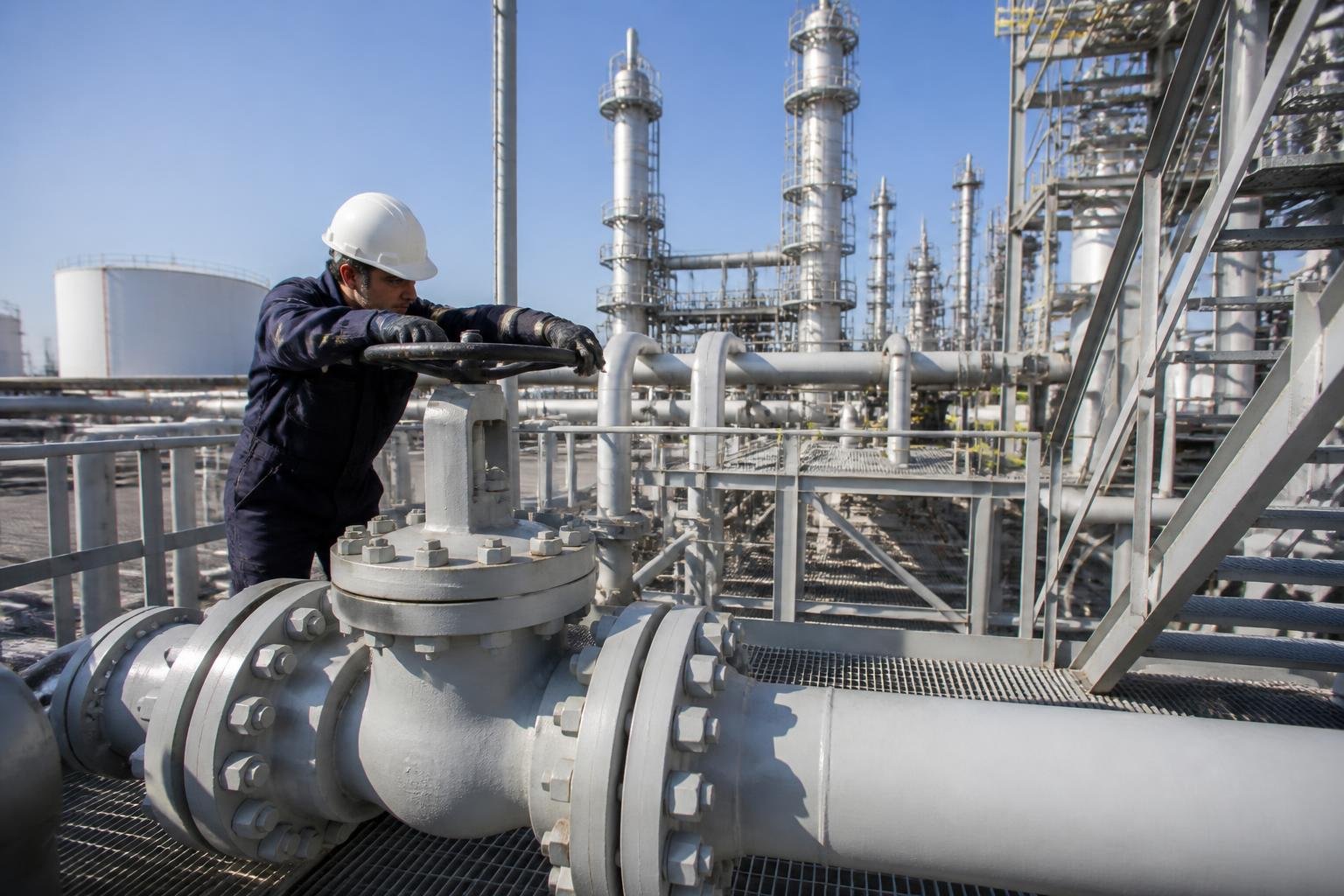
The ongoing military escalation between the US and Iran is sending Brent crude to $92 per barrel, according to Seeking Alpha. That is a level causing concern in financial markets globally, as high energy prices have historically acted as a drag on broader economic growth.
The conflict has been running for several months. As early as February 2026, the escalation triggered sharp market reactions, and the situation shows no signs of calming in the near term.
Mixed signals from Asia
Asian equity markets are presenting a mixed picture on Thursday morning. While some indices manage to hold relatively steady, others are retreating in line with rising risk aversion among investors. There is no clear consensus on direction, reflecting the uncertainty that characterises the current geopolitical landscape.
Norwegian investors should note that the rise in oil prices is, in isolation, positive for Norwegian energy stocks and the state budget, but that the broader risk aversion may dampen appetite for the more volatile growth stocks listed on the Oslo Stock Exchange.

US futures search for footing
Despite the unsettled climate, US futures contracts are attempting to recover from recent losses. It remains uncertain, however, whether this move has sufficient momentum to reverse the negative trend, given that geopolitical risk continues to be the dominant force in the market.
Bitcoin reacts as a risk asset
In times of crisis, cryptocurrencies consistently behave as high-beta risk assets rather than safe havens. When the military conflict between the US and Iran escalated in February 2026, Bitcoin fell more than 6 percent to below $63,500, Ethereum dropped nearly 9 percent, and total forced liquidations across the network reached around $494 million within 24 hours, according to market data cited in analyses from that period.
Bitcoin is trading around $62,549 today – and a fear-and-greed index reading of just 12 out of 100 points signals extreme fear in the market.
There are nuances, however. After the initial shock reaction in March 2026, Bitcoin actually rose 7 percent over a two-week period, while gold fell 2 percent and the Nasdaq 100 slipped 0.5 percent, suggesting that crypto can at times move against the tide. MetaEra has nonetheless summarised it this way: "Bitcoin has repeatedly underperformed gold during major geopolitical crises – it behaves more like a risk asset than a safe haven."
What happens next?
Market participants are now closely watching for any diplomatic signals or military developments that could rapidly shift the risk picture. The further trajectory of oil prices will be critical: if Brent breaks higher from $92, it could amplify global inflationary pressures and complicate central bank policy – which in turn would put additional pressure on risk assets, including equities and cryptocurrencies.
For Norwegian energy companies such as Equinor, high oil prices represent increased revenues in isolation, but the overall risk aversion across markets makes the picture more complex than a straightforward oil price windfall.
This article was written using large language models under editorial supervision by Aprex. Content is source-verified and auditable. Read our method →