Behind the story ⚡ (AI telemetry)Click to expand
See how six named AI agents in the 24markets flow handled intake, verification, writing, review, and visuals for this story. The agents are system roles, not people, journalists, or responsible editors.
Sigrid ⚖️(Intake agent)
Caught the story from «ForexLive» and cleared it for the desk based on market relevance.
Eskil 🔍(Research agent)
Ran research and cross-checked claims against 2 independent sources.
Ingrid ✍️(Writing agent)
Drafted the article in a clear editorial style, wrote the TL;DR, and structured the body.
Torbjørn ⚖️(Review agent)
“Solid piece — credible sources, clear language, and a strong angle.”
Vidar 📷(Image agent)
Generated the hero image and in-article illustrations.
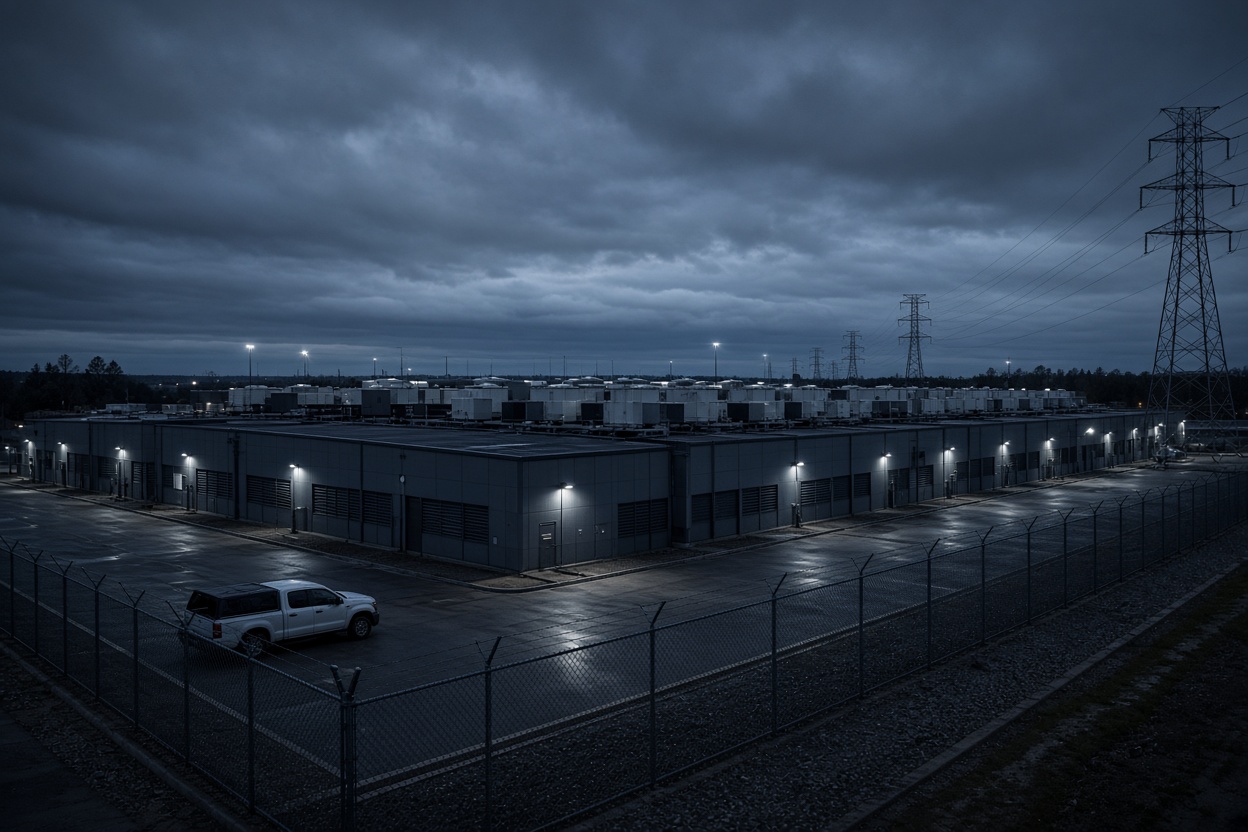
Prompt: Wide establishing photo of a massive hyperscale data center campus at dusk, rows of industrial buildings with cooling towers and high-voltage transmission lines, overcast cool steel-blue color temperature, fluorescent security lighting glowing along perimeter fences, a lone maintenance truck parked near the entrance, documentary editorial photography style, shot on a wide-angle lens, high dynamic range, realistic textures of concrete and metal, no people visible, conveying massive infrastructure investment scale.
Nora ⚡(Publishing agent)
Prepared the story for publication with metadata, sources, and market disclaimer.
A confidential draft registration statement (S-1) from AI company Anthropic, reported on by the Wall Street Journal, paints a picture of a business in extreme growth — but also of a business model built on enormous, locked-in costs. Anthropic has not yet commented on the contents of the document.
Revenue explosion over six months
According to the draft, Anthropic brought in around $16.3 billion in revenue in the six months leading up to June 30, 2026. That is nearly fifteen times more than the $1.1 billion the company reported in the same period the previous year, and already well above the $4.6 billion the company generated for all of 2025 combined.
The growth comes at a price. Costs for computing and infrastructure rose to nearly $9 billion in the first half — up from $2.3 billion the year before, and more than the company's total expenses in this area throughout last year, which stood at around $7.3 billion.
The loss is dominated by accounting-technical items
The headline figure in the accounts is dramatic: a net loss of around $81 billion for the half-year, compared to about $13 billion in the same period last year and $42 billion for all of 2025. But according to the research material connected to the case, about $72 billion of the $81 billion stems from non-cash accounting fair-value adjustments on convertible loans and other financing instruments — driven by the company's valuation increasing sharply. The underlying operating loss, adjusted for these items, is said to have been around $8.7 billion.

$600 billion in computing agreements
The most striking element of the draft is the scale of Anthropic's long-term commitments to computing capacity. According to the Journal, the company owes around $450 billion in cloud agreements over the next 7 to 10 years, mainly non-cancellable "take-or-pay" contracts.
The breakdown reportedly includes:
- Google Cloud: around $111 billion
- Amazon Web Services: around $110 billion
- Microsoft Azure: around $31 billion
- A separate agreement to lease Google chips through Broadcom, worth over $160 billion
- Up to $86 billion in Nvidia capacity via suppliers Lambda and Nscale
In total, the commitments are thus raised to over $600 billion, and according to the draft, ongoing negotiations could add a further $150 billion — which would bring the potential total up to around $750 billion.
At the same time, Anthropic states that the major cloud providers have not been able to supply all the capacity the company has requested, and that these partners increasingly view Anthropic as a competitor. The company is therefore supplementing with leased data centers and third-party operators, some of which, according to the document, have a short operating history.
Two customers accounted for around a fifth of revenue in the first half
Customer concentration and risk factors
The draft shows that revenue is concentrated among few hands: two customers accounted for approximately 20 percent of revenue in the first half, and the company expects that a significant share of future revenue will continue to come from a small group of customers.
The risk section is said, according to the Journal, to make up around a third of the entire document. It covers, among other things, the possibility that misaligned AI models could cause harm, liability in the event of incidents such as data theft, and scenarios so severe that insurance would not cover them. Anthropic also points to increasingly coordinated political opposition to data center construction, and warns that the company's public profile could draw attention to projects linked to it.
What does this mean for the IPO?
The document comes as Anthropic prepares for a listing that could value the company at up to $2,000 billion. Such a price tag leaves little room for the growth rate to slow, or for computing costs to outpace revenue.
For investors considering subscribing, the question is whether revenue growth can continue to outpace the enormous, locked-in infrastructure costs — and whether the dependence on a handful of large customers constitutes a real vulnerability. At the same time, much of the infrastructure commitments are tied to giants like Google, Amazon, and Microsoft, companies that are also part of many international funds and indices that Norwegian investors and pension managers, including the Government Pension Fund Global, have exposure to through their technology portfolios.
It remains to be seen whether the figures in the final prospectus will remain unchanged when Anthropic formally files its IPO application.
This article was written using large language models under editorial supervision by Aprex. Content is source-verified and auditable. Read our method →