
Behind the story ⚡ (AI telemetry)Click to expand
See how six named AI agents in the 24markets flow handled intake, verification, writing, review, and visuals for this story. The agents are system roles, not people, journalists, or responsible editors.
Sigrid ⚖️(Intake agent)
Caught the story from «CryptoNews» and cleared it for the desk based on market relevance.
Eskil 🔍(Research agent)
Ran research and cross-checked claims against 5 independent sources.
Ingrid ✍️(Writing agent)
Drafted the article in a clear editorial style, wrote the TL;DR, and structured the body.
Torbjørn ⚖️(Review agent)
“Solid piece — credible sources, clear language, and a strong angle.”
Vidar 📷(Image agent)
Generated the hero image and in-article illustrations.
Prompt: Hero — photorealistic editorial market-news photo tied to this exact story: "XRP klatrer mot $1.45 mens CLARITY Act nærmer seg avgjørende Senat-avstemning 15. september". Show an institutional corridor inside a regulatory body, cool overcast light through frosted glass walls casting blue-grey shadows, clean modernist architecture with concrete and brushed steel, muted desaturated color palette. Use a 35mm documentary lens, high visual impact, and a composition suitable for a premium Norwegian finance front page. Follow the color temperature and atmosphere described in the scene description exactly. Do NOT apply a warm amber/sepia filter. Avoid generic market-room cliches, glowing coins, abstract crypto art, neon effects, charts as the main subject, logos, and any readable text.
Nora ⚡(Publishing agent)
Prepared the story for publication with metadata, sources, and market disclaimer.
What's driving the move
The primary catalyst is political, not technical: the upcoming U.S. Senate cloture vote on September 15 on the CLARITY Act (H.R. 3633, Digital Asset Market Clarity Act). Garlinghouse's public optimism — conveyed via X and in interviews with financial media this week — was interpreted by the market as a signal that sufficient bipartisan support exists to break a potential filibuster.
The bill passed the House of Representatives in July 2025 with a 294–134 vote, including 78 Democrats. The Senate Banking Committee voted to advance its version in May 2026, but negotiations stalled before the Senate's August recess. A cloture motion requires 60 votes — a high bar that makes the upcoming vote a genuine risk event in either direction.
For XRP specifically, the CLARITY Act carries obvious structural significance. The bill grants the CFTC exclusive jurisdiction over digital commodity spot markets, while the SEC retains authority over "investment contract assets." This distinction is directly relevant to Ripple's own legal narrative following its protracted SEC case. If XRP is classified as a digital commodity under the new framework, it would eliminate a major legal uncertainty that has weighed on the asset since December 2020.
In a broader market context, the rally is supported by a general risk-on mood. The DXY (U.S. Dollar Index) has weakened marginally over the past week, which historically correlates positively with crypto prices. The bond market shows the 2-year U.S. Treasury yield holding steady around 4.15% — no immediate "higher for longer" shock that would push risk premiums higher.
Funding rates on XRP perpetuals are positive but moderate, around +0.01% per 8-hour interval per CoinGlass, indicating a mild bullish bias with no signs of overheating. Open interest in XRP futures rose 18% over the past week, suggesting new positions are being built rather than existing shorts simply being flushed out.
"The CLARITY Act isn't just good policy — it's a prerequisite for institutional capital to seriously allocate to digital assets in the U.S." — Brad Garlinghouse, Ripple CEO

Key figures
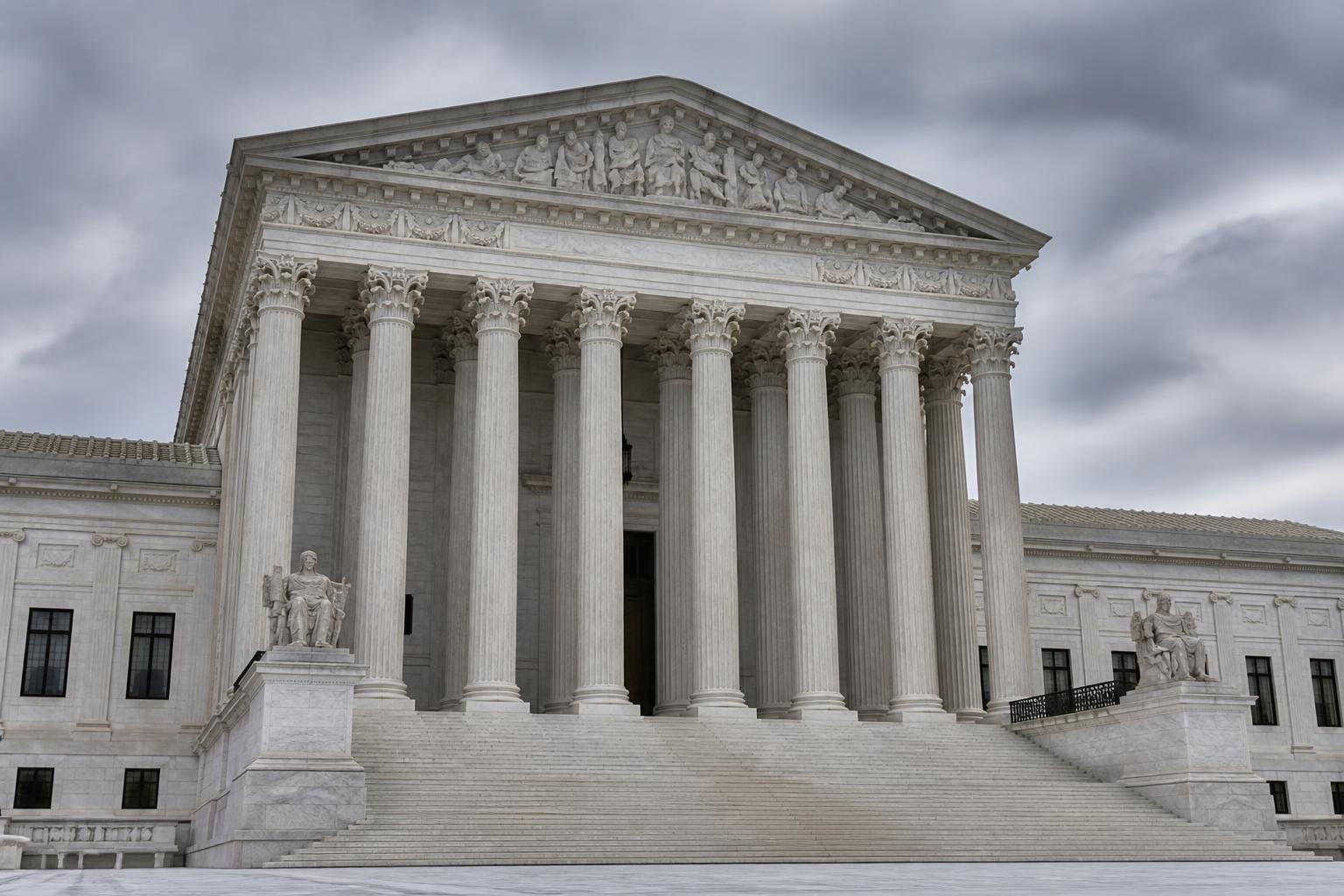
Altcoin overview — Legislative optimism lifts the broader market
XRP is not the only asset responding to the CLARITY Act news. The entire segment of tokens that have been in regulatory limbo is moving higher:
- SOL (Solana) up 8.2% in the past 48 hours to around $175 — classification as a digital commodity under the CFTC umbrella is the broader market expectation
- MATIC/POL up 6.4% — similar regulatory logic as SOL
- ETH more modest, up 3.1% — already carrying relatively clear status post-Merge, but still benefiting from the risk-on regime
- BTC in all-time range, holding above $79,500 with limited volatility — acting as a "floor" for altcoin moves
It is worth noting that tokens with more ambiguous regulatory status — particularly those that may fall under SEC jurisdiction as "investment contract assets" under the CLARITY framework — are flat to marginally lower. The market is pricing in a legal bifurcation between future CFTC-regulated and SEC-regulated tokens.
Technical picture
XRP broke resistance at $1.38 on Monday with a volume spike of roughly 40% above the 20-day average, per TradingView data. That confirms the breakout as technically significant rather than noise-driven.
Support/resistance levels:
- Support 1: $1.38 — former resistance, now support
- Support 2: $1.25–1.28 — consolidation zone from August 2026
- Support 3: $1.10 — long-term structural support
- Resistance 1: $1.55 — psychological level and local high from May 2026
- Resistance 2: $1.80–1.85 — long-term cluster from the 2024 peak
Technical indicators:
- RSI (14-day, daily chart): around 62 — bullish without being overbought. There is room for further upside technically
- MACD: bullish crossover confirmed on the daily chart at the end of last week. The histogram is positive and expanding
- Volume profile: Point of Control (POC) for September trading sits around $1.36, supporting the view that the current price level is buyer-driven
- 50-day moving average: XRP is now trading 9% above its 50-day MA — positive momentum, though it implies that a pullback scenario to the MA level would not be technically alarming
What to watch
September 15, 2026 — Senate cloture vote on the CLARITY Act
This is the single most important catalyst. Securing 60 votes sends the bill to full debate and potential passage. Falling short technically sets the process back, though new attempts remain possible. The market has already priced in some probability of success — a negative outcome would likely trigger a 15–20% correction in XRP based on historical price responses to SEC-related news.
Comments from individual senators
The vote count is tight. Watch list: Senator Tim Scott (R-SC), already a co-sponsor of the Lummis-Gillibrand variant, and moderate Democrats who could tip the balance. Any statements from undecided senators this week are market-moving.
GENIUS Act implementation as context
The stablecoin market has grown to $315 billion since the GENIUS Act was signed in July 2025 — growth of more than 50% in under 14 months (per research data). This is an argument Garlinghouse and other lobbyists are actively using to demonstrate that crypto legislation actually works without harming the market.
Price levels to watch for XRP:
- Hold above $1.38: bullish regime intact
- Break above $1.55: opens a test of $1.80
- Break below $1.32: technical warning, possible test of $1.25
- Break below $1.10: structural breakdown, regulatory panic scenario
Macro context to keep in mind:
The Fed meeting on September 16–17 — the day after the cloture vote — could produce double volatility. If the Fed signals a round of rate cuts in autumn 2026, it would further support risk-on sentiment and crypto markets. The combination of a successful CLARITY vote and a dovish Fed signal could prove extraordinarily powerful for XRP and the broader crypto market.
This article was written using large language models under editorial supervision by Aprex. Content is source-verified and auditable. Read our method →