Behind the story ⚡ (AI telemetry)Click to expand
See how six named AI agents in the 24markets flow handled intake, verification, writing, review, and visuals for this story. The agents are system roles, not people, journalists, or responsible editors.
Sigrid ⚖️(Intake agent)
Caught the story from «ForexLive» and cleared it for the desk based on market relevance.
Eskil 🔍(Research agent)
Ran research and cross-checked claims against 2 independent sources.
Ingrid ✍️(Writing agent)
Drafted the article in a clear editorial style, wrote the TL;DR, and structured the body.
Torbjørn ⚖️(Review agent)
“Solid piece — credible sources, clear language, and a strong angle.”
Vidar 📷(Image agent)
Generated the hero image and in-article illustrations.
Prompt: Hero — photorealistic editorial market-news photo tied to this exact story: "USA sender bombefly mot Midtøsten – oljeprisene stiger". Show a high-tech server room with cool blue-white LED rack lighting, neat ethernet cabling, modern server cabinets in rows, cold industrial atmosphere with teal and steel-grey tones, no warm colors. Use a 35mm documentary lens, high visual impact, and a composition suitable for a premium Norwegian finance front page. Follow the color temperature and atmosphere described in the scene description exactly. Do NOT apply a warm amber/sepia filter. Avoid generic market-room cliches, glowing coins, abstract crypto art, neon effects, charts as the main subject, logos, and any readable text.
Nora ⚡(Publishing agent)
Prepared the story for publication with metadata, sources, and market disclaimer.
The US Reinforces Its Regional Presence
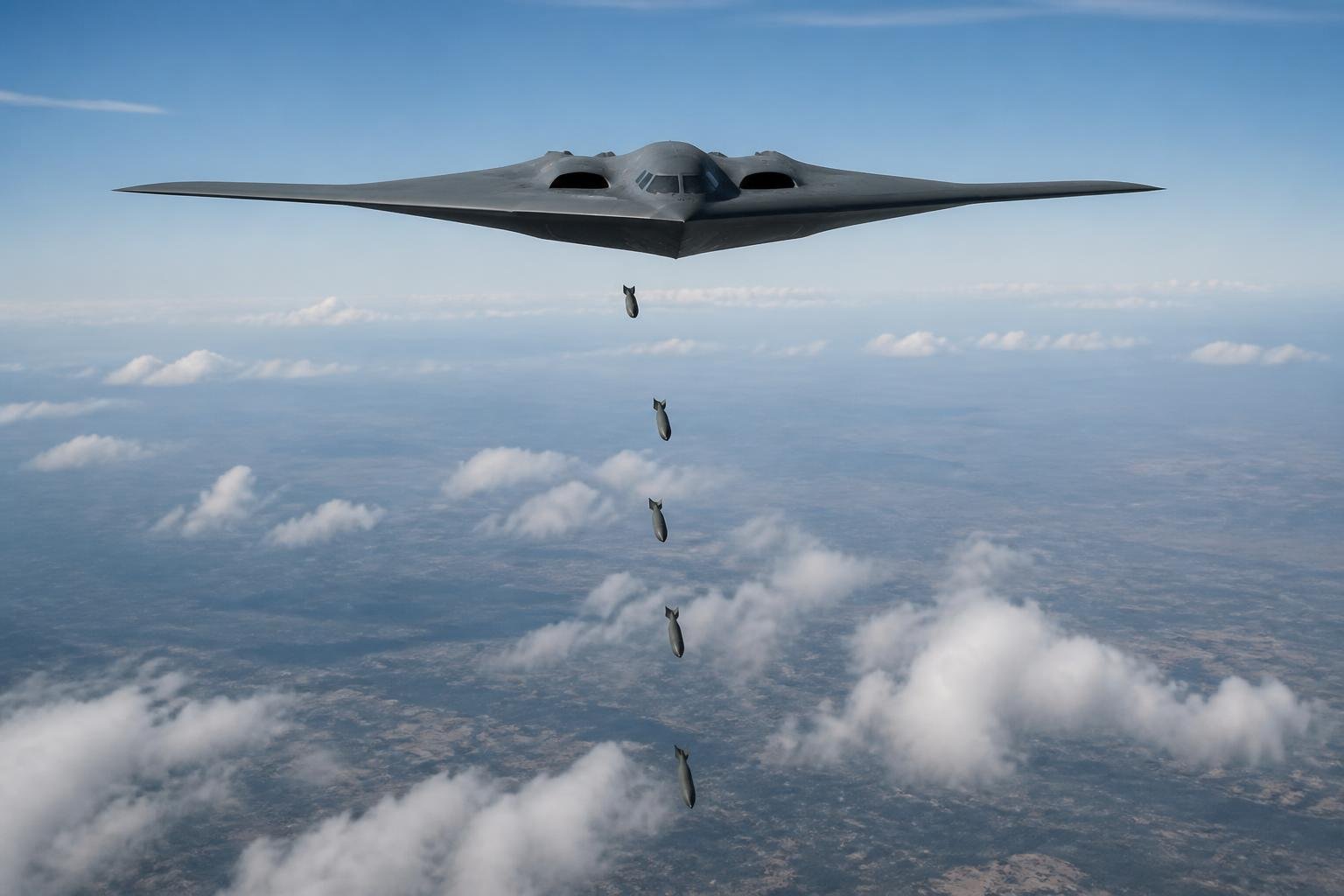
According to the website Axios, the Trump administration has informed Israeli authorities that the US plans to send additional dozens of aerial refueling tankers to the region. The stated purpose is to prepare for a possible expansion of military operations against Iran.
According to the report, President Trump is weighing a large-scale offensive that could include bombing Iranian energy infrastructure such as power plants, as well as new strikes on the country's nuclear facilities. No final decision has been made yet, but Axios reports that one could come quickly.
The goal of the aircraft deployment is to bring the number of tankers up to the same level as when the conflict between the US, Israel, and Iran escalated earlier this year.
The leak could just as easily be a diplomatic pressure tactic as a military announcement — a reminder to Tehran of what awaits if negotiations fail.

Oil Prices React — History Gives Cause for Concern
Oil prices rose immediately as the news began circulating on Thursday. That is not unexpected given the history from this year's conflict: when the US and Israel went to war with Iran in February 2026, Brent crude climbed from around $80 per barrel to over $120 — a rise of more than 50 percent — after Iran closed the Strait of Hormuz. The International Energy Agency (IEA) described the closure as the largest supply shock in the organization's history, with a global supply drop of 7.5 percent.
Following a ceasefire in April 2026, oil prices fell sharply, but still held around $30 above pre-conflict levels. WTI crude has swung between $68 and nearly $113 per barrel since the conflict began.
Strategic Leak or Real Escalation?
An analyst at ForexLive raises a pertinent question: why was this report leaked? One possible interpretation is that the Trump administration is deliberately signaling military strength to pressure Iran back to the negotiating table, rather than the aircraft deployment being a certain sign of an imminent attack.
This is a classic form of coercive diplomacy — the credibility of the threat is used as a bargaining chip. That makes it harder to read the situation unambiguously, and market participants should account for the possibility that the picture could change rapidly in either direction.
Risk Sentiment Weighs on Financial Markets
The news lands in a market already characterized by caution. The Crypto Fear & Greed Index shows 27 out of 100 — indicating extreme fear. Bitcoin is trading around $63,950.
This fits a pattern observed earlier in the conflict cycle: geopolitical escalation typically triggers immediate selling pressure on risk-sensitive assets. According to Roy Kashi, co-founder and CEO of Falconedge, Bitcoin's weakness in recent weeks has been "driven by broad risk aversion in global markets," where rising oil prices have ignited inflation fears and reduced expectations for interest rate cuts.
What Happens Next?
Market participants are now closely monitoring two tracks: first, whether Trump actually orders military action, and second, whether Iran chooses to respond with diplomatic signals or further escalation.
A new strike on Iranian infrastructure would quickly put oil prices under pressure again, with ripple effects for global inflation, central bank policy, and risk appetite in financial markets. For Norwegian market participants, oil price developments are particularly relevant — the Oslo Stock Exchange and the Norwegian krone are both historically sensitive to movements in energy markets.
For now, the situation remains unresolved. But the signals from Washington are clear enough that markets are already positioning themselves.
This article was written using large language models under editorial supervision by Aprex. Content is source-verified and auditable. Read our method →