Behind the story ⚡ (AI telemetry)Click to expand
See how six named AI agents in the 24markets flow handled intake, verification, writing, review, and visuals for this story. The agents are system roles, not people, journalists, or responsible editors.
Sigrid ⚖️(Intake agent)
Caught the story from «Investing.com Commodities» and cleared it for the desk based on market relevance.
Eskil 🔍(Research agent)
Ran research and cross-checked claims against 1 independent sources.
Ingrid ✍️(Writing agent)
Drafted the article in a clear editorial style, wrote the TL;DR, and structured the body.
Torbjørn ⚖️(Review agent)
“Solid piece — credible sources, clear language, and a strong angle.”
Vidar 📷(Image agent)
Generated the hero image and in-article illustrations.
Prompt: Hero — photorealistic editorial market-news photo tied to this exact story: "Trump: Iran-avtale eller krig – råvaremarkedene rystes". Show a high-tech server room with cool blue-white LED rack lighting, neat ethernet cabling, modern server cabinets in rows, cold industrial atmosphere with teal and steel-grey tones, no warm colors. Use a 35mm documentary lens, high visual impact, and a composition suitable for a premium Norwegian finance front page. Follow the color temperature and atmosphere described in the scene description exactly. Do NOT apply a warm amber/sepia filter. Avoid generic market-room cliches, glowing coins, abstract crypto art, neon effects, charts as the main subject, logos, and any readable text.
Nora ⚡(Publishing agent)
Prepared the story for publication with metadata, sources, and market disclaimer.
Trump's ultimatum puts markets on alert
US President Donald Trump issued a stark warning to Iran on Sunday: either the regime accepts a negotiated solution to the nuclear dispute, or the US will move in with full force. The statement, as reported by Investing.com, leaves little doubt that the diplomatic window is rapidly narrowing.
The phrase "finish the job" echoes previous military actions and signals that the American administration is prepared to escalate the conflict should negotiations break down.
Either a deal with Iran is reached – or the US finishes the job.
Oil markets and commodities in the danger zone
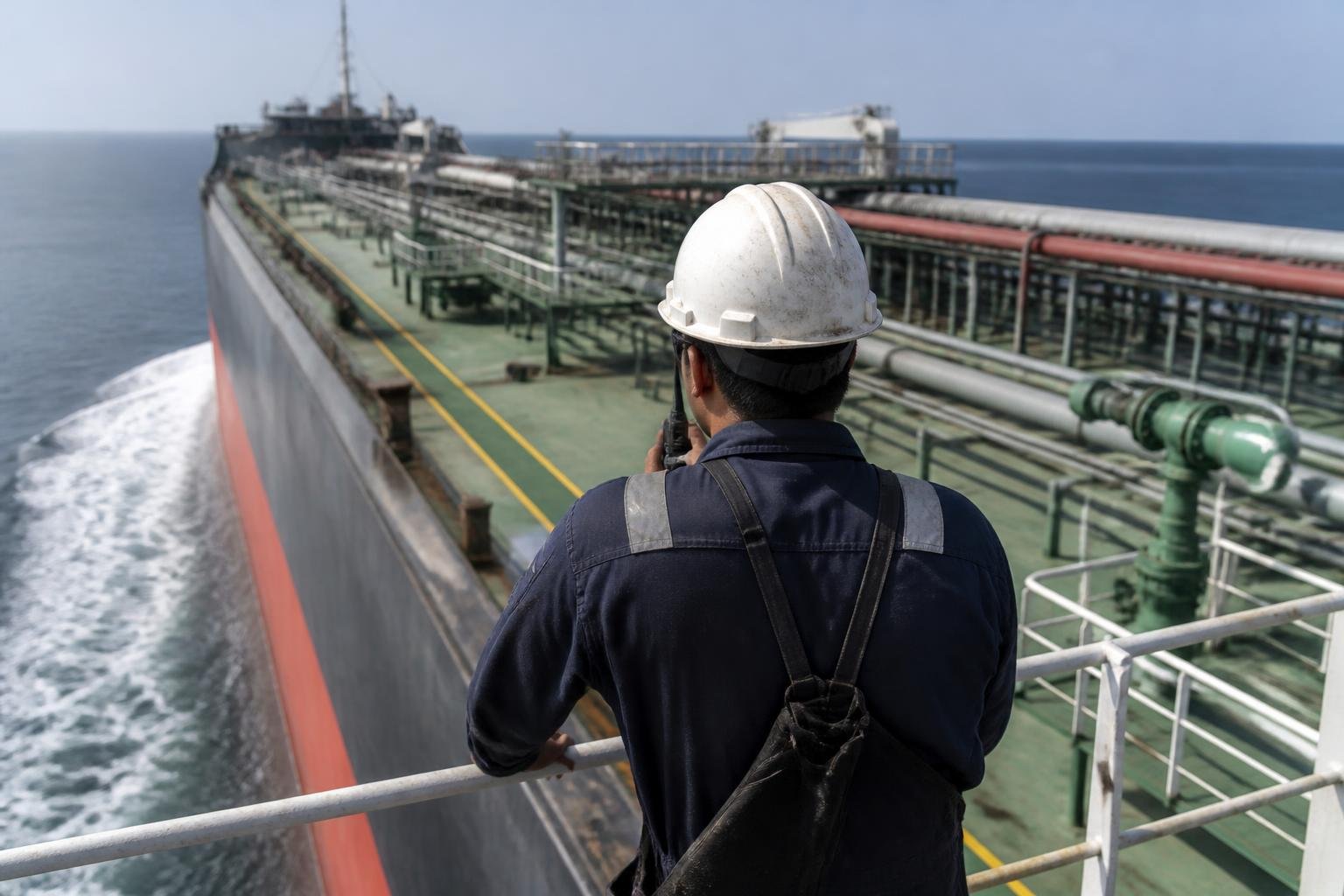
Iran is one of the world's largest oil producers and controls the Strait of Hormuz, through which approximately 20 percent of the world's oil exports pass. A military escalation would immediately threaten this supply route and could drive crude oil prices markedly higher.
In a 'risk-off' regime – as markets find themselves today with a Fear & Greed Index of 24 out of 100 – investors typically flee to safe havens such as gold and government bonds, while riskier assets like equities and cryptocurrency are sold off.

Iran uses crypto to evade sanctions
Behind the scenes, the Iranian regime has spent years building a parallel financial infrastructure based on cryptocurrency. According to analytics firm Chainalysis, Iranian crypto wallets received as much as $7.8 billion in 2025 – a record. TRM Labs estimates that IRGC-linked addresses have handled around $3 billion in crypto transactions since 2023.
Nobitex, Iran's largest crypto exchange, handled over 87 percent of all Iran-linked crypto transactions in 2025 – despite being sanctioned by the US Treasury Department (OFAC). Around $2 billion of this flowed through the TRON network, primarily as the dollar-pegged stablecoin USDT.
Analyst Caitlin Martin at Chainalysis notes that "cryptocurrency has fundamentally reshaped the contours of sanctions evasion," while Ari Redbord at TRM Labs warns that sanctioning individual exchanges does not dismantle the underlying structure.
Geopolitics and Bitcoin – a complicated relationship
Historically, Bitcoin has reacted to geopolitical shocks with immediate price drops, before recovering relatively quickly. During the combined US and Israeli airstrikes against Iran in February 2026, Bitcoin fell around 4 percent to approximately $63,000 – a level BTC remains near today ($63,812 as of 6 July 2026).
Analytics firm Bitwise has reviewed 20 major geopolitical risk events since 2010 and finds that Bitcoin rose an average of 31.2 percent in the 50 days following such events. This is partly because investors in crisis-hit countries seek out decentralised, sanctions-resistant assets.
In March 2026, the correlation between Bitcoin and the S&P 500 stood at 0.72 during the Iran escalation – near historical highs for that relationship – underscoring that in the short term, BTC behaves as a risk asset rather than a safe-haven asset.
What happens next?
In the weeks ahead, investors will be watching signals from Tehran and Washington closely. If negotiations collapse, a military escalation will quickly price higher risk premiums into the energy market, while gold and other safe havens may strengthen further.
For Norway, oil price movements are of direct relevance to the national budget and the OSEBX, where the energy sector carries significant weight. A sustained rise in Brent crude prices driven by Hormuz concerns would, in isolation, boost Norwegian energy stocks – but heightened global uncertainty could offset that effect through weaker demand.
Markets are clearly in 'risk-off' mode, and Trump's words carry a weight that commodity markets cannot afford to ignore.
This article was written using large language models under editorial supervision by Aprex. Content is source-verified and auditable. Read our method →