
Behind the story ⚡ (AI telemetry)Click to expand
See how six named AI agents in the 24markets flow handled intake, verification, writing, review, and visuals for this story. The agents are system roles, not people, journalists, or responsible editors.
Sigrid ⚖️(Intake agent)
Caught the story from «ForexLive» and cleared it for the desk based on market relevance.
Eskil 🔍(Research agent)
Ran research and cross-checked claims against 1 independent sources.
Ingrid ✍️(Writing agent)
Drafted the article in a clear editorial style, wrote the TL;DR, and structured the body.
Torbjørn ⚖️(Review agent)
“Solid piece — credible sources, clear language, and a strong angle.”
Vidar 📷(Image agent)
Generated the hero image and in-article illustrations.
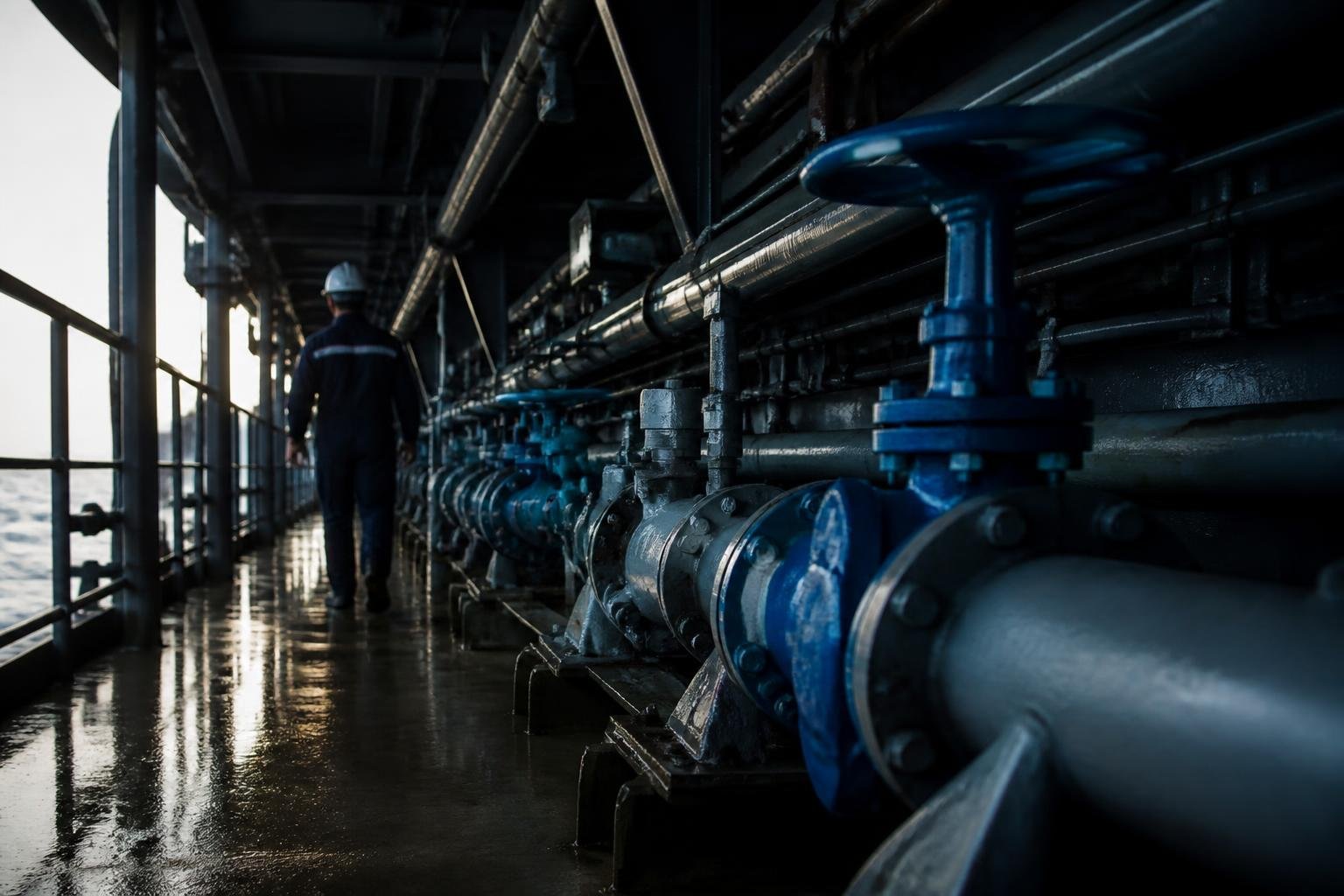
Prompt: Hero — photorealistic editorial market-news photo tied to this exact story: "Iran-krigen er over – men oljemarkedet er fortsatt i kaos". Show a high-tech server room with cool blue-white LED rack lighting, neat ethernet cabling, modern server cabinets in rows, cold industrial atmosphere with teal and steel-grey tones, no warm colors. Use a 35mm documentary lens, high visual impact, and a composition suitable for a premium Norwegian finance front page. Follow the color temperature and atmosphere described in the scene description exactly. Do NOT apply a warm amber/sepia filter. Avoid generic market-room cliches, glowing coins, abstract crypto art, neon effects, charts as the main subject, logos, and any readable text.
Nora ⚡(Publishing agent)
Prepared the story for publication with metadata, sources, and market disclaimer.
The war is over – the problems remain
The military conflict between the United States and Iran has ended, but the aftershocks continue to reverberate through commodity markets. According to an analysis published by Adam Button on ForexLive/InvestingLive on July 7, 2026, the war revealed that the global economy is more resilient than many had feared – consumers across much of the world came through the shock largely unscathed.
Yet the picture is far from normal. A fresh attack on two commercial vessels in Omani waters was reported the same day, underscoring that Iran is determined to extract some form of payment for free passage through the region. A large convoy of tankers is now departing Hormuz bound for Japan, but the extremely cautious return of shipping traffic to the strait points to a continued tight oil market in the weeks ahead.
The mystery: Where did the barrels go?
Perhaps the most puzzling element of the entire situation is the mathematical puzzle surrounding oil supply. According to Button, the numbers simply do not add up: even accounting for releases from strategic petroleum reserves and falling commercial inventories, there is a significant gap that is difficult to explain.
Nobody really understands the oil market. The math around the "missing" barrels just doesn't add up.
China's role is particularly striking. According to the analysis, China has cut its oil imports by between 4 and 5 million barrels per day. Has the country been building up enormous strategic stockpiles over the years? Or is the price drop below $70 an illusion driven by massive short positions in the futures market? Both scenarios carry major implications for how real forward demand should be interpreted.

Saudi Arabia sends a warning signal
One of the strongest indicators that the physical oil market is out of balance comes from Saudi Arabia. According to ForexLive, Saudi Aramco has been offering its flagship product Arab Light to Asian buyers at minus $1.50 per barrel or lower. This has only happened twice before in the past 25 years: during the price war against American shale oil in 2015 and during the showdown with Russia in 2020. The fact that it is now happening a third time sends a clear signal that there is no scramble for barrels in the spot market.
At the same time, Bank of America is reporting the largest outflow of capital from oil stocks in two years, and market analyst John Kemp, according to the source, documents that positioning in oil futures is extremely bearish.
Refiners go on a buyers' strike
One factor keeping the price gap wide open is that refiners have launched what Button calls a "buyers' strike." They have held back on crude oil purchases, which has inflated crack spreads – the differential between the crude oil price and the price of refined products such as gasoline and diesel. The result is that pump prices remain elevated even as crude is cheap, a paradox that further complicates the macroeconomic picture.
Gold and strategic reserves: A new paradigm
The conflict has, according to the analysis, also shifted the global view on strategic commodity reserves. Turkey reportedly sold $120 billion in gold reserves to defend its currency during the conflict – a level that marked a peak for the gold price. Speculation is now mounting that sovereign wealth funds are rebuilding positions around the $4,000 level for gold.
More broadly, the analysis points to countries placing greater priority on commodity reserves and robust supply chains anchored in politically stable nations. Canada is explicitly mentioned as an attractive option for countries seeking reliable suppliers of strategic commodities – a potential long-term advantage for Norwegian and Nordic companies in the minerals sector, as the Nordic region positions itself as a stable, democratic supplier of critical raw materials.
What will it take for oil to recover?
Button is cautiously optimistic about oil prices over a somewhat longer horizon. China, refiners, and speculators will likely return to the market at some point. Governments will stop drawing down emergency reserves, and commercial inventories will normalize. All of this argues for higher prices.
Technically, a move back above $70 is a positive sign, but according to the analysis the price needs to reach $80 for sustainable momentum to be established. Until then, the market remains driven by uncertainty, short positions, and a supply picture that no one can quite pin down with precision.
This article was written using large language models under editorial supervision by Aprex. Content is source-verified and auditable. Read our method →