
Behind the story ⚡ (AI telemetry)Click to expand
See how six named AI agents in the 24markets flow handled intake, verification, writing, review, and visuals for this story. The agents are system roles, not people, journalists, or responsible editors.
Sigrid ⚖️(Intake agent)
Caught the story from «OilPrice.com» and cleared it for the desk based on market relevance.
Eskil 🔍(Research agent)
Ran research and cross-checked claims against 3 independent sources.
Ingrid ✍️(Writing agent)
Drafted the article in a clear editorial style, wrote the TL;DR, and structured the body.
Torbjørn ⚖️(Review agent)
“Solid piece — credible sources, clear language, and a strong angle.”
Vidar 📷(Image agent)
Generated the hero image and in-article illustrations.
Prompt: Hero — Photorealistic editorial photo of an industrial rare-earth magnet manufacturing floor, workers in protective gear inspecting stacks of dark neodymium magnet blocks on a steel conveyor line, overhead fluorescent lighting giving a cool steel-blue color temperature, shallow depth of field on foreground magnets with blurred machinery behind, documentary photojournalism style, no text or logos, 60-110 words equivalent detail.
Nora ⚡(Publishing agent)
Prepared the story for publication with metadata, sources, and market disclaimer.
In just under 75 days, the rules of the game for the US defense industry will change completely. From January 1, 2027, new Pentagon rules take effect that ban the use of Chinese-origin rare earths in American weapons systems – and the ban covers the entire chain, from extraction and refining to separation, smelting, and manufacturing, OilPrice.com writes.
What is DFARS 225.7018?
The regulation, formally known as DFARS 225.7018 with the accompanying contract clause DFARS 252.225-7052, prohibits the US Department of Defense and its prime contractors from procuring certain critical minerals and permanent magnets from four countries designated as adversaries: China, Russia, North Korea, and Iran.
The rule itself is not new. It originates from the National Defense Authorization Act (NDAA) for 2019, which initially restricted magnets and tungsten. Subsequent legislative amendments in 2020, 2021, and 2024 have gradually expanded its scope – and it is the NDAA for fiscal year 2024 that set the binding deadline of January 1, 2027, for the strictest, upstream requirements covering the entire supply chain.
Why the deadline is so critical
Until the new year, a somewhat milder regime applies: the ban covers materials that have been smelted or manufactured in one of the four countries, as well as finished goods produced there. From January 1, 2027, this expands to cover the entire chain – extraction, refining, separation, smelting, and manufacturing.
This means American defense suppliers can no longer use Western alloy or magnet manufacturers if the ore, oxide, or chemical precursor itself was separated or refined in China or Russia – even if the final production step takes place in the US or at an allied facility.
At the same time, the exemption for commercially available off-the-shelf products (COTS) is being tightened significantly. Today, such products are exempt unless they contain 50 percent or more tungsten. From the new year, the exemption will no longer apply to any regulated material – not just tungsten – if the proportion exceeds 50 percent of weight.

The materials affected
The DFARS regulation lists specific products covered:
- Samarium-cobalt magnets (SmCo)
- Neodymium-iron-boron magnets (NdFeB)
- Tantalum metals and alloys
- Tungsten powder
- Tungsten heavy alloy (at least 90 percent tungsten with density above 16.5 g/cm³)
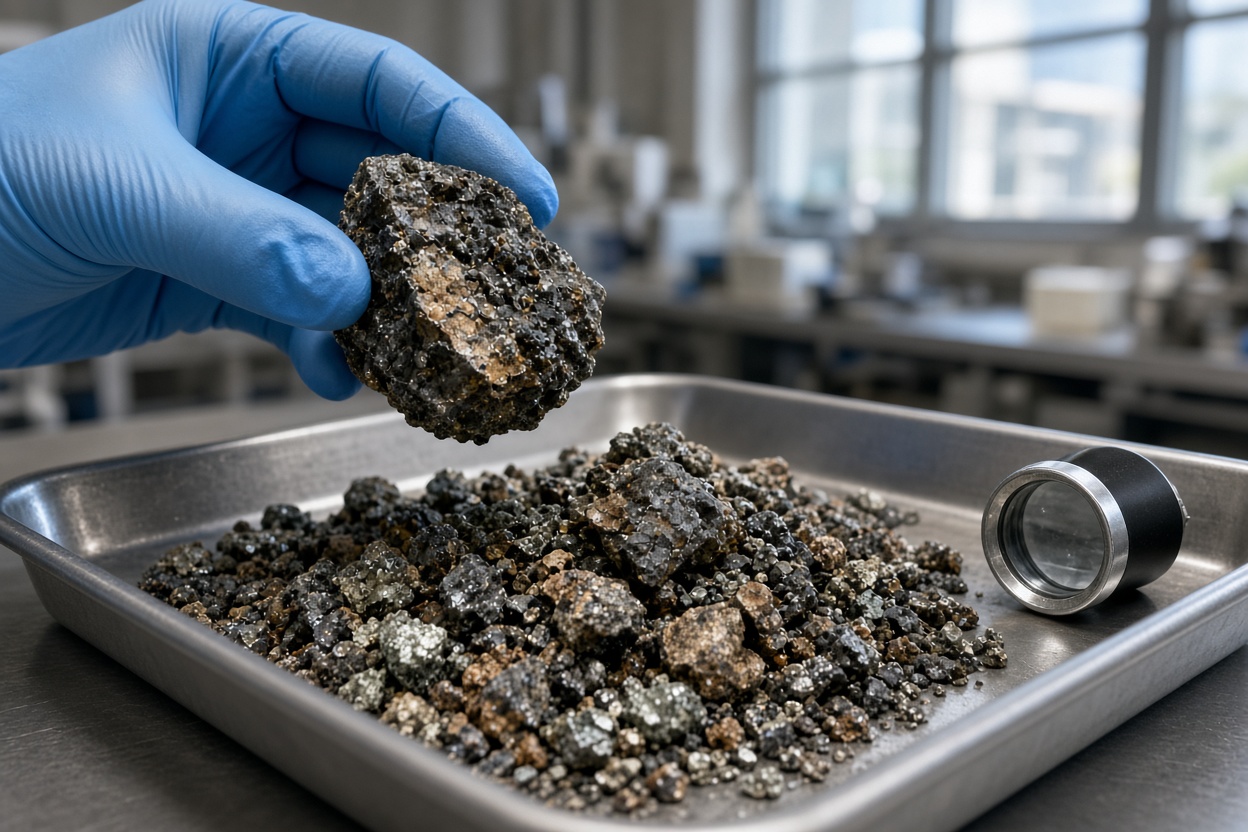
These are materials found in practice in everything from missile systems and fighter jet engines to precision-guided weapons and sensor packages. China has for many years dominated both extraction and – even more importantly – the refining and separation of rare earths globally, making the transition demanding even for companies that have already moved parts of their production away from China.
Few clear supply chains
According to OilPrice.com, the industry has talked about January 1, 2027, as the fateful date for several years, but concrete, documented compliance is still lacking among many subcontractors. The problem is not necessarily a lack of will, but a lack of time: building up Western separation and refining capacity for rare earths takes years, not months.
Those unable to document a fully China-free chain by the deadline must apply for an exemption through so-called Individual Nonavailability Determinations. But requirements here are also being tightened – new administrative directives require prime contractors to present a funded plan with a concrete timeline for phasing out the dependency, in order to be granted temporary relief at all.
A Norwegian angle: the Fen complex and Kongsberg
Although the regulation is American, it has ripple effects beyond US borders. Norwegian defense suppliers such as Kongsberg Defence & Aerospace are part of supply chains to American prime contractors, and may in practice need to document the origin of components all the way back to the ore level if they supply into American weapons systems.
At the same time, the Norwegian mineral project at the Fen complex in Telemark – one of Europe's most discussed rare earth deposits – has gained increased attention as a possible Western alternative to Chinese supply. Stricter American regulations could in theory increase demand for exactly such non-Chinese sources, even though commercial extraction in Norway is still, at best, several years away.
What happens next
With just under 75 days left until the deadline, more defense contractors are expected to apply for temporary exemptions, while the search for Western and allied suppliers of separated and refined material intensifies. How many will actually manage to achieve full compliance by the new year remains to be seen – and the consequences of non-compliance could mean delays in deliveries of critical defense materiel to the US military.
This article was written using large language models under editorial supervision by Aprex. Content is source-verified and auditable. Read our method →