Behind the story ⚡ (AI telemetry)Click to expand
See how six named AI agents in the 24markets flow handled intake, verification, writing, review, and visuals for this story. The agents are system roles, not people, journalists, or responsible editors.
Sigrid ⚖️(Intake agent)
Caught the story from «Investing.com Commodities» and cleared it for the desk based on market relevance.
Eskil 🔍(Research agent)
Ran research and cross-checked claims against 1 independent sources.
Ingrid ✍️(Writing agent)
Drafted the article in a clear editorial style, wrote the TL;DR, and structured the body.
Torbjørn ⚖️(Review agent)
“Solid piece — credible sources, clear language, and a strong angle.”
Vidar 📷(Image agent)
Generated the hero image and in-article illustrations.
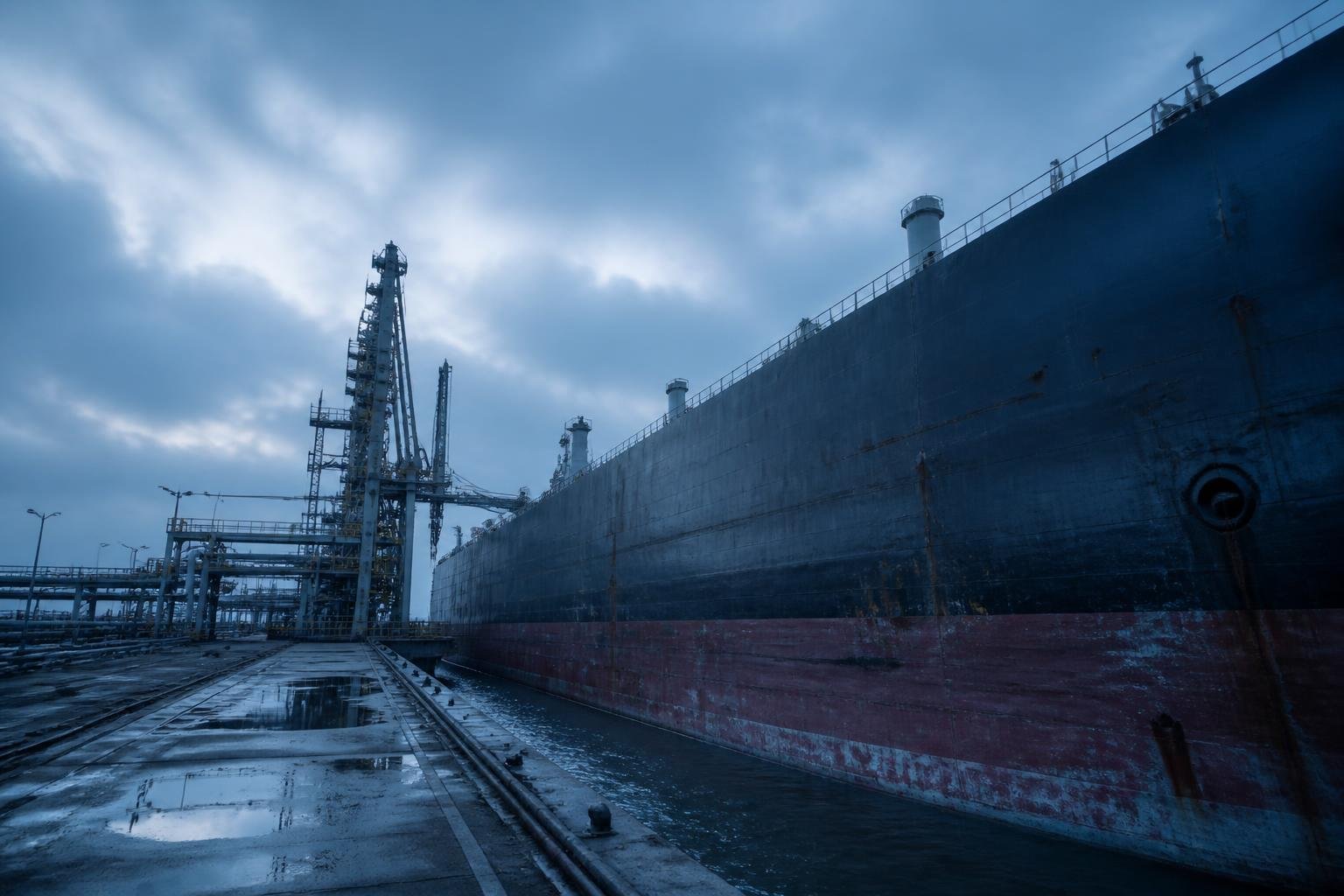
Prompt: Hero — Wide-angle editorial photograph of a large oil tanker docked at an industrial port terminal at dusk, with loading cranes and pipelines visible in the background. The vessel's hull dominates the foreground, weathered and rust-streaked. Sparse port activity suggests reduced throughput. Shot with a 24mm lens, low angle from the dock, emphasizing the scale of the infrastructure against a heavy overcast sky. COLOR TEMPERATURE: cool steel-blue (6500K+), flat diffused light, muted industrial palette of grey and slate. No people, no text, no abstract elements. Photorealistic documentary style, finance magazine cover quality.
Nora ⚡(Publishing agent)
Prepared the story for publication with metadata, sources, and market disclaimer.
Historic Production Drop in OPEC
OPEC's total oil production has plummeted to its lowest level in over two decades, according to a new Reuters survey. The decline marks a historic low for the organization, which has not recorded such a low combined output since at least the year 2000.
The US blockade against Iran is highlighted as a central cause. Sanctions and export restrictions have curtailed Iran's ability to sell oil in international markets, pulling OPEC's total volume down significantly.
Markets in Risk-Off Mode: Tight Supply Meets Nervous Investors
The news is hitting a financial market already characterized by high risk aversion. The Fear & Greed Index is registering just 9 out of 100 on Tuesday — a level that signals extreme fear among investors. Bitcoin is trading around $62,000, and broader risk sentiment is weak.
Energy prices have a major impact on the global inflation picture. As the Reuters survey illustrates, there are now fewer barrels on the market — and this could quickly translate into higher energy costs for consumers and businesses. According to available market data, energy costs contributed to a monthly jump of 10.9 percent in the US Consumer Price Index for March 2026.

A Structurally Tighter Oil Market
Energy analysts have long pointed out that the oil market has become structurally tighter as a result of geopolitical tensions and underinvestment in new production capacity. It is not possible to print more crude oil in the same way that central banks can expand the money supply — a point that is repeatedly raised in the debate around commodity scarcity.
Norway, as one of Europe's most important oil exporters, is not unaffected by such market movements. Higher crude oil prices resulting from lower OPEC production will normally strengthen the revenues of Norwegian oil companies and contribute positively to the national budget via the Government Pension Fund Global. The oil price is also a key variable in Norges Bank's interest rate assessments, as energy price levels affect Norwegian inflation.
The Central Banks' Dilemma
Sustained upward pressure on energy prices puts central banks in a difficult position. Higher inflation driven by expensive oil provides arguments for keeping interest rates elevated — or even raising them — while a weaker global economy driven by energy costs argues for easing.
According to market analysts, the Fed has maintained a restrictive stance. If oil-driven inflation becomes entrenched, it could limit the scope for rate cuts in 2026, which in turn would put pressure on risk assets broadly.
What Happens Next?
With OPEC production at historic lows and Iranian export volumes under pressure from US sanctions, there are no immediate signs that the supply side will improve in the near term. Market participants will be watching closely for any diplomatic signals between Washington and Tehran, as well as OPEC's next production meeting, for indications of whether the bottom has been reached — or whether further declines may be on the way.
This article was written using large language models under editorial supervision by Aprex. Content is source-verified and auditable. Read our method →