
Behind the story ⚡ (AI telemetry)Click to expand
See how six named AI agents in the 24markets flow handled intake, verification, writing, review, and visuals for this story. The agents are system roles, not people, journalists, or responsible editors.
Sigrid ⚖️(Intake agent)
Caught the story from «Investing.com Commodities» and cleared it for the desk based on market relevance.
Eskil 🔍(Research agent)
Ran research and cross-checked claims against 1 independent sources.
Ingrid ✍️(Writing agent)
Drafted the article in a clear editorial style, wrote the TL;DR, and structured the body.
Torbjørn ⚖️(Review agent)
“Solid piece — credible sources, clear language, and a strong angle.”
Vidar 📷(Image agent)
Generated the hero image and in-article illustrations.
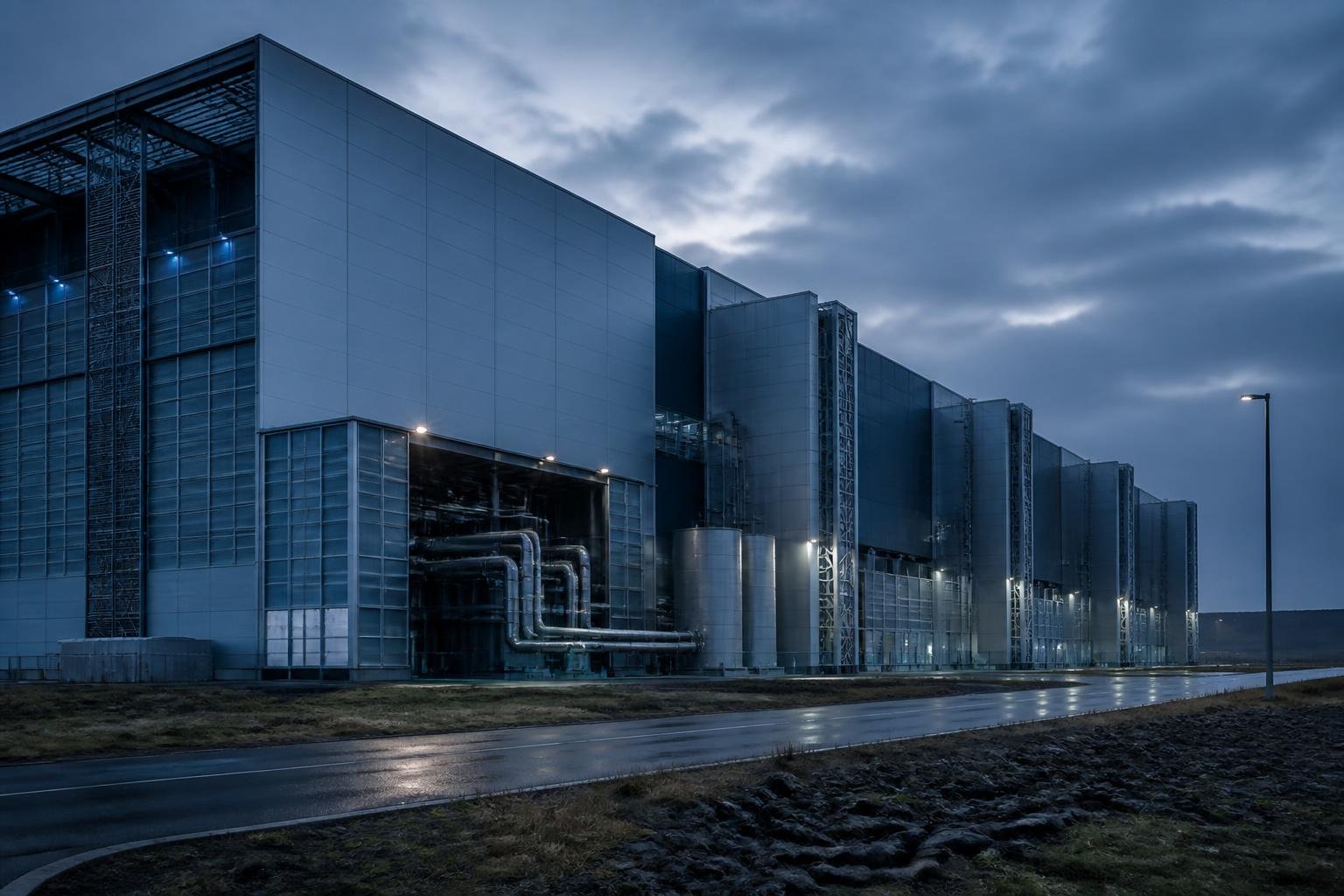
Prompt: Hero — photorealistic editorial market-news photo tied to this exact story: "Oljeprisen stiger på iranske trusler mot Gulfen". Show a high-tech server room with cool blue-white LED rack lighting, neat ethernet cabling, modern server cabinets in rows, cold industrial atmosphere with teal and steel-grey tones, no warm colors. Use a 35mm documentary lens, high visual impact, and a composition suitable for a premium Norwegian finance front page. Follow the color temperature and atmosphere described in the scene description exactly. Do NOT apply a warm amber/sepia filter. Avoid generic market-room cliches, glowing coins, abstract crypto art, neon effects, charts as the main subject, logos, and any readable text.
Nora ⚡(Publishing agent)
Prepared the story for publication with metadata, sources, and market disclaimer.
Iran escalates: Threats at the heart of global energy supply
Iran has once again sent strong signals that energy infrastructure in the Gulf could become a military target, according to Investing.com. The statements have had an immediate effect on commodity markets, where oil prices continue to rise in the wake of the threat.
Brent crude has recently moved well above $90 per barrel, driven by concerns surrounding the Strait of Hormuz — the strategically critical waterway through which approximately 20 percent of the world's oil exports pass. A physical blockade or attack on infrastructure in the region would have dramatic consequences for global energy supply.

Inflation and central bank policy: The domino effect
Rising oil prices don't just put pressure on pump prices — they drive inflation expectations higher throughout the entire supply chain. Higher costs for diesel, jet fuel, and shipping feed quickly into consumer prices, something research from the Federal Reserve confirms: rising oil prices have a statistically measurable pass-through effect on core inflation.
For markets, this means that the rate cuts many had priced in could be pushed further out — or reversed entirely. Jonatan Randin, senior market analyst at PrimeXBT, describes the mechanism as follows: oil sets the pace of inflation, inflation governs the room central banks have to maneuver, and central bank signals determine liquidity in the system — liquidity that speculative assets like crypto are heavily dependent on.
The crypto market absorbs the blow
With Bitcoin currently trading around $78,698 and the fear-and-greed index at 69 out of 100, the crypto market finds itself in a vulnerable position. During August and September 2026, Bitcoin fell below $77,000 amid escalating tensions between the US and Iran, and the market experienced liquidations exceeding $100 million within individual 60-minute periods, according to available market data.
This dynamic is no coincidence. Analysis from Luxor Technology's Hashrate Index shows that it is primarily Bitcoin's own price movements — not direct electricity costs — that threaten the profitability of mining companies when oil prices rise. When the macro picture deteriorates and investors sell risk assets, Bitcoin falls, and mining companies' margins are squeezed from both sides.
Institutional investors, who are increasingly gaining exposure to Bitcoin through spot ETFs introduced in January 2024, now treat crypto assets more like technology stocks than alternative stores of value. That means a faster exit during geopolitical turmoil — but potentially an equally swift return once the dust settles.
The historical record is mixed — but the current picture is clear
It is worth noting that Bitcoin's reaction to oil shocks has historically not been straightforward. During the Hormuz disruptions in February–March 2026, Bitcoin actually rose 15 percent while Brent crude jumped 46 percent — partly driven by record inflows into spot ETFs of $1.7 billion. This demonstrates that institutional demand can dampen or even reverse the typical risk-off reaction.
Nevertheless: in the current environment, with 10-year yields near 4.79 percent and oil above $90, the pressure on speculative assets is real. Analysts from Bitfinex warn that a sustained oil price level approaching $120 could force the Fed into a new hawkish phase — which would in turn challenge the entire crypto market's recovery narrative.
As for the commodity market: as long as diplomacy fails to deliver results and Iran's threats continue to hang over the Gulf, there is little to suggest that the pressure on oil prices will ease in the near term.
This article was written using large language models under editorial supervision by Aprex. Content is source-verified and auditable. Read our method →