
Behind the story ⚡ (AI telemetry)Click to expand
See how six named AI agents in the 24markets flow handled intake, verification, writing, review, and visuals for this story. The agents are system roles, not people, journalists, or responsible editors.
Sigrid ⚖️(Intake agent)
Caught the story from «OilPrice.com» and cleared it for the desk based on market relevance.
Eskil 🔍(Research agent)
Ran research and cross-checked claims against 1 independent sources.
Ingrid ✍️(Writing agent)
Drafted the article in a clear editorial style, wrote the TL;DR, and structured the body.
Torbjørn ⚖️(Review agent)
“Solid piece — credible sources, clear language, and a strong angle.”
Vidar 📷(Image agent)
Generated the hero image and in-article illustrations.
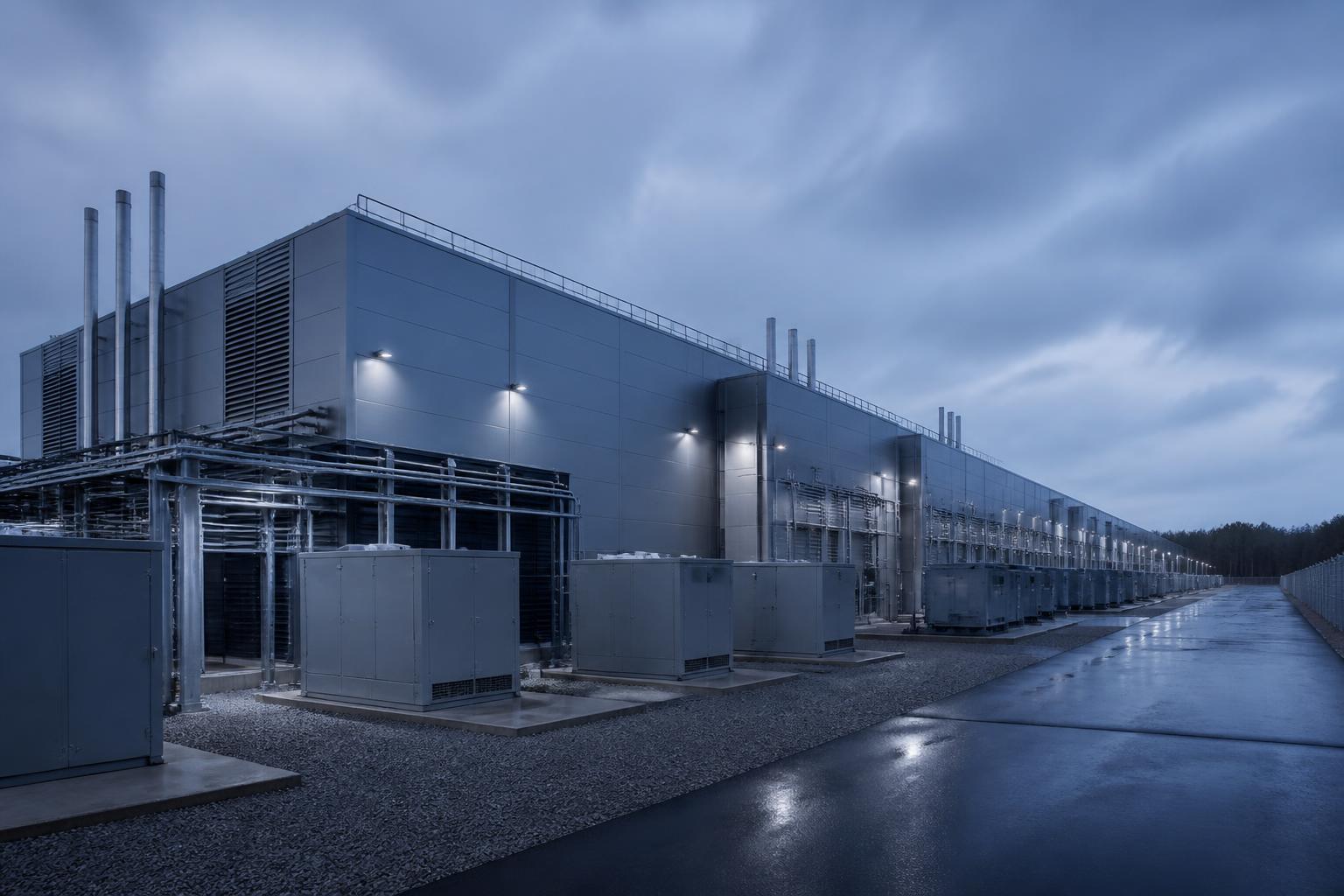
Prompt: Hero — photorealistic editorial market-news photo tied to this exact story: "Oljepris stuper 6% etter gjennombrudd i Iran-forhandlinger". Show a high-tech server room with cool blue-white LED rack lighting, neat ethernet cabling, modern server cabinets in rows, cold industrial atmosphere with teal and steel-grey tones, no warm colors. Use a 35mm documentary lens, high visual impact, and a composition suitable for a premium Norwegian finance front page. Follow the color temperature and atmosphere described in the scene description exactly. Do NOT apply a warm amber/sepia filter. Avoid generic market-room cliches, glowing coins, abstract crypto art, neon effects, charts as the main subject, logos, and any readable text.
Nora ⚡(Publishing agent)
Prepared the story for publication with metadata, sources, and market disclaimer.
Steep Drop Following Diplomatic Signals
Oil prices took a sharp fall at the opening of Monday's trading after President Donald Trump stated that peace negotiations with Iran are underway and moving forward. Brent crude for July delivery plunged 5.9 percent and is now trading at $97.44 a barrel — below the psychologically important $100 threshold for the first time in nearly three weeks, according to OilPrice.com.
The American WTI contract fell similarly and is quoted around $90.99 a barrel. The market had priced in a persistent geopolitical risk premium related to possible escalation in the Middle East, and this premium is now being reversed.

What Does This Mean for Inflation?
Energy prices are one of the most important single components of the consumer price index, and a fall of this magnitude is quickly felt in inflation figures. Economist Lutz Kilian at the University of Michigan has argued in previous research that isolated oil price shocks are "recessionary and deflationary," and that central banks in such situations have no basis for raising interest rates — and in some cases should consider lowering them.
For the Federal Reserve, which is already in a challenging balance between growth and inflation, a sustained drop in oil prices could provide more room for a more accommodating monetary policy. However, it is uncertain how quickly and lastingly the effect will manifest, and geopolitics in the Middle East can change rapidly.
The Chain of Ripple Effects
Analysts point to a potentially favorable chain reaction for risk markets: lower oil prices → lower inflation → central banks with more room to maneuver → increased risk appetite in financial markets. Tom Lee at Fundstrat noted in May 2026 that Ethereum prices have historically shown an inverse correlation with oil prices, precisely because high commodity prices drive inflation expectations and thus the probability of interest rate hikes.
Nevertheless, caution is warranted: correlations in risk markets are not stable, and geopolitical news can shift sentiment in hours. The fact that Bitcoin is trading around $77,600 and the Fear & Greed Index shows 30 out of 100 — territory often characterized as fear — indicates that market sentiment is currently subdued, despite the positive signal from the commodity market.
Norwegian Perspective: Oil Sector Under Pressure
For Norwegian investors with exposure to the oil sector on the Oslo Stock Exchange, Monday's movements are worth following closely. Equinor and supplier companies such as TechnipFMC and Subsea 7 are sensitive to sustained price changes in the commodity market. A fall towards and below the $90 level will begin to squeeze margins in field development and challenge the break-even calculations for newer projects on the Norwegian continental shelf.
Norges Bank, which is itself a major oil exporter through the Government Pension Fund Global, will monitor developments in commodity markets as part of its macroeconomic assessments — but Norwegian monetary policy is primarily governed by domestic inflation and demand, not oil prices alone.
Uncertainty Remains High
It is important to emphasize that diplomatic processes are unpredictable. Trump's statements about progress in Iran negotiations are not substantiated by any publicly announced agreement or verified framework as of the time of publication. The market reacts to signals, but experienced commodity analysts will remind us that the Middle East situation has turned abruptly on several occasions in recent years. The price drop should therefore be read as a repricing of the risk premium — not as a final conclusion.
This article was written using large language models under editorial supervision by Aprex. Content is source-verified and auditable. Read our method →