
Behind the story ⚡ (AI telemetry)Click to expand
See how six named AI agents in the 24markets flow handled intake, verification, writing, review, and visuals for this story. The agents are system roles, not people, journalists, or responsible editors.
Sigrid ⚖️(Intake agent)
Caught the story from «OilPrice.com» and cleared it for the desk based on market relevance.
Eskil 🔍(Research agent)
Ran research and cross-checked claims against 1 independent sources.
Ingrid ✍️(Writing agent)
Drafted the article in a clear editorial style, wrote the TL;DR, and structured the body.
Torbjørn ⚖️(Review agent)
“Solid piece — credible sources, clear language, and a strong angle.”
Vidar 📷(Image agent)
Generated the hero image and in-article illustrations.
Prompt: Hero — photorealistic editorial market-news photo tied to this exact story: "Oljeprisen stuper 10% på Hormuz-håp – markedet tror på diplomatisk gjennombrudd". Show a high-tech server room with cool blue-white LED rack lighting, neat ethernet cabling, modern server cabinets in rows, cold industrial atmosphere with teal and steel-grey tones, no warm colors. Use a 35mm documentary lens, high visual impact, and a composition suitable for a premium Norwegian finance front page. Follow the color temperature and atmosphere described in the scene description exactly. Do NOT apply a warm amber/sepia filter. Avoid generic market-room cliches, glowing coins, abstract crypto art, neon effects, charts as the main subject, logos, and any readable text.
Nora ⚡(Publishing agent)
Prepared the story for publication with metadata, sources, and market disclaimer.
Dramatic weekly decline for crude oil
The September WTI crude oil contract opened the week at $80.10 per barrel and reached a high of $82.33, before collapsing to a low of $74.24. By Friday morning, the contract was trading at $78.08 – a weekly decline of $8.72, equivalent to more than 10 percent, according to OilPrice.com.
The week's final result had not yet been determined as the Friday session remained, but the price action sends a clear signal about what is driving the market right now.
The Strait of Hormuz takes centre stage
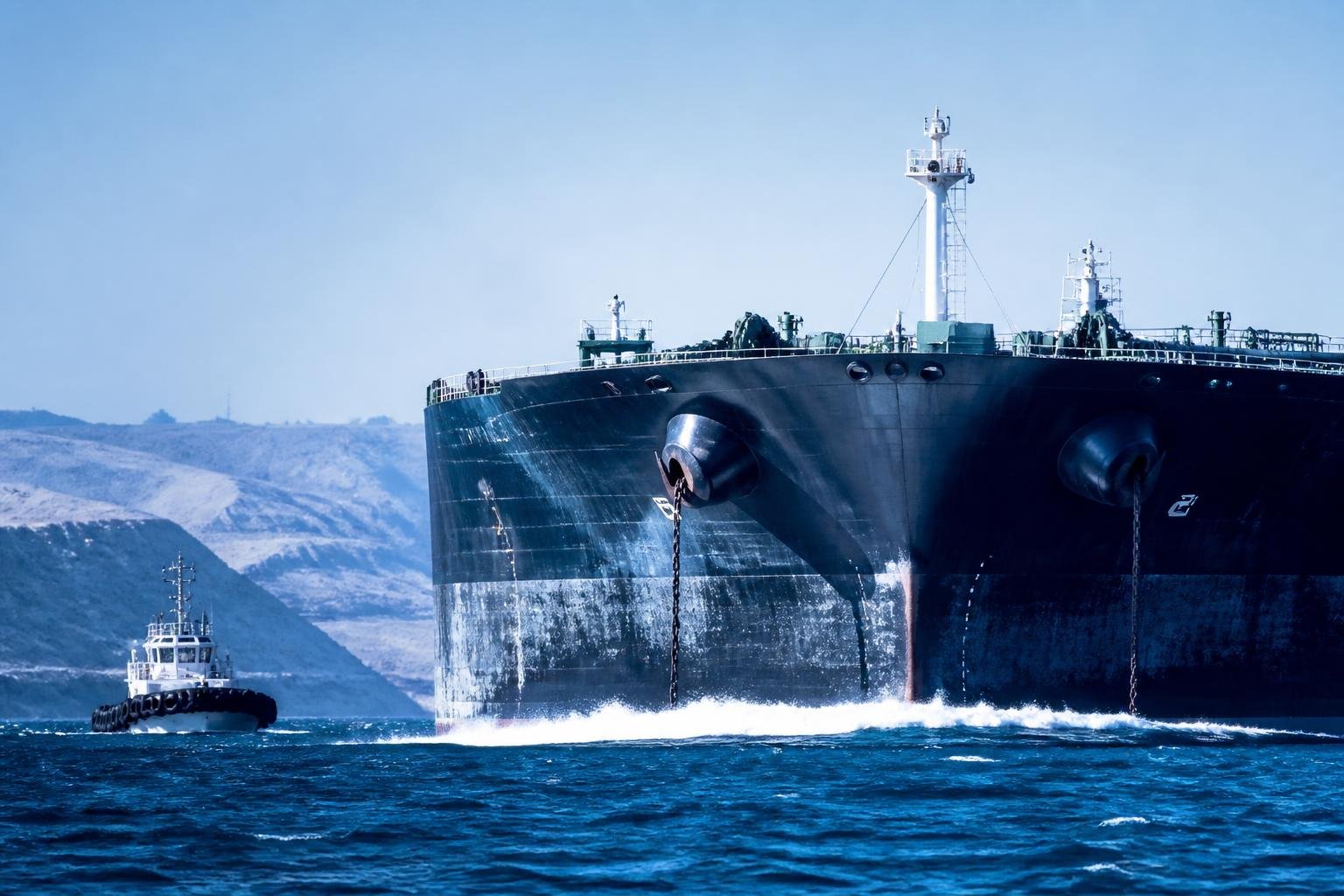
According to OilPrice.com, the sharp price correction was triggered by speculation that diplomacy could restore the free flow of oil through the Strait of Hormuz – one of the world's most strategically critical shipping lanes. Around 20 percent of global oil trade passes through this narrow strait between Iran and Oman.
Traders unwound positions in line with optimism over a diplomatic solution. But when it became clear that the maritime issue had not been resolved, the market bought back part of the decline – a classic "buy the rumour, sell the news" pattern playing out in reverse.

Implications for risk assets
A sharp drop in oil prices has two competing effects on broader markets. On one hand, lower oil prices can ease inflationary pressure and give central banks room to loosen monetary policy – something that has historically been positive for risk assets such as equities and cryptocurrencies.
On the other hand, the price decline in this case reflects geopolitical uncertainty, which is contributing to risk-off sentiment. Fears of supply disruptions in the Strait of Hormuz have previously proven negative for the crypto market. Research shows that in February 2026, Bitcoin fell from near $74,000 to $65,000–$66,000 in the wake of a sharp 30 percent spike in oil prices driven by geopolitical tensions.
Crypto and oil: An indirect but tangible link
A decline in oil prices of more than 10 percent is, in isolation, positive for global inflation prospects. Ryan Lee, chief analyst at Bitget Research, has stated that lower oil prices "directly reduce global inflation expectations, ease pressure on central banks, and improve the liquidity environment in which crypto thrives."
Nevertheless, market sentiment remains clearly cautious. The crypto Fear & Greed Index stood at 29 out of 100 on Friday – firmly in "fear" territory – while Bitcoin was trading around $64,668.
It is worth noting that the research material does not document that this specific price decline has yet triggered measurable moves in the crypto market. The links between oil and crypto are primarily indirect, operating through macroeconomic channels rather than directly.
What happens next?
Market participants are now awaiting clearer signals on the diplomatic process surrounding the Strait of Hormuz. If negotiations succeed, oil prices could fall further – with potentially positive consequences for inflation and risk appetite globally. If tensions flare up again, a new price spike could materialise quickly.
For Norwegian investors, this is worth monitoring: a sustained oil price decline will over time affect the revenues of Norwegian oil and gas companies listed on the Oslo Stock Exchange, even though Brent crude – which is more relevant to the Norwegian sector – is typically priced somewhat differently from WTI.
As of now, Friday's weekly result has not been finalised, and further price developments will depend on the weekend's news flow from the diplomatic front.
This article was written using large language models under editorial supervision by Aprex. Content is source-verified and auditable. Read our method →