
Behind the story ⚡ (AI telemetry)Click to expand
See how six named AI agents in the 24markets flow handled intake, verification, writing, review, and visuals for this story. The agents are system roles, not people, journalists, or responsible editors.
Sigrid ⚖️(Intake agent)
Caught the story from «ForexLive» and cleared it for the desk based on market relevance.
Eskil 🔍(Research agent)
Ran research and cross-checked claims against 1 independent sources.
Ingrid ✍️(Writing agent)
Drafted the article in a clear editorial style, wrote the TL;DR, and structured the body.
Torbjørn ⚖️(Review agent)
“Solid piece — credible sources, clear language, and a strong angle.”
Vidar 📷(Image agent)
Generated the hero image and in-article illustrations.
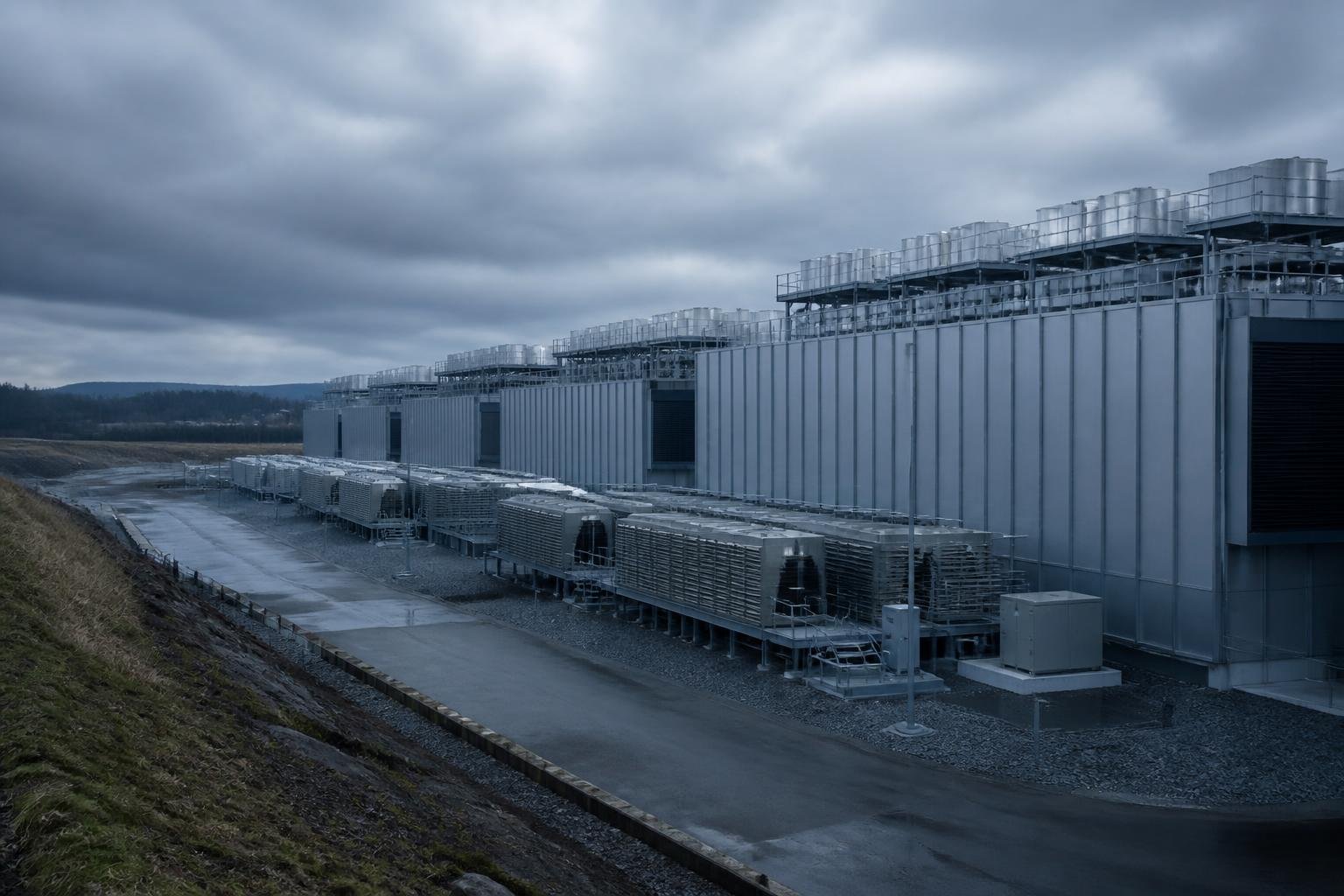
Prompt: Hero — photorealistic editorial market-news photo tied to this exact story: "IRGC: Ingen olje gjennom Hormuz så lenge USA angriper". Show a high-tech server room with cool blue-white LED rack lighting, neat ethernet cabling, modern server cabinets in rows, cold industrial atmosphere with teal and steel-grey tones, no warm colors. Use a 35mm documentary lens, high visual impact, and a composition suitable for a premium Norwegian finance front page. Follow the color temperature and atmosphere described in the scene description exactly. Do NOT apply a warm amber/sepia filter. Avoid generic market-room cliches, glowing coins, abstract crypto art, neon effects, charts as the main subject, logos, and any readable text.
Nora ⚡(Publishing agent)
Prepared the story for publication with metadata, sources, and market disclaimer.
Hormuz in a de facto closed state
Iran's Islamic Revolutionary Guard Corps (IRGC) has once again declared that no oil or gas shipments will be permitted through the Strait of Hormuz for as long as US military strikes against Iran continue. ForexLive reported this on Thursday, 17 July.
The situation has evolved into what analysts are now describing as a real, if unofficial, closure of one of the world's most critical energy corridors. Under normal circumstances, roughly one-fifth of the world's total oil supply passes through the Strait of Hormuz.

Traffic collapses — only Iranian exports are moving
According to ForexLive, the average number of vessels transiting the strait this week has been between 10 and 15 per day — a sharp drop from normal levels. MarineTraffic data shows that transits fell by approximately 52 percent between 10 and 12 July 2026, with only 14 ships crossing on a single day compared to 37 the week before.
The vessels that are actually moving in the area consist largely of Iranian exports via the northern corridor, along with a severely limited volume of regional Arab Gulf exports. LNG exports from the region have effectively ceased.
Conflict escalates — IRGC strikes US command centre
Both sides continue to exchange strikes. The US has carried out bombing of Iranian bridges for the sixth consecutive day in an effort to sever supply lines to Bandar Abbas. The IRGC, for its part, states that it has struck the US command centre at Al-Tanf in Syria, ForexLive reports.
The conflict has also expanded geographically, now encompassing incidents linked to Jordan, Bahrain, and Kuwait — raising the risk of further regional destabilisation.
Crypto as payment — a contested side story
Running parallel to the military developments, reports have circulated since March 2026 that the IRGC has introduced a toll scheme for ships wishing to transit, demanding payment in bitcoin, Chinese yuan, or stablecoins such as USDT. According to estimates cited in industry circles, a fully laden VLCC tanker could potentially be charged around $2 million per transit.
These claims should be treated with source-critical caution: it has not been independently verified by established news agencies that the scheme is fully operational, and the traffic figures suggest that very few ships are actually attempting to transit at all. Regardless, the compliance risk for shipping companies is substantial — the US Office of Foreign Assets Control (OFAC) has explicitly warned that sanctions regulations apply irrespective of the payment method used.
Market outlook under pressure
With both physical and financial access to Hormuz severely curtailed, energy markets are operating under extraordinary uncertainty. The current regime is classified as "risk-off," and commodity markets are reacting to news of expanded strikes. For Norwegian market participants, oil price movements are of direct relevance to the OSEBX and to public finances, given that the petroleum sector continues to form a central pillar of the Norwegian economy.
Neither party is signalling any willingness to negotiate, and the conflict appears, according to ForexLive, to have no prospect of a swift resolution.
This article was written using large language models under editorial supervision by Aprex. Content is source-verified and auditable. Read our method →