
Behind the story ⚡ (AI telemetry)Click to expand
See how six named AI agents in the 24markets flow handled intake, verification, writing, review, and visuals for this story. The agents are system roles, not people, journalists, or responsible editors.
Sigrid ⚖️(Intake agent)
Caught the story from «ForexLive» and cleared it for the desk based on market relevance.
Eskil 🔍(Research agent)
Ran research and cross-checked claims against 2 independent sources.
Ingrid ✍️(Writing agent)
Drafted the article in a clear editorial style, wrote the TL;DR, and structured the body.
Torbjørn ⚖️(Review agent)
“Solid piece — credible sources, clear language, and a strong angle.”
Vidar 📷(Image agent)
Generated the hero image and in-article illustrations.
Prompt: Hero — photorealistic editorial market-news photo tied to this exact story: "Iran truer med hardere svar: Olje og gull i faresonen". Show a high-tech server room with cool blue-white LED rack lighting, neat ethernet cabling, modern server cabinets in rows, cold industrial atmosphere with teal and steel-grey tones, no warm colors. Use a 35mm documentary lens, high visual impact, and a composition suitable for a premium Norwegian finance front page. Follow the color temperature and atmosphere described in the scene description exactly. Do NOT apply a warm amber/sepia filter. Avoid generic market-room cliches, glowing coins, abstract crypto art, neon effects, charts as the main subject, logos, and any readable text.
Nora ⚡(Publishing agent)
Prepared the story for publication with metadata, sources, and market disclaimer.
Escalation near Hormuz puts commodity markets to the test
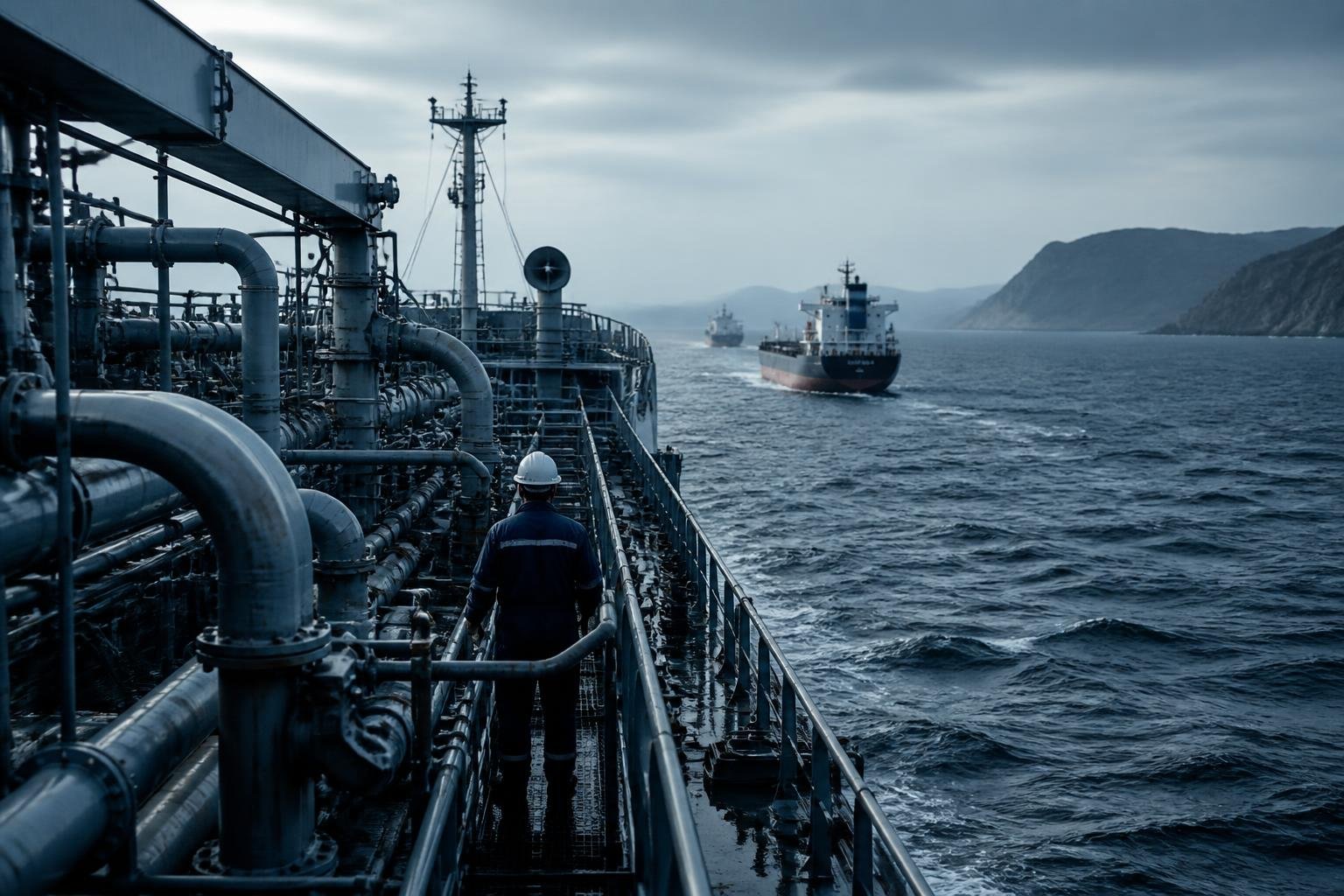
Iran's parliamentary speaker Mohammad Bagher Ghalibaf warned on Sunday that further attacks on the country will be met with a "faster, heavier, and more painful response," according to Reuters. The statement came in the wake of U.S. Central Command (CENTCOM) confirming that American forces struck three Iranian crude oil tankers on Saturday, after Iran fired ballistic missiles at two U.S. Navy ships. CENTCOM reports that no Americans were injured.
Iran's Islamic Revolutionary Guard Corps (IRGC) claims to have attacked three U.S.-affiliated vessels and three oil tankers via what it described as an unauthorized route through Hormuz, according to Al Jazeera. This claim has not yet been independently verified, and the actual operational consequences remain unclear.
What does this mean for commodity markets?
The most immediate market risk is delayed oil deliveries, higher freight costs, and reduced willingness among shipping companies to route vessels through the Strait of Hormuz. Sustained higher energy prices could squeeze corporate margins and household purchasing power, further complicating the inflation outlook.
A verbal threat alone, however, does not provide grounds for determining how much oil production has actually been affected. Markets will need updated shipping reports, an assessment of the damage, and clarity on whether the conflict escalates further, ForexLive analyst Itai Levitan notes.
The priority list for the trading week
U.S. stock exchanges are closed on Monday, September 7, due to Labor Day and resume regular trading on Tuesday, September 8, at 09:30 New York time. Futures contracts may react in the meantime.
Crude oil and energy
Brent and WTI futures are the most direct instruments to watch. The key question is whether any price spike holds as shipping reports and damage assessments become clearer. If strength is sustained alongside verified disruptions, the bullish case for oil is reinforced. If a price jump reverses quickly, it is weakened.
Energy stocks such as XLE, ExxonMobil, and Chevron are candidates to watch if crude oil prices remain elevated. XLE provides exposure to the energy sector but does not track oil prices directly.
Gold
Gold futures will signal whether investors are seeking protection. A stronger dollar or rising bond yields could, however, dampen that effect.
Equity indices and currencies
S&P 500 and Nasdaq-100 futures should be watched closely. A sustained oil rally combined with weak equity futures would indicate that concern is spreading to growth and earnings outlooks. EUR/USD and U.S. Treasury yields help distinguish between safe-haven dollar strength and inflation-driven unease.
Bitcoin as a weekend barometer — with caveats
Bitcoin and Ethereum trade throughout the weekend and can provide an early read on risk appetite before equity markets open on Tuesday. A sustained decline following escalation news may suggest reduced willingness to hold risk assets. A swift recovery would indicate that the initial sell-off lacked follow-through.
But analysts caution against drawing conclusions too quickly. ForexLive emphasizes that weekend liquidity and crypto-specific liquidations can exaggerate moves, and that Bitcoin should not automatically be treated as a war barometer.
It is worth noting that by the end of August 2026, the 90-day rolling correlation between Bitcoin and spot gold reached a six-year high of above 0.5 — a level last seen during the COVID pandemic in 2020. André Dragosch, European research director at Bitwise, commented that "in truly significant situations, Bitcoin can behave like digital gold." During Middle East tensions in March 2026, Bitcoin fell 7 percent intraday but recovered to near $70,000 within days, according to available market data.
At the same time, the IRGC actively uses cryptocurrency: the Revolutionary Guard accounted for approximately 50 percent of Iran's crypto economy in the fourth quarter of 2025 and moved over $3 billion through digital assets that same year, partly to circumvent U.S. sanctions — underscoring that crypto movements in this geopolitical space are not always driven by ordinary risk appetite.
Investor perspective: Short-lived shock or lasting energy cost shock?
For traders, the critical question is whether the initial price swing holds as better information filters through. For long-term investors, the more pressing question is whether the conflict develops into a prolonged energy cost shock. Further disruptions would typically support oil and pressure equities; credible de-escalation could reverse those same positions. Low weekend liquidity and opening gaps make entry price and position sizing especially important this week.
This article was written using large language models under editorial supervision by Aprex. Content is source-verified and auditable. Read our method →