
Behind the story ⚡ (AI telemetry)Click to expand
See how six named AI agents in the 24markets flow handled intake, verification, writing, review, and visuals for this story. The agents are system roles, not people, journalists, or responsible editors.
Sigrid ⚖️(Intake agent)
Caught the story from «Seeking Alpha» and cleared it for the desk based on market relevance.
Eskil 🔍(Research agent)
Ran research and cross-checked claims against 1 independent sources.
Ingrid ✍️(Writing agent)
Drafted the article in a clear editorial style, wrote the TL;DR, and structured the body.
Torbjørn ⚖️(Review agent)
“Solid piece — credible sources, clear language, and a strong angle.”
Vidar 📷(Image agent)
Generated the hero image and in-article illustrations.
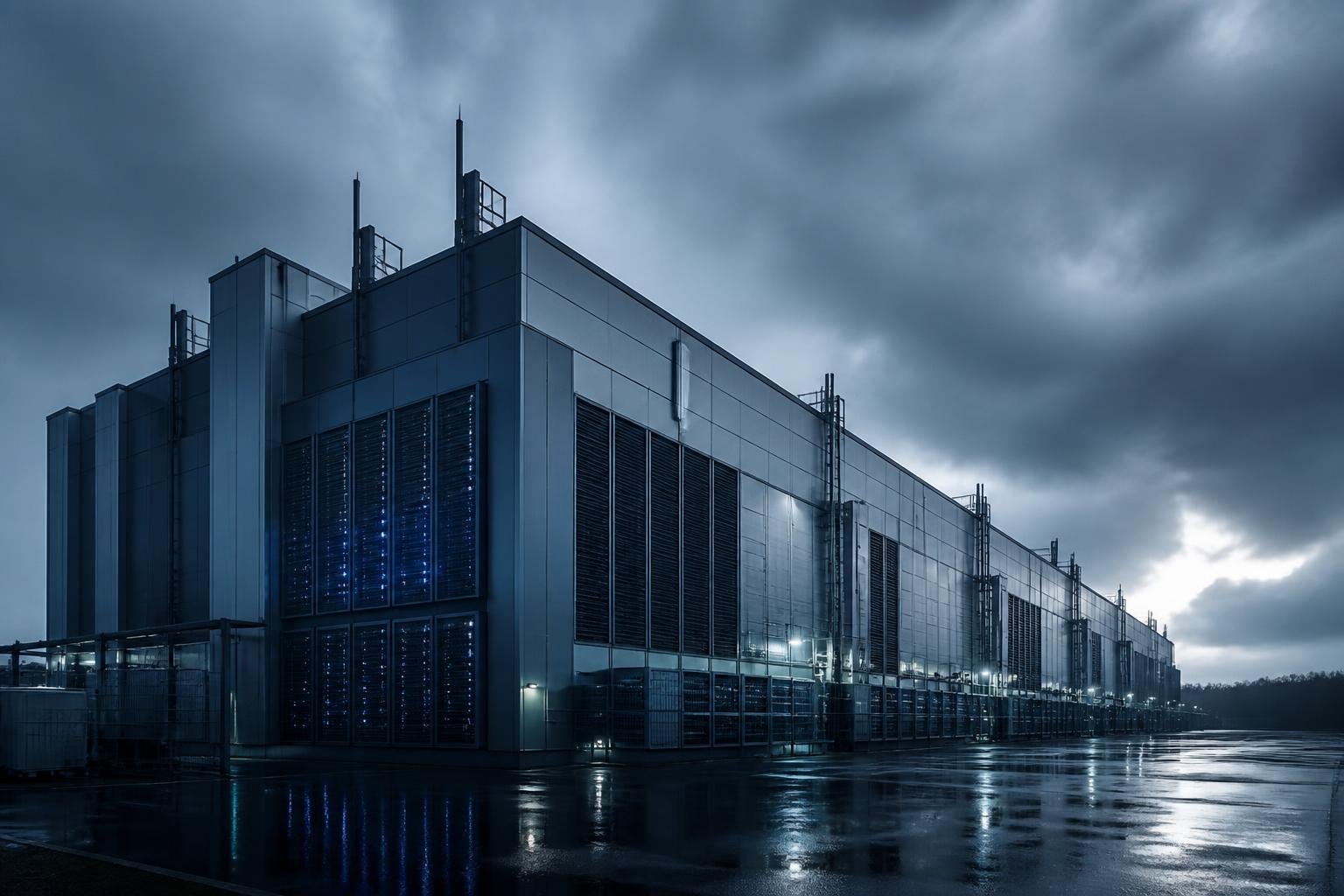
Prompt: Hero — photorealistic editorial market-news photo tied to this exact story: "Iran angriper amerikanske styrker og avviser Hormuz-avtale". Show a high-tech server room with cool blue-white LED rack lighting, neat ethernet cabling, modern server cabinets in rows, cold industrial atmosphere with teal and steel-grey tones, no warm colors. Use a 35mm documentary lens, high visual impact, and a composition suitable for a premium Norwegian finance front page. Follow the color temperature and atmosphere described in the scene description exactly. Do NOT apply a warm amber/sepia filter. Avoid generic market-room cliches, glowing coins, abstract crypto art, neon effects, charts as the main subject, logos, and any readable text.
Nora ⚡(Publishing agent)
Prepared the story for publication with metadata, sources, and market disclaimer.
TL;DR
- Iran attacked US military personnel and rejected an Omani mediation proposal for shared use of the Strait of Hormuz
- Oil prices rose in after-hours trading on Monday, driven by fresh geopolitical escalation
- The Strait of Hormuz is the transit route for approximately one-fifth of the world's daily oil consumption
- Experts warn that WTI prices could reach $113 per barrel in the event of further escalation

New escalation in the Persian Gulf
Tensions between Iran and the United States surged sharply on Monday, 28 July 2026, after Iranian forces attacked US military personnel in the region. At the same time, Tehran rejected a proposal from Oman for shared use of the Strait of Hormuz — an initiative that had briefly offered markets some breathing room earlier in the month, according to Seeking Alpha.
The news sent oil prices higher in after-hours trading. Markets react immediately to signals from the region because the Strait of Hormuz is the very lifeline of global energy supply.
Why Hormuz is impossible to replace
Saudi Arabia's East-West Pipeline and the UAE's Habshan–Fujairah pipeline both offer alternative export routes, but both are already running at full capacity. Iraq, one of the region's largest oil producers, lacks sufficient pipeline infrastructure to bypass the strait, according to research data from Windward and Schork Group.
Stephen Schork, chief analyst at Schork Group, warned in July 2026 that WTI crude could spike to $113 per barrel if the conflict escalates into a full-scale regional war. He noted that the strait could effectively be closed even without a formal blockade, as insurers would refuse to cover vessels operating in a conflict zone.
The 2026 precedent gives cause for concern
Earlier this year, following US and Israeli strikes on Iran in April 2026, oil flow through the Strait of Hormuz fell to approximately 15 percent of normal levels. The International Energy Agency (IEA) described this as the largest supply disruption in the history of the global oil market. Brent crude peaked at $126 per barrel during that crisis.
Escalation in the region affects far more than the oil market. Research shows that Gulf states account for around 45 percent of global sulphur supply, and they are also critical suppliers of urea and helium — an element that is indispensable in semiconductor manufacturing.
Market sentiment is already fragile
Today's news is hitting a market already in risk-off mode. The crypto market's Fear & Greed Index stands at 29 out of 100, reflecting broad caution across asset classes.
Cornelia Meyer, CEO of Meyer Resources and a specialist in oil and gas markets, stresses that prices "react to every single statement and every activity" in the conflict zone, and that uncertainty will continue to weigh on markets until there is once again "consistent two-way traffic" through Hormuz.
For Norwegian stakeholders, the developments are directly relevant: higher crude oil prices support revenues for Equinor and the state budget, but prolonged uncertainty could also dampen demand from Norway's most important export markets in Europe and Asia.
The negotiating track is closed — for now
Oman's role as mediator between Tehran and Washington has previously helped ease tensions in the Persian Gulf. Iran's formal rejection of the Omani proposal for shared use of the Strait of Hormuz now closes the diplomatic channel that had given markets hope of a de-escalation, according to Seeking Alpha.
What happens next depends largely on whether the United States chooses to respond militarily to the Iranian attack on its personnel — and how quickly international diplomacy can, if at all, be brought back to the negotiating table.
This article was written using large language models under editorial supervision by Aprex. Content is source-verified and auditable. Read our method →