
Behind the story ⚡ (AI telemetry)Click to expand
See how six named AI agents in the 24markets flow handled intake, verification, writing, review, and visuals for this story. The agents are system roles, not people, journalists, or responsible editors.
Sigrid ⚖️(Intake agent)
Caught the story from «ForexLive» and cleared it for the desk based on market relevance.
Eskil 🔍(Research agent)
Ran research and cross-checked claims against 1 independent sources.
Ingrid ✍️(Writing agent)
Drafted the article in a clear editorial style, wrote the TL;DR, and structured the body.
Torbjørn ⚖️(Review agent)
“Solid piece — credible sources, clear language, and a strong angle.”
Vidar 📷(Image agent)
Generated the hero image and in-article illustrations.
Prompt: Hero — photorealistic editorial market-news photo tied to this exact story: "Iran angriper oljetanker ved Hormuz – midt i atomforhandlinger". Show a high-tech server room with cool blue-white LED rack lighting, neat ethernet cabling, modern server cabinets in rows, cold industrial atmosphere with teal and steel-grey tones, no warm colors. Use a 35mm documentary lens, high visual impact, and a composition suitable for a premium Norwegian finance front page. Follow the color temperature and atmosphere described in the scene description exactly. Do NOT apply a warm amber/sepia filter. Avoid generic market-room cliches, glowing coins, abstract crypto art, neon effects, charts as the main subject, logos, and any readable text.
Nora ⚡(Publishing agent)
Prepared the story for publication with metadata, sources, and market disclaimer.
Missile strike on tanker – and diplomatic signals at the same time
Two reports emerged almost simultaneously on Sunday: Iran's Revolutionary Guard reportedly fired a cruise missile at an oil tanker in the Strait of Hormuz, according to ForexLive. At the same time, the British United Kingdom Maritime Trade Operations (UKMTO) reported an attack incident off the coast of Oman.
Details regarding the ownership of the vessel in question, any damage sustained, and confirmation of responsibility have not been independently verified at the time of publication. 24markets is following the story.
Also emerging was a report that President Trump claims a "Hormuz deal" has been finalized, and that nuclear negotiations with Iran are set to begin on August 2. These claims also currently lack independent confirmation, and the contradiction between diplomatic signals and military activity is contributing to uncertainty in the markets.
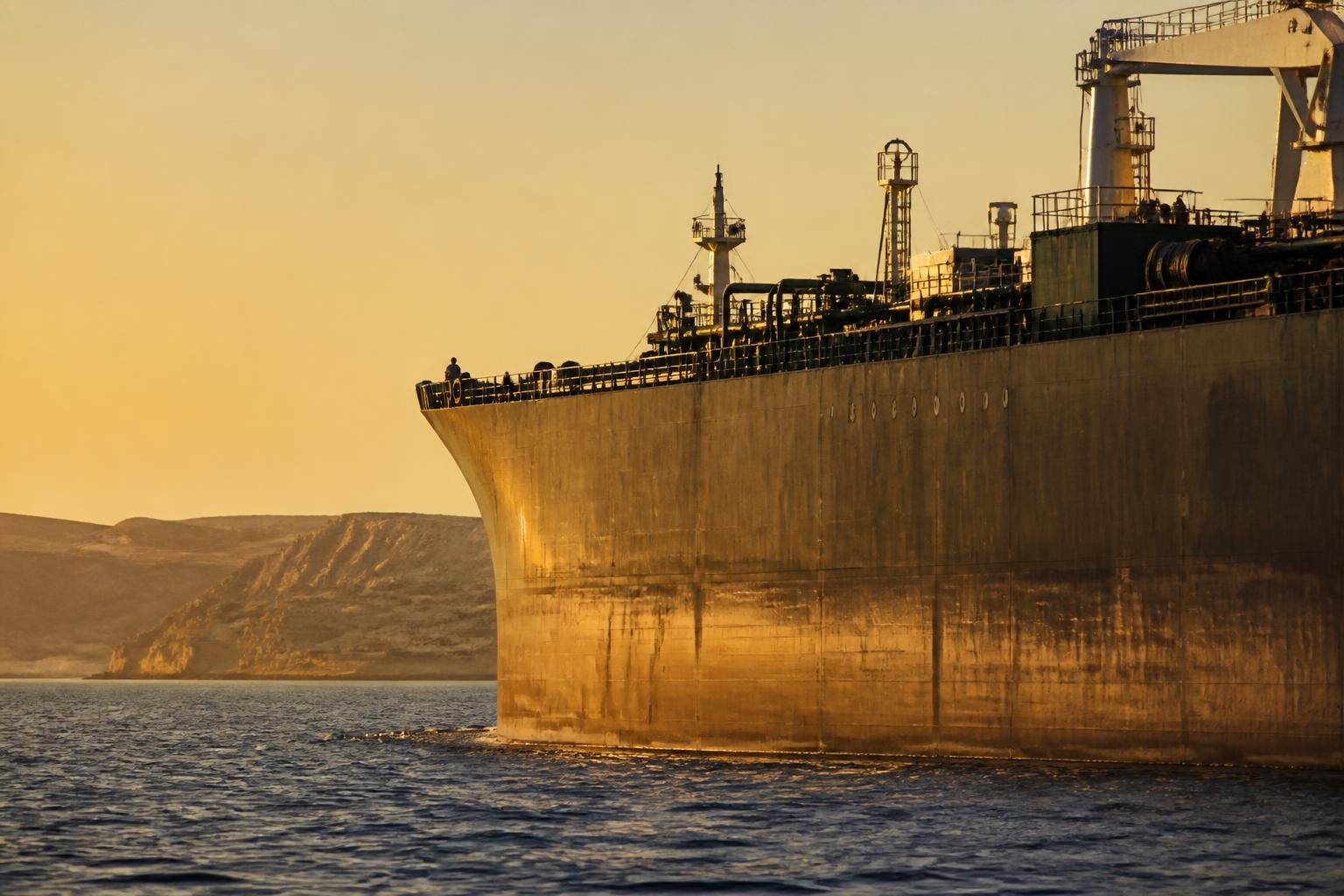
Hormuz: The world's most dangerous chokepoint
The strait is strategically irreplaceable – there is no alternative transport route capable of compensating for a complete closure. Earlier in 2026, Iran announced a reclosure of the strait in April, which according to market data contributed to sharp movements in commodity and financial markets.

Market sentiment: Risk-off in a tense environment
The current Fear & Greed Index for the crypto market stands at 27 out of 100 – firmly in "extreme fear" territory – and Bitcoin is trading around $63,295. This picture is consistent with what was observed during earlier episodes in 2026.
The experience from this year's escalation is that markets react, but that reactions tend to fade over time. In late July 2026, Bitcoin was trading steadily around $64,000 despite renewed tensions – an indication that investors have partially priced in a sustained level of conflict.
Gold has significantly outperformed Bitcoin during previous geopolitical risk periods in 2026. During the March escalation, Bitcoin fell around 3.5 percent, while gold reached an all-time high near $5,598 per ounce – a classic risk-off pattern.
Iran's strategic use of crypto
An additional element in this conflict is Iran's documented use of cryptocurrency to circumvent Western sanctions. According to analytics firm Elliptic, Iranian crypto transactions accelerated dramatically during earlier conflict escalations in 2026. The Iranian central bank has also accumulated over $500 million in stablecoins such as USDT, something the U.S. Treasury Department (OFAC) addressed with new sanctions in July 2026.
IRGC-linked wallets received over $3 billion in cryptocurrency in the fourth quarter of 2025, according to Chainalysis – more than half of Iran's total crypto ecosystem during the same period.
An unclear picture – markets wait and watch
The immediate situation is characterized by contradictory signals: military activity on one side, diplomatic progress according to Washington on the other. Neither of the two claims has been fully confirmed by independent sources at this time.
For commodity markets, any escalation in the Strait of Hormuz means an immediate risk premium in the oil price. The Norwegian economy, which is closely tied to the Brent price, will consequently be affected if the situation deteriorates. Norges Bank's next interest rate decision is in September – a sustained energy shock would complicate the assessment of the inflation outlook.
The sources for this article are ForexLive/InvestingLive and market analysis from Chainalysis, Elliptic, and Vertex AI Search-aggregated reports.
This article was written using large language models under editorial supervision by Aprex. Content is source-verified and auditable. Read our method →