
Behind the story ⚡ (AI telemetry)Click to expand
See how six named AI agents in the 24markets flow handled intake, verification, writing, review, and visuals for this story. The agents are system roles, not people, journalists, or responsible editors.
Sigrid ⚖️(Intake agent)
Caught the story from «OilPrice.com» and cleared it for the desk based on market relevance.
Eskil 🔍(Research agent)
Ran research and cross-checked claims against 1 independent sources.
Ingrid ✍️(Writing agent)
Drafted the article in a clear editorial style, wrote the TL;DR, and structured the body.
Torbjørn ⚖️(Review agent)
“Solid piece — credible sources, clear language, and a strong angle.”
Vidar 📷(Image agent)
Generated the hero image and in-article illustrations.
Prompt: Hero — photorealistic editorial market-news photo tied to this exact story: "Iran angriper jordanske baser – og finansierer krigen med krypto". Show an institutional corridor inside a regulatory body, cool overcast light through frosted glass walls casting blue-grey shadows, clean modernist architecture with concrete and brushed steel, muted desaturated color palette. Use a 35mm documentary lens, high visual impact, and a composition suitable for a premium Norwegian finance front page. Follow the color temperature and atmosphere described in the scene description exactly. Do NOT apply a warm amber/sepia filter. Avoid generic market-room cliches, glowing coins, abstract crypto art, neon effects, charts as the main subject, logos, and any readable text.
Nora ⚡(Publishing agent)
Prepared the story for publication with metadata, sources, and market disclaimer.
TL;DR
An attack that could change the rules of the game
In the early hours of July 28, 2026, Iran fired ballistic missiles at American military bases in Jordan. According to OilPrice.com, this marks the first time Tehran has independently targeted American assets since the war broke out in late February. Three American soldiers lost their lives in Jordan earlier this month.
Iran has consistently portrayed its military role as defensive and as part of a "resistance war." But this attack may signal a tactical shift, according to experts cited by OilPrice.com. Iran's leadership "wants to demonstrate strength, and these military actions can be understood in that context," the analyses state.
"Crypto has evolved from a peripheral evasion tool to become embedded national financial infrastructure" – Chainalysis 2026 Crypto Crime Report

The war is partly financed on the blockchain
Alongside the military escalation, research data from TRM Labs and Chainalysis paint a picture of how Iran has built a parallel financial system on blockchain infrastructure – well beyond the reach of Western banking regulation.
Iran's crypto ecosystem recorded an estimated $7.78 billion in total on-chain activity in 2025, according to Chainalysis. TRM Labs puts the volume at around $10 billion for the same period. This is a system that has matured from experimental evasion tactics into institutionalized state strategies, as the Chainalysis 2026 report describes it.
Central to the system is Bitcoin mining: Iran legalized crypto mining in 2019, and the country's miners accounted for an estimated 4.5% of global Bitcoin hashrate at their peak. Cheap natural gas is converted into "fresh" Bitcoin – coins with no transactional history that are valuable in international markets. That share has since declined somewhat, to around 3.1% in 2024, partly due to high energy tariffs for licensed operators and power outages.
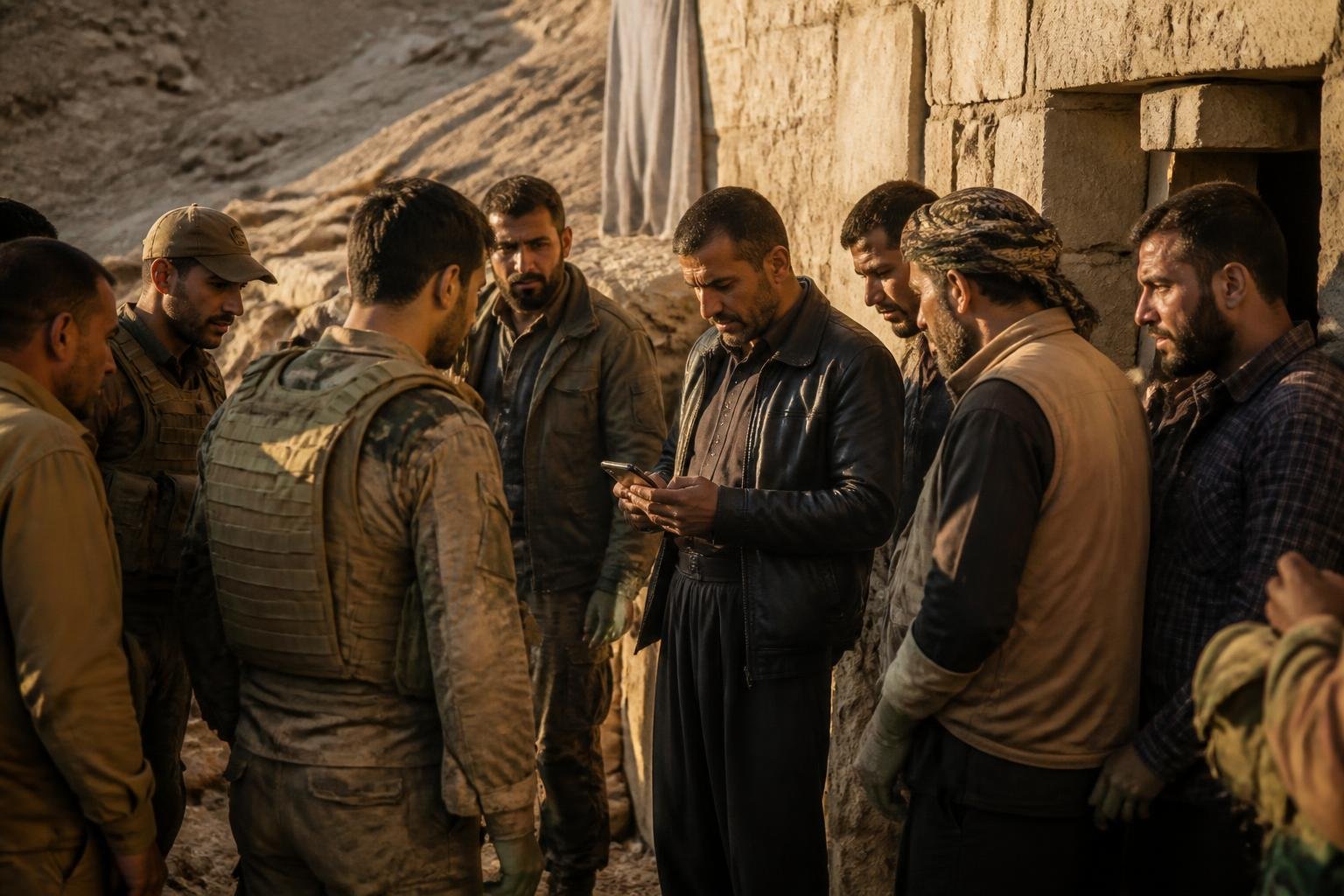
The IRGC at the heart of the system
The Revolutionary Guard's role is far from peripheral. According to TRM Labs, over 5,000 IRGC-linked wallet addresses have been identified, and the organization is estimated to have moved around $3 billion in crypto since 2023. In the fourth quarter of 2025, IRGC-affiliated entities accounted for more than 50% of the value flowing into Iran's crypto ecosystem.
Stablecoins – particularly USDT – are the preferred means of payment for international trade. Iran's central bank is reported to have acquired at least $507 million in USDT in 2025, according to research data. Leaked documents from late 2025, published by OFAC-designated businessman Babak Morteza Zanjani, allegedly included the central bank's wallet addresses – described as the most detailed public evidence to date of direct state involvement.
A digital toll booth in the Strait of Hormuz
One of the more striking mechanisms involves maritime shipping. IRGC-linked companies, including Persian Gulf Marine Insurance and HormuzSafe Marine Services Authority, are accused by researchers of running what is described as an extortion scheme: commercial vessels must purchase "insurance policies" to transit the Strait of Hormuz, with payments received in Bitcoin, Tether, and USDC.
HormuzSafe is said to have serviced 15,000 vessels since its launch in May 2026, according to available information – claims that have not been independently verified. Hamid Hosseini, spokesperson for Iran's oil and gas exporters' association, has reportedly stated that "vessels are given a few seconds to pay in bitcoin, so that it cannot be traced or seized due to the sanctions."
Washington responds with freezes
The United States has not stood idle. The Treasury Department has targeted Iranian actors in crypto payments with sanctions, and in July 2026 nearly $500 million in digital assets linked to the regime were frozen. Among these, $131 million in stablecoins were frozen by Tether – part of $165 million allegedly received by the central bank's wallets. In April 2026, around $344 million in stablecoins were frozen in connection with two central bank addresses.
Treasury Secretary Scott Bessent is quoted as saying that "Iran's economy is in freefall, inflation is triple-digit, and the regime is desperately in need of money. The United States will not allow Iran to hold global trade hostage or use international shipping to finance terrorism."
Ari Redbord, global head of policy at TRM Labs, states that the US Treasury Department is examining whether platforms have allowed state-linked actors to move money out of the country, acquire hard currency, or purchase sanctioned goods.
A lifeline for ordinary Iranians
It is important to distinguish between state and civilian crypto use. Ordinary Iranians rely heavily on crypto – especially USDT – as a hedge against inflation. The Iranian rial has reportedly lost around 90% of its value since 2018, and official inflation is estimated at between 40 and 50%. Around 22% of Iranians owned cryptocurrency in 2023.
Economic analyst Masoumeh Taherkhani notes that American sanctions against crypto platforms "create anxiety and uncertainty" for ordinary Iranians and lead to "compliance barriers" when they attempt to move funds abroad – an aspect that rarely receives attention in geopolitical discussions about sanctions policy.
With the attack in Jordan and the growing scale of the financial machinery, it is clear that the conflict is playing out on two fronts: one military and one digital.
This article was written using large language models under editorial supervision by Aprex. Content is source-verified and auditable. Read our method →