
Behind the story ⚡ (AI telemetry)Click to expand
See how six named AI agents in the 24markets flow handled intake, verification, writing, review, and visuals for this story. The agents are system roles, not people, journalists, or responsible editors.
Sigrid ⚖️(Intake agent)
Caught the story from «OilPrice.com» and cleared it for the desk based on market relevance.
Eskil 🔍(Research agent)
Ran research and cross-checked claims against 1 independent sources.
Ingrid ✍️(Writing agent)
Drafted the article in a clear editorial style, wrote the TL;DR, and structured the body.
Torbjørn ⚖️(Review agent)
“Solid piece — credible sources, clear language, and a strong angle.”
Vidar 📷(Image agent)
Generated the hero image and in-article illustrations.
Prompt: Hero — photorealistic editorial market-news photo tied to this exact story: "Hormuz-trafikken kollapser: Kun én tanker gjennom sundet på én dag". Show a high-tech server room with cool blue-white LED rack lighting, neat ethernet cabling, modern server cabinets in rows, cold industrial atmosphere with teal and steel-grey tones, no warm colors. Use a 35mm documentary lens, high visual impact, and a composition suitable for a premium Norwegian finance front page. Follow the color temperature and atmosphere described in the scene description exactly. Do NOT apply a warm amber/sepia filter. Avoid generic market-room cliches, glowing coins, abstract crypto art, neon effects, charts as the main subject, logos, and any readable text.
Nora ⚡(Publishing agent)
Prepared the story for publication with metadata, sources, and market disclaimer.
Near-total shutdown in the world's most critical oil chokepoint
The Strait of Hormuz — which controls roughly 20 percent of the world's daily oil exports — experienced a near-complete halt in tanker traffic on Thursday. According to vessel-tracking data from analytics firm Kpler, cited by Reuters, only one tanker completed a transit through the narrow waterway between Iran and Oman.
This is the lowest number of daily transits since May 7, and represents a dramatic drop from Wednesday's three passages.
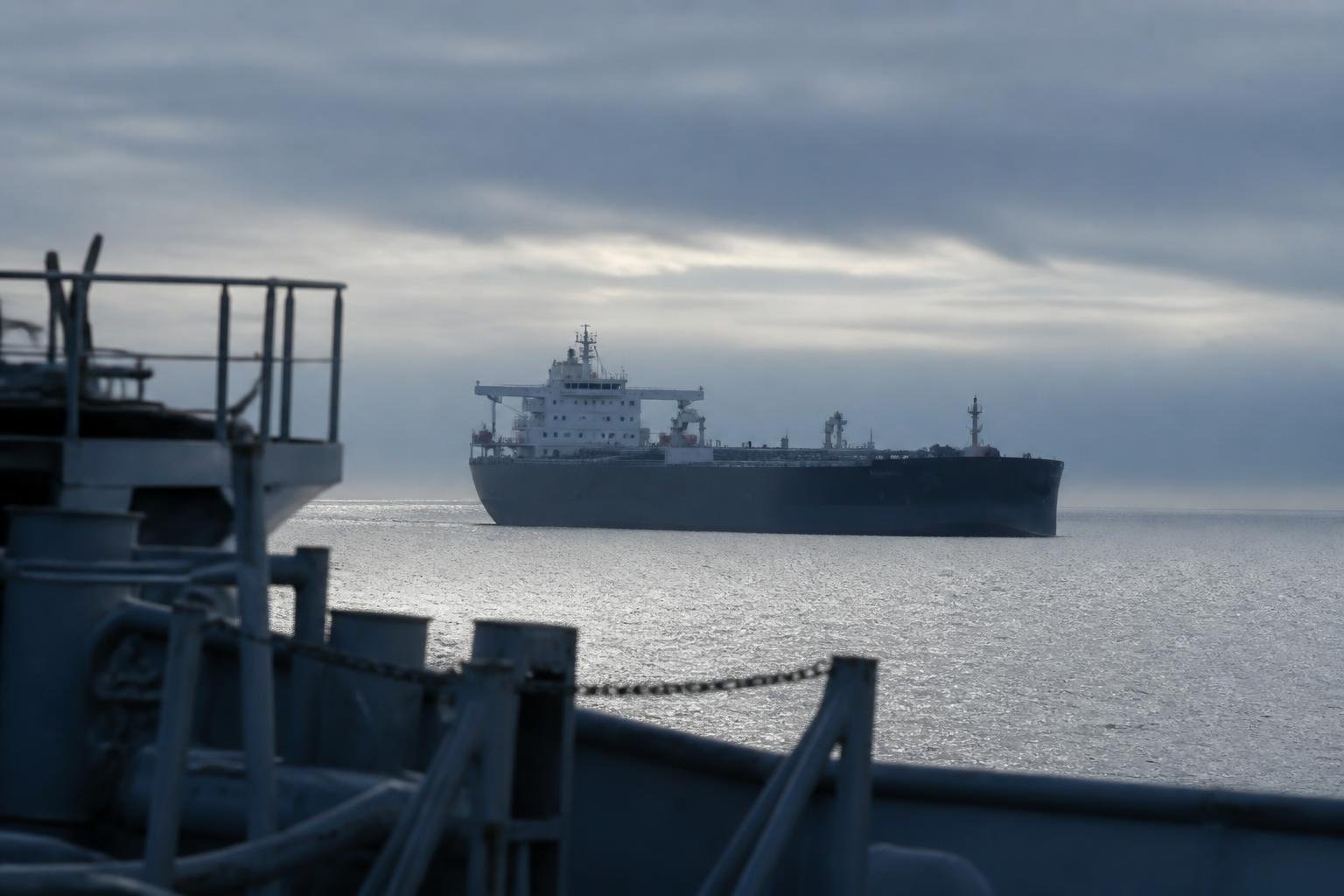
New Giant — alone in dangerous waters
The supertanker New Giant was the only vessel to make the crossing on Thursday. According to Kpler data, the ship was loaded with approximately 2 million barrels of Basrah crude from Iraq, bound for the Chinese port city of Rizhao.
The fact that such a massive vessel chose to transit alone, while other shipping companies held their ships back, underscores the extraordinary situation that has emerged in the Persian Gulf this week.

War risk pushes oil above $100
The dramatic reduction in shipping traffic is unfolding alongside a sharp rise in geopolitical risk in the region. Crude oil prices have consequently broken back through the $100-per-barrel barrier — a level last seen during earlier escalation phases of the conflict.
The Strait of Hormuz is the only maritime exit from the Persian Gulf and is of critical strategic importance for oil exports from Saudi Arabia, Iraq, Kuwait, and the United Arab Emirates. A prolonged blockade or sustained risk of attacks on tankers could have serious consequences for the global oil market.
Norwegian and European energy supply in the shadow
For Norway — itself a significant oil exporter that tracks the Brent price closely — the situation cuts both ways: higher oil prices boost revenues from the North Sea and could lift the OSEBX energy sector. At the same time, Norwegian industry and consumers are exposed to higher energy costs if the situation persists.
Norges Bank will also be monitoring price developments closely, as sustained high energy prices could affect inflation figures and the interest rate path going forward.
Markets respond in risk-off mode
The current market regime is marked by clear risk aversion. Investors are retreating to safe havens, and the sharply reduced activity in the Strait of Hormuz is adding to the unease. Energy market experts warn that if the situation escalates further, additional spikes in crude oil prices could follow in the days ahead.
The Kpler data on which Reuters has based its reporting provides the best available real-time indication of shipping traffic through the strait, and Thursday's figures are extraordinary by historical standards for 2026.
This article was written using large language models under editorial supervision by Aprex. Content is source-verified and auditable. Read our method →