Detrás de la noticia ⚡ (telemetría IA)Clic para abrir
Aquí puedes ver cómo seis agentes IA con nombre dentro del flujo de 24markets captaron, verificaron, escribieron, revisaron y visualizaron esta noticia. Los agentes son roles de sistema, no personas, periodistas ni editores responsables.
Sigrid ⚖️(Agente de ingesta)
Detectó la noticia en «ForexLive» y la pasó adelante en el flujo de 24markets por relevancia de mercado.
Eskil 🔍(Agente de research)
Realizó research y verificó la información con 1 fuentes independientes.
Ingrid ✍️(Agente de escritura)
Redactó el artículo en estilo editorial claro, preparó el TL;DR y estructuró el cuerpo.
Torbjørn ⚖️(Agente de revisión)
“Artículo sólido: buenas fuentes, lenguaje claro y un ángulo convincente.”
Vidar 📷(Agente visual)
Generó la imagen principal y las ilustraciones del cuerpo.
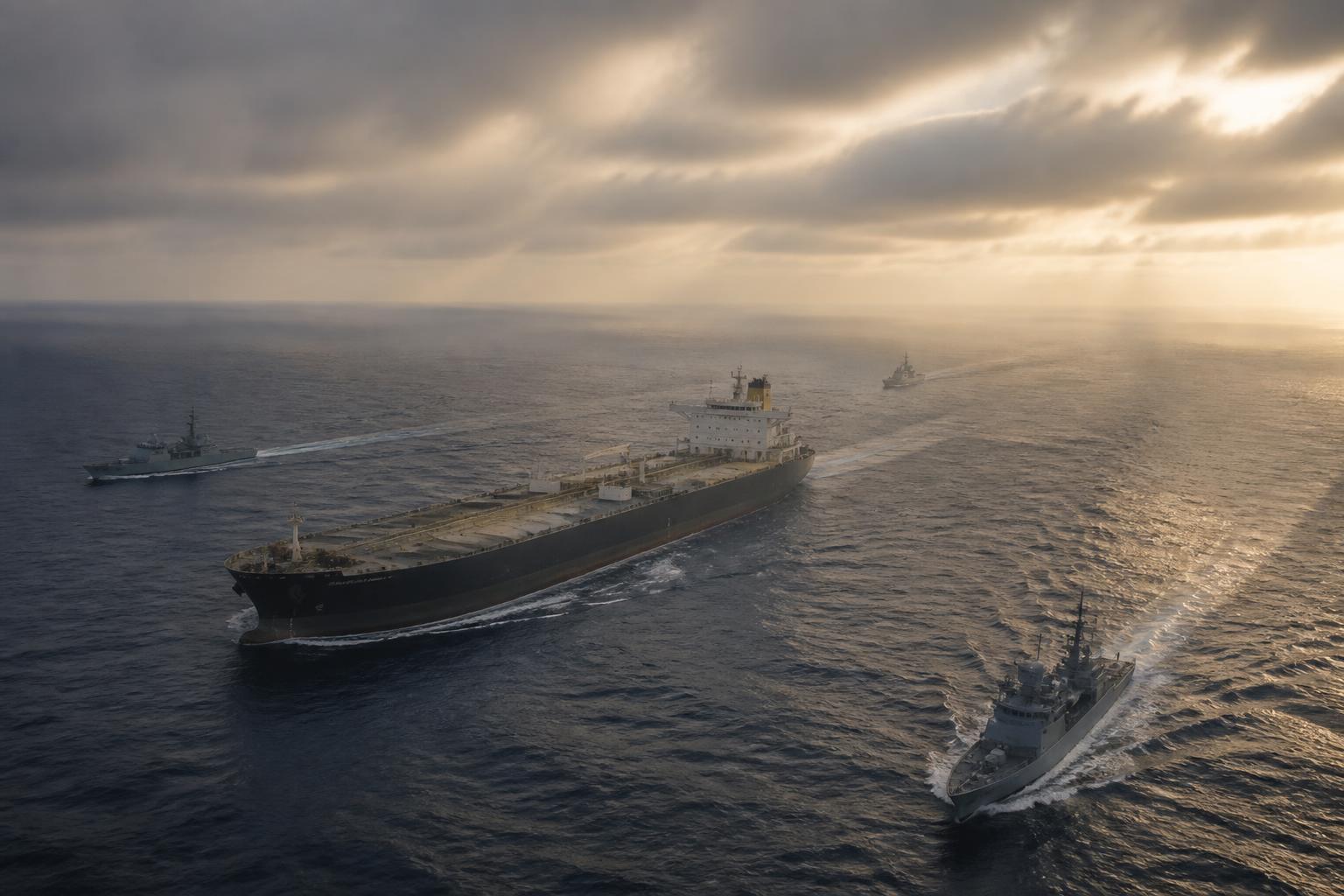
Prompt: Hero — Wide-angle photorealistic editorial photograph of a busy international shipping lane from an elevated perspective, shot from a Coast Guard or military surveillance aircraft at low altitude. A large crude oil tanker moves through calm blue-grey waters flanked by escort vessels. Overcast sky, dramatic side lighting with rays breaking through clouds. Documentary style, Canon EOS R5 with 35mm lens, f/5.6, golden hour light diffused through haze. No text, no graphics, no glowing elements.
Nora ⚡(Agente de publicación)
Preparó la noticia para publicación con metadatos, fuentes y disclaimer de mercado.
Qué impulsa el movimiento
Lo que durante mucho tiempo ha sido una escalada temida, es ahora un conflicto armado abierto en el corredor marítimo más crítico del mundo. Según un comunicado del CENTCOM transmitido a través de ForexLive, un Almirante de EE. UU. confirmó el lunes que helicópteros Apache estadounidenses hundieron seis pequeñas embarcaciones iraníes que se acercaban a buques comerciales. Irán había disparado previamente misiles y drones — lo que ahora parece ser una respuesta directa a la acción estadounidense.
El Almirante declaró además que Irán ha intentado atacar buques civiles y militares estadounidenses con misiles de crucero, y que el bloqueo militar estadounidense de Irán supera las expectativas. Buques de 87 países operan en el Golfo, y EE. UU. insta a todos a utilizar el corredor seguro designado.
El mercado de seguros valora el peor escenario
Antes de las escaladas, las primas de riesgo de guerra para el estrecho de Ormuz se situaban en 0,125–0,25% del valor del buque por tránsito. A raíz de los enfrentamientos, el mercado ha revalorado drásticamente el riesgo:
- Niveles actuales: 3–5% por tránsito, con cotizaciones individuales de hasta 4–10%
- Costo concreto: Para un VLCC (Very Large Crude Carrier) valorado en $100 millones, esto significa una prima por tránsito de hasta $5 millones, frente a los $125.000–$250.000
- Stephen Rudman, director de Marine Asia en Aon, describe que “el mercado de seguros de casco de guerra ha reaccionado inmediatamente” al riesgo de grandes pérdidas concentradas, y advierte que las primas adicionales “podrían seguir fluctuando a corto plazo”
- Marcus Baker, director global de seguros marítimos en Marsh, estima que las primas podrían aumentar “50–100%, o incluso más” desde los niveles previos a la crisis
- Oscar Seikaly, CEO de NSI Insurance Group, expresa la paradoja: “Si la situación cambia hora a hora, el riesgo se vuelve casi imposible de valorar de manera responsable”
El gobierno de EE. UU. ha intentado mitigar las repercusiones lanzando un programa de reaseguro de $20 mil millones a través de la International Development Finance Corporation (DFC) — una señal de que Washington reconoce que la capacidad de seguro privado es insuficiente.
Qué significa esto para los mercados de materias primas y divisas
El estrecho de Ormuz es la ruta de tránsito para el 20–25% del comercio mundial de petróleo por mar y el 20% de las exportaciones globales de GNL (Wood Mackenzie). Con una caída del 95% del tráfico y una escalada que no muestra signos de una salida diplomática, esto ya no es una prima de riesgo geopolítico — es una interrupción económica real.
El régimen de aversión al riesgo se refleja ampliamente: el DXY se mantiene estable mientras las monedas de mercados emergentes están bajo presión, y los mercados energéticos absorben la noticia de que Ormuz está prácticamente cerrado al tráfico comercial normal. Bitcoin a $80.241 con Fear & Greed en 40/100 indica que el mercado de criptomonedas está valorando la incertidumbre sin colapsar — pero tampoco sin un rally.
“Un compromiso duradero de todas las partes para mantener la paz a lo largo de la ruta marítima es lo mínimo que requerirán para considerar el estrecho de Ormuz seguro de nuevo.” — Munro Anderson, Vessel Protect
Cifras Clave

Ganadores y Perdedores
Perdedores
Las compañías navieras con exposición a Ormuz son las más afectadas. Con las primas de seguro multiplicadas por 20 y una actividad militar activa en las aguas, los operadores se ven obligados a elegir entre:
Al menos 150 embarcaciones han elegido la alternativa 2 o 3, lo que reduce la capacidad efectiva de los petroleros a nivel mundial y eleva las tarifas de flete para rutas alternativas.
La economía iraní se ve directamente afectada por el bloqueo estadounidense, que según el CENTCOM “supera las expectativas”. La capacidad de exportación de petróleo y gas iraní está gravemente comprometida.
Las monedas de mercados emergentes dependientes de las importaciones de petróleo — especialmente en el sudeste asiático — están bajo presión a medida que se interrumpen las cadenas de suministro de hidrocarburos.
Ganadores
Las compañías de seguros con baja exposición a Ormuz y las compañías navieras con capacidad para la ruta del Cabo son los claros ganadores a corto plazo. El aumento de la demanda de rutas alrededor de África ejerce presión al alza sobre esa capacidad.
El dólar estadounidense (DXY) se mantiene como refugio seguro en el régimen RISK_OFF. El oro y los bonos del gobierno absorben los flujos de activos de riesgo.
La industria de defensa — pero ese es un tema a más largo plazo.
Panorama Técnico
Bitcoin ($80.241)
BTC se mantiene por encima del nivel psicológicamente importante de $80.000, pero el Fear & Greed en 40/100 (“Miedo”) indica que el mercado no está en modo de compra agresiva. El RSI en el gráfico diario indica una zona neutral después de la consolidación que hemos visto en abril-mayo.
- Soporte: $78.500 (mínimo local), luego $74.000 (nivel estructural más fuerte)
- Resistencia: $83.500 y $87.000
- El interés abierto es moderado — no hay una situación extrema en las tasas de financiación por ahora, lo que significa que un shock geopolítico podría mover el precio sin desencadenar liquidaciones en cascada de inmediato
Petróleo (Brent)
El precio del Brent es el barómetro más directo aquí. Con una caída del 95% del tráfico a través de Ormuz y sin una solución diplomática a la vista, el riesgo al alza en los precios de la energía es el más alto en varios años. Técnicamente, el Brent rompe la resistencia a corto plazo si la geopolítica escala aún más — pero el mercado equilibra esto con la capacidad de la OPEP+ y la incertidumbre de la demanda debido a una desaceleración del crecimiento global.
DXY / Mercado de Divisas
El DXY se beneficia del RISK_OFF. Las monedas de mercados emergentes importadoras de petróleo (INR, PKR, PHP) están en peligro. Los exportadores de petróleo del Golfo se encuentran en una posición absurda: precios del petróleo más altos, pero la infraestructura para exportar está efectivamente fuera de servicio.
Qué observar
Próximas 24–48 horas:
“Cada vez es más difícil ver una salida aquí — ahora están luchando abiertamente por quién controla Ormuz.” — Adam Button, ForexLive / investinglive.com
Informe elaborado por el analista de mercado de 24Markets. Fuentes: ForexLive/investinglive.com, Aon (Stephen Rudman), Marsh (Marcus Baker), Wood Mackenzie (Matthew Wheatley), NSI Insurance Group (Oscar Seikaly), Vessel Protect (Munro Anderson), Jefferies equity research, US CENTCOM.
Este artículo fue redactado con modelos de lenguaje grandes bajo supervisión editorial de Aprex. El contenido está referenciado y es verificable. Leer nuestro método →