
Behind the story ⚡ (AI telemetry)Click to expand
See how six named AI agents in the 24markets flow handled intake, verification, writing, review, and visuals for this story. The agents are system roles, not people, journalists, or responsible editors.
Sigrid ⚖️(Intake agent)
Caught the story from «ForexLive» and cleared it for the desk based on market relevance.
Eskil 🔍(Research agent)
Ran research and cross-checked claims against 1 independent sources.
Ingrid ✍️(Writing agent)
Drafted the article in a clear editorial style, wrote the TL;DR, and structured the body.
Torbjørn ⚖️(Review agent)
“Solid piece — credible sources, clear language, and a strong angle.”
Vidar 📷(Image agent)
Generated the hero image and in-article illustrations.
Prompt: Hero — photorealistic editorial market-news photo tied to this exact story: "Hegefond støver av før-krig-spillebøker etter Iran-avtale". Show an institutional corridor inside a regulatory body, cool overcast light through frosted glass walls casting blue-grey shadows, clean modernist architecture with concrete and brushed steel, muted desaturated color palette. Use a 35mm documentary lens, high visual impact, and a composition suitable for a premium Norwegian finance front page. Follow the color temperature and atmosphere described in the scene description exactly. Do NOT apply a warm amber/sepia filter. Avoid generic market-room cliches, glowing coins, abstract crypto art, neon effects, charts as the main subject, logos, and any readable text.
Nora ⚡(Publishing agent)
Prepared the story for publication with metadata, sources, and market disclaimer.
War risk premiums evaporate — funds reorganise
Since armed conflict broke out in late February, major international hedge funds have held positions oriented toward geopolitical turbulence. Now, following what Bloomberg reports as a US-Iran agreement, repositioning is in full swing. Fund managers in the US, Singapore, Sydney, and Hong Kong have confirmed to Bloomberg that they are reviving strategies shelved when the war began.
The core of the new picture is straightforward: when war recedes, markets stop paying for safety — and capital can once again flow toward yield and growth.

Short-dated Treasuries are the first beneficiary
Grey Value Management and Reed Capital Partners are among the funds actively buying short-dated US Treasuries. The move is already visible in the rates market: the two-year US yield fell to 4.02% on Monday, while the ten-year ended at 4.43%, according to source material from ForexLive/InvestingLive.
With a yield spread of just 40 basis points between the two- and ten-year, fund managers see little reason to extend duration or take on additional credit risk in pursuit of returns. The spread's size makes the short end of the curve appear the cleanest and least risky exposure available.
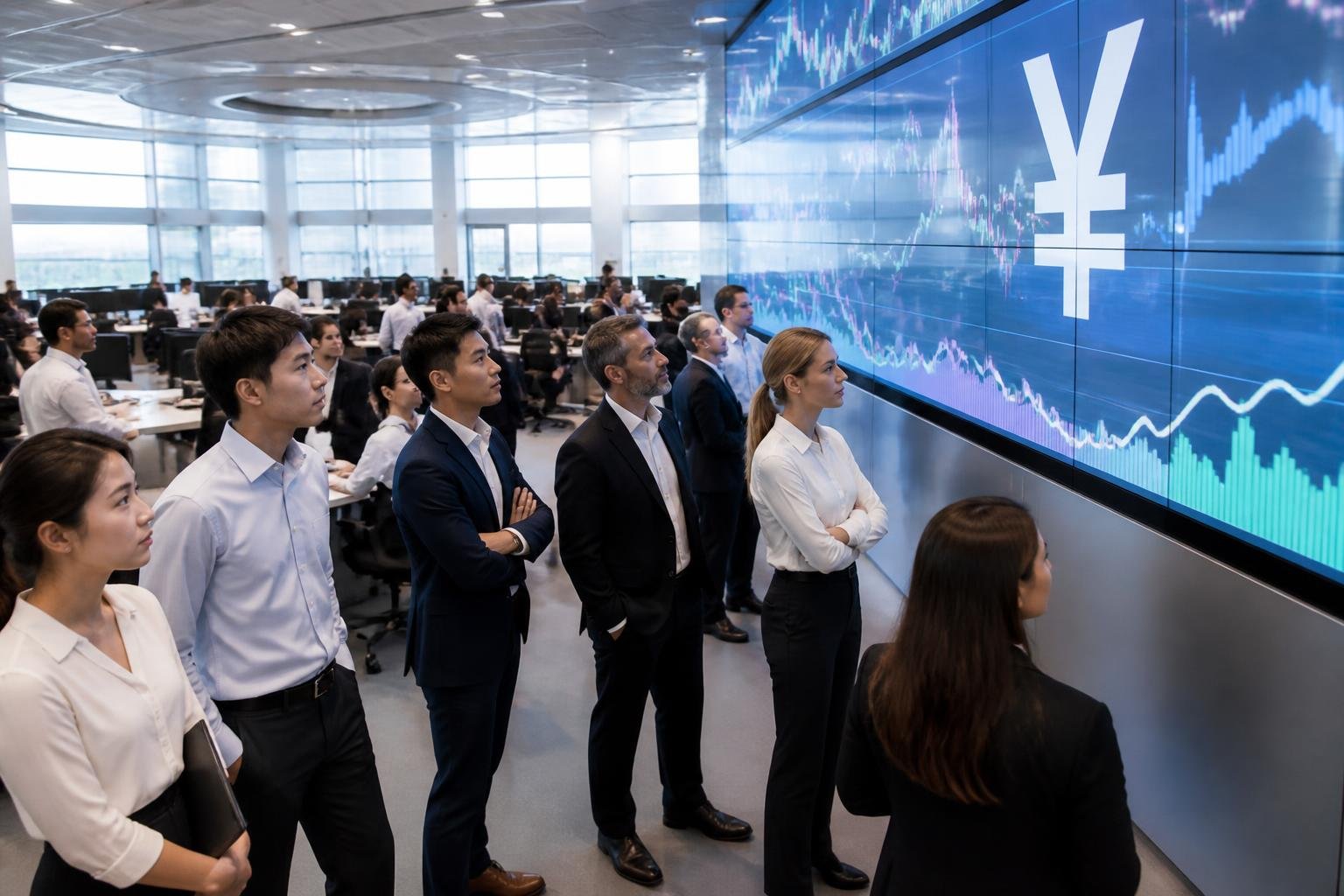
The yen attracts buying interest
The dollar is heading lower as the geopolitical risk premium that had sustained demand begins to evaporate. Among currencies, it is the Japanese yen that is attracting the most explicit buying interest.
Reed Capital, which manages $600 million out of Singapore, has positioned for structural yen strength combined with dollar weakness. The logic is clear: Japan was particularly exposed to imported energy costs during the conflict, and a normalisation of energy markets will substantially ease that pressure, according to the fund.
The yen is attracting the most explicit buying interest — Japan was particularly penalised by imported energy costs during the conflict.
Asian equities split along sector lines
In Asian equity markets, funds are carving out opportunity along sector lines rather than geography. Golden Horse Fund Management favours Asian energy importers — Japan, South Korea, and India are highlighted as countries set to see a clear improvement in their operating balances as energy prices normalise. The fund also sees potential in industrial stocks and logistics companies with exposure to the Middle East and the Strait of Hormuz.
GAO Capital is focusing on Asian consumer goods producers with input costs tied to commodities — including manufacturers exposed to palm oil in food products and instant noodles — a sector that stands to benefit directly from lower raw material prices.
Vantage Point Asset Management highlights Southeast Asian equities as the most undervalued and potentially most asymmetric bet in the region. The fund is clear, however, that AI remains the dominant theme for capital allocation in Asia, and that contrarian positions in Southeast Asia will not displace technology exposure in any meaningful way.
Crypto: cautious gains, wait-and-see positioning
Bitcoin rose to near a two-week high following the deal announcement, according to ForexLive. Additional data from the research material indicates that bitcoin climbed approximately 4.9% to around $67,000 in the wake of the news, with trading volume reportedly surging more than 100% over 24 hours — figures that have not been independently verified by 24markets.
In 2026, bitcoin correlated strongly with the Nasdaq index (correlation of 0.75), while its correlation with gold was negative (-0.27). This underscores that the market largely treats bitcoin as a high-beta risk asset rather than a safe haven during active conflicts — which explains both the sell-off at the outbreak of war and the rally now.
Nevertheless, most fund managers remain in wait-and-see mode: the formal signing of the agreement is expected on Friday, and many will hold off on increasing exposure further until that has taken place. Bitcoin is also still around 48% below its all-time high from October, according to the source material.
What does this mean for Norwegian investors?
For Norwegian market participants, the most direct consequence of the Iran deal is the movement in oil prices. A lower geopolitical risk premium in energy markets puts downward pressure on crude oil prices, which could potentially weigh on earnings at Oslo Børs given its energy-heavy composition. On the other hand, a more stable global risk environment would normally support risk appetite and thus broader equity markets — including Oslo Børs.
Sources: ForexLive/InvestingLive (15 June 2026), Bloomberg (gated, cited in source), research material on geopolitical de-escalation and crypto.
This article was written using large language models under editorial supervision by Aprex. Content is source-verified and auditable. Read our method →