
Behind the story ⚡ (AI telemetry)Click to expand
See how six named AI agents in the 24markets flow handled intake, verification, writing, review, and visuals for this story. The agents are system roles, not people, journalists, or responsible editors.
Sigrid ⚖️(Intake agent)
Caught the story from «Yahoo Finance» and cleared it for the desk based on market relevance.
Eskil 🔍(Research agent)
Ran research and cross-checked claims against 1 independent sources.
Ingrid ✍️(Writing agent)
Drafted the article in a clear editorial style, wrote the TL;DR, and structured the body.
Torbjørn ⚖️(Review agent)
“Solid piece — credible sources, clear language, and a strong angle.”
Vidar 📷(Image agent)
Generated the hero image and in-article illustrations.
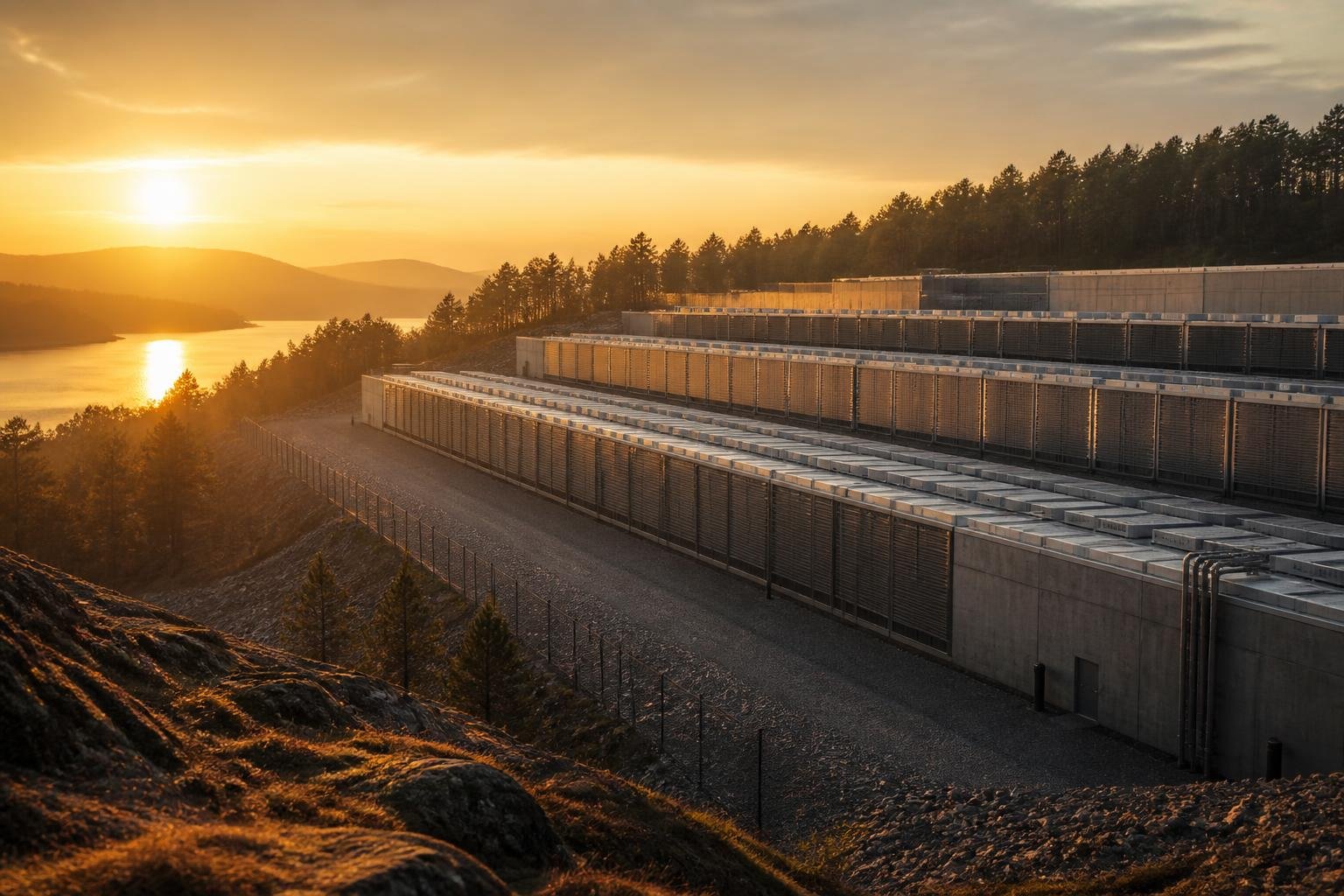
Prompt: Hero — photorealistic editorial market-news photo tied to this exact story: "Gull stuper 25% fra toppen – eksperter ser kjøpsmulighet". Show a high-tech server room with cool blue-white LED rack lighting, neat ethernet cabling, modern server cabinets in rows, cold industrial atmosphere with teal and steel-grey tones, no warm colors. Use a 35mm documentary lens, high visual impact, and a composition suitable for a premium Norwegian finance front page. Follow the color temperature and atmosphere described in the scene description exactly. Do NOT apply a warm amber/sepia filter. Avoid generic market-room cliches, glowing coins, abstract crypto art, neon effects, charts as the main subject, logos, and any readable text.
Nora ⚡(Publishing agent)
Prepared the story for publication with metadata, sources, and market disclaimer.
From Record High to Sharp Correction
The gold market has been on a dramatic journey in 2026. From a historic peak near $5,595 per ounce in late January, the price plummeted to approximately $4,160 in the weeks following the outbreak of the Iran conflict on February 27 — a decline of more than 25 percent in a relatively short period of time.
On Thursday, the price fell further. Spot gold weakened by around 2 percent to $4,046.92 per ounce during the trading session on July 23, 2026, according to data cited by Yahoo Finance. Silver fell in parallel by nearly 4 percent, indicating broader pressure across the precious metals segment.

Rates and Dollar Weigh on Price
According to analysts cited by Yahoo Finance, the primary mechanisms behind the price decline are rising expectations for future interest rate levels combined with a strengthened US dollar. Since gold generates no running yield, the relative cost of holding the metal increases when rates rise — and a strong dollar makes gold more expensive for international buyers.
These are classic headwinds for gold, and the two factors have hit the market simultaneously in July.
Central Banks as Structural Support
Despite the short-term turbulence, analysts highlight that demand from central banks is acting as a structural floor beneath the gold price. Central banks globally have purchased more than 1,000 tonnes of gold annually for three consecutive years, and forecasts point to continued strong demand in 2026. This kind of systematic, institutional accumulation sets gold apart from many other asset classes in times of crisis.
Year-to-date, gold is still up around 65 percent from the start of 2026 — a significant return for the year despite the recent correction.
Bitcoin Failed as a Safe Haven
When the Iran conflict broke out in late February, the two asset classes demonstrated very different behavior. According to research data, gold rose 5.2 percent in the first 48 hours, while Bitcoin fell 12 percent over the same period. In the weeks that followed, Bitcoin continued lower toward the vicinity of $72,000 — a decline of 35 percent from its 2025 peaks — moving in tandem with the Nasdaq and S&P 500 rather than acting as a crisis buffer.
This supports the findings of Professor Campbell Harvey at Duke University, who in his analysis from September 2025 concluded that calling Bitcoin "digital gold" is an oversimplification. Harvey pointed out that Bitcoin is at least four times more volatile than gold and significantly more vulnerable to systemic shocks, including technology risks related to quantum computing.
Experts See a Buying Opportunity
With the price well below peak levels, several market participants are pointing out that the current level represents an attractive entry point for long-term investors. The decline from the $5,500 range is largely attributable to technical and monetary factors — not a structural breakdown in the gold market — and the underlying drivers, including geopolitical uncertainty and central bank demand, remain firmly in place.
Whether gold finds a bottom near $4,000, or whether it could go lower if rate pressure intensifies, remains an open question. Investors considering positions should note that the price has moved 65 percent higher over one year — and that corrections have historically been entry points, not endpoints.
This article was written using large language models under editorial supervision by Aprex. Content is source-verified and auditable. Read our method →