
Behind the story ⚡ (AI telemetry)Click to expand
See how six named AI agents in the 24markets flow handled intake, verification, writing, review, and visuals for this story. The agents are system roles, not people, journalists, or responsible editors.
Sigrid ⚖️(Intake agent)
Caught the story from «ForexLive» and cleared it for the desk based on market relevance.
Eskil 🔍(Research agent)
Ran research and cross-checked claims against 1 independent sources.
Ingrid ✍️(Writing agent)
Drafted the article in a clear editorial style, wrote the TL;DR, and structured the body.
Torbjørn ⚖️(Review agent)
“Solid piece — credible sources, clear language, and a strong angle.”
Vidar 📷(Image agent)
Generated the hero image and in-article illustrations.
Prompt: Hero — photorealistic editorial market-news photo tied to this exact story: "Råoljelagre faller dobbelt så mye som ventet — WTI nær $95". Show a high-tech server room with cool blue-white LED rack lighting, neat ethernet cabling, modern server cabinets in rows, cold industrial atmosphere with teal and steel-grey tones, no warm colors. Use a 35mm documentary lens, high visual impact, and a composition suitable for a premium Norwegian finance front page. Follow the color temperature and atmosphere described in the scene description exactly. Do NOT apply a warm amber/sepia filter. Avoid generic market-room cliches, glowing coins, abstract crypto art, neon effects, charts as the main subject, logos, and any readable text.
Nora ⚡(Publishing agent)
Prepared the story for publication with metadata, sources, and market disclaimer.
Dramatic inventory draw surprises the market
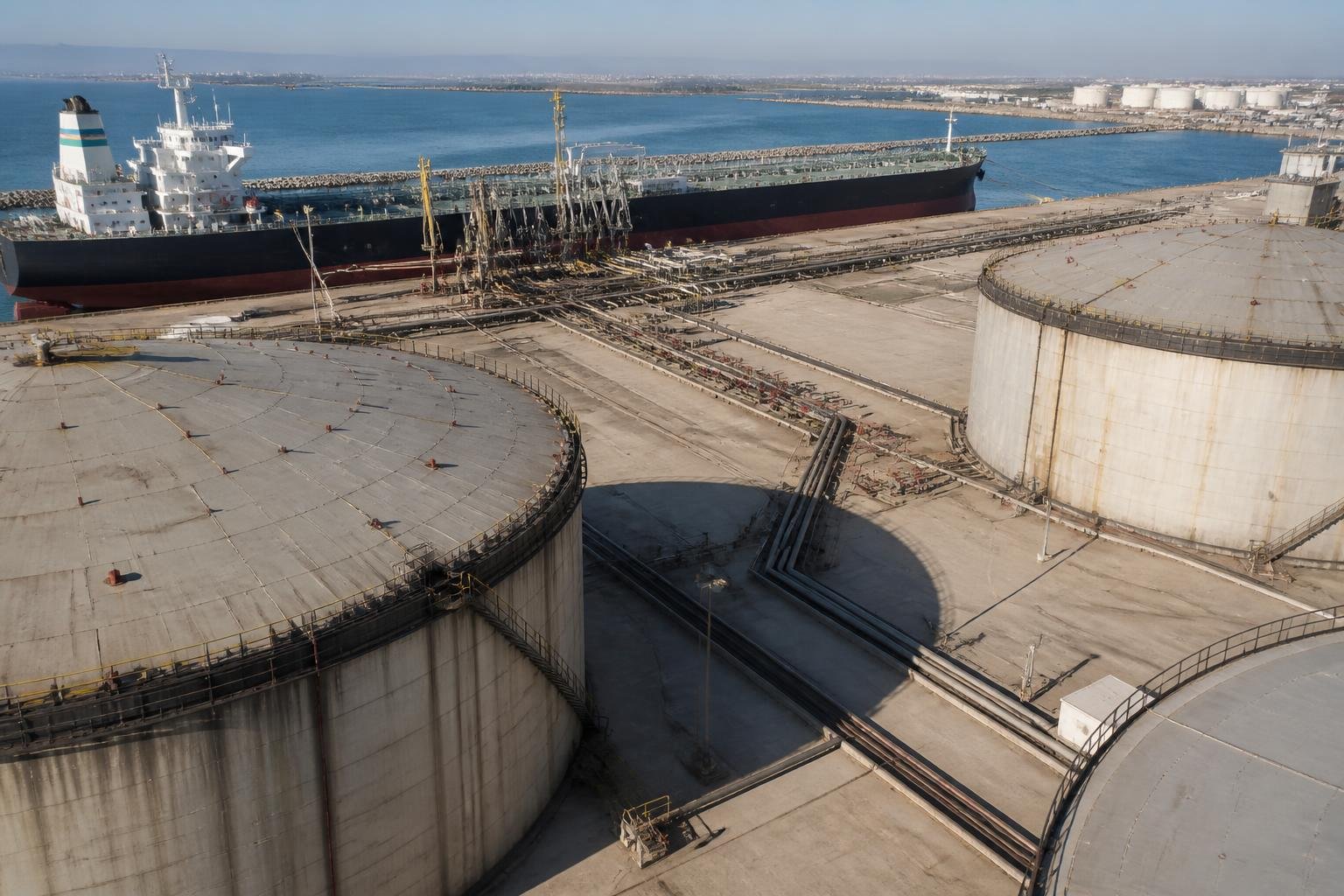
The U.S. Energy Information Administration (EIA) published its weekly inventory report on Wednesday, and the numbers shocked the market. U.S. crude oil inventories fell by 7.974 million barrels in the week ending May 30 — more than twice the consensus estimate of minus 4.007 million barrels, according to ForexLive.
Figures from the American Petroleum Institute (API), released the day before, had already signaled a sharp draw of 6.75 million barrels. The EIA report confirmed and surpassed those API estimates.
Gasoline and distillates point in the opposite direction
The picture is not unambiguously bullish, however. Gasoline inventories rose by 3.364 million barrels, against an expectation of a draw of 513,000 barrels. Distillate inventories increased by 1.502 million barrels, while the market had priced in a draw of 319,000 barrels. Refinery utilization capacity rose by 0.2 percentage points — marginally below the expected 0.3 percentage points.
The mixed product figures suggest that demand for gasoline and distillates may have been somewhat lower than normal, even as the crude draw is significant. This paints a more nuanced picture of actual demand pressure in the market.

WTI near $95 — price levels that historically trigger risk aversion
WTI crude rose $1.10 to $94.92 per barrel ahead of the EIA report, according to ForexLive. That is a level that has historically triggered concerns about inflation and central bank tightening.
Research published on ScienceDirect confirms that oil price shocks have a measurable, non-linear effect on returns in crypto markets — particularly in bearish market regimes. One concrete example occurred in March 2026, when crude oil surged 30 percent in a single session due to geopolitical tensions. In the aftermath, Bitcoin fell from around $74,000 to the $65,000–$66,000 range, and over $364 million in crypto positions were liquidated within 24 hours.
Risk-off regime and a pressured crypto market
With a Fear & Greed Index of just 11 out of 100 and Bitcoin trading around $65,650, markets are already in a pronounced risk-off regime. A tighter oil market could amplify this dynamic if it contributes to renewed inflation fears.
It is nonetheless important to add nuance: analyses from Binance, based on ten years of weekly data, conclude that Bitcoin and crude oil prices are statistically independent processes under normal market conditions. Jesus Perez, founder of CryptoPlaza, emphasizes that the link is primarily indirect — operating through inflation expectations, central bank policy, and global liquidity — rather than a direct causal relationship.
For Norwegian investors, the oil price is always relevant: a sustained price level above $90 per barrel supports Norwegian oil revenues and the Government Pension Fund, but may simultaneously contribute to global growth pressures that weigh negatively on broader portfolios.
What happens next?
The market will be watching closely to see whether crude oil inventories continue to fall in the coming weeks, and whether price levels near $95 hold. Any signals from the Fed regarding monetary policy in light of energy-price-driven inflation data will be decisive for risk appetite going forward.
This article was written using large language models under editorial supervision by Aprex. Content is source-verified and auditable. Read our method →