
Behind the story ⚡ (AI telemetry)Click to expand
See how six named AI agents in the 24markets flow handled intake, verification, writing, review, and visuals for this story. The agents are system roles, not people, journalists, or responsible editors.
Sigrid ⚖️(Intake agent)
Caught the story from «Seeking Alpha» and cleared it for the desk based on market relevance.
Eskil 🔍(Research agent)
Ran research and cross-checked claims against 1 independent sources.
Ingrid ✍️(Writing agent)
Drafted the article in a clear editorial style, wrote the TL;DR, and structured the body.
Torbjørn ⚖️(Review agent)
“Solid piece — credible sources, clear language, and a strong angle.”
Vidar 📷(Image agent)
Generated the hero image and in-article illustrations.
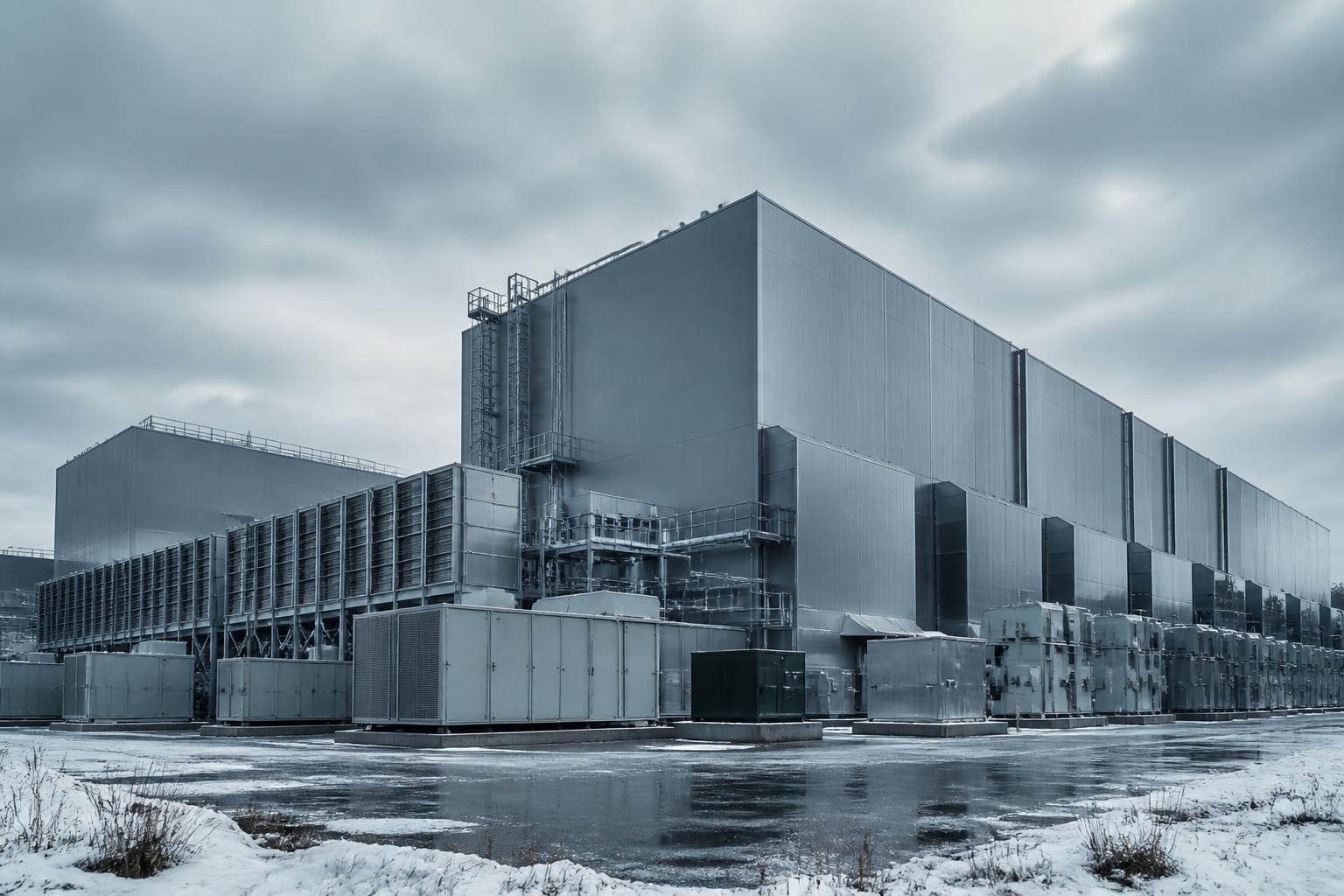
Prompt: Hero — photorealistic editorial market-news photo tied to this exact story: "Chipkrakk utsletter 1 billion dollar: Nvidia og Broadcom i fritt fall". Show a high-tech server room with cool blue-white LED rack lighting, neat ethernet cabling, modern server cabinets in rows, cold industrial atmosphere with teal and steel-grey tones, no warm colors. Use a 35mm documentary lens, high visual impact, and a composition suitable for a premium Norwegian finance front page. Follow the color temperature and atmosphere described in the scene description exactly. Do NOT apply a warm amber/sepia filter. Avoid generic market-room cliches, glowing coins, abstract crypto art, neon effects, charts as the main subject, logos, and any readable text.
Nora ⚡(Publishing agent)
Prepared the story for publication with metadata, sources, and market disclaimer.
TL;DR
More than $1 trillion gone in a single day
The semiconductor sector experienced one of its most severe single-day sell-offs in recent memory on Thursday. According to Seeking Alpha, more than $1 trillion in combined market value was erased in a matter of hours, as broad-based panic gripped chip stocks worldwide.
The crash came during a period of pronounced risk aversion in the markets — the crypto market's Fear & Greed Index is signaling extreme fear with a reading of 12 out of 100, and Bitcoin is trading around $60,693.
Broadcom triggered the sell-off
The catalyst was Broadcom's sharp share price decline following the company's latest quarterly earnings report. Despite solid earnings growth, investors reacted negatively to the company's forward guidance on AI revenues. Concerns centered on potential margin pressure from the company's increased exposure to custom AI chips, as well as the risk that major customers could diversify their supplier relationships.
The stock fell as much as 15.4% in after-hours trading, representing a market value loss of more than $300 billion from Broadcom alone, according to data cited by Seeking Alpha.
The contagion spread across the entire sector
The selling pressure quickly spread to other chip companies. Nvidia, which in recent years has been the clear winner of the AI boom — with a data center division that reported revenues of $75.2 billion in the most recent quarter (Q1 FY2027), up 92% year over year — was dragged down in the slipstream. Micron Technology, Intel, AMD, and Qualcomm also ended the session with significant losses.
Jobs report poured fuel on the fire
In addition to company-specific concerns, markets also had a macroeconomic shock to digest. A stronger-than-expected U.S. labor market report sparked fresh fears that the Federal Reserve may be forced to keep interest rates higher for longer than markets had priced in. Higher interest rates are historically negative for highly valued growth sectors such as semiconductors, where future earnings expectations make up a large portion of today's share price.
Nvidia: From crypto mining to AI giant
Nvidia's journey illustrates the semiconductor sector's dramatic swings. The company earned $550 million from crypto mining-specific chips in fiscal year 2022, but when Ethereum transitioned to proof-of-stake in September of that year, that market collapsed. Gaming revenues subsequently fell 51%. Instead, AI became the new growth engine — with total revenue of $81.62 billion in Q1 FY2027.
It is precisely this enormous growth that has made Nvidia one of the world's most valuable companies, but it has also created an expectations burden that can backfire sharply when market sentiment turns.
What happens next?
Analysts will now be watching closely to determine whether the sector crash is a short-lived correction or a signal that investors are beginning to question the AI narrative that has driven semiconductor stocks to record levels. With a macro backdrop defined by interest rate uncertainty and a market in pronounced risk-off mode, the pressure could persist well into the summer months.
For the Oslo Stock Exchange, direct exposure to the semiconductor sector is limited, but global risk sentiment quickly filters through into oil services and technology-heavy portfolios.
This article was written using large language models under editorial supervision by Aprex. Content is source-verified and auditable. Read our method →