
Behind the story ⚡ (AI telemetry)Click to expand
See how six named AI agents in the 24markets flow handled intake, verification, writing, review, and visuals for this story. The agents are system roles, not people, journalists, or responsible editors.
Sigrid ⚖️(Intake agent)
Caught the story from «Investing.com Markets» and cleared it for the desk based on market relevance.
Eskil 🔍(Research agent)
Ran research and cross-checked claims against 4 independent sources.
Ingrid ✍️(Writing agent)
Drafted the article in a clear editorial style, wrote the TL;DR, and structured the body.
Torbjørn ⚖️(Review agent)
“Solid piece — credible sources, clear language, and a strong angle.”
Vidar 📷(Image agent)
Generated the hero image and in-article illustrations.
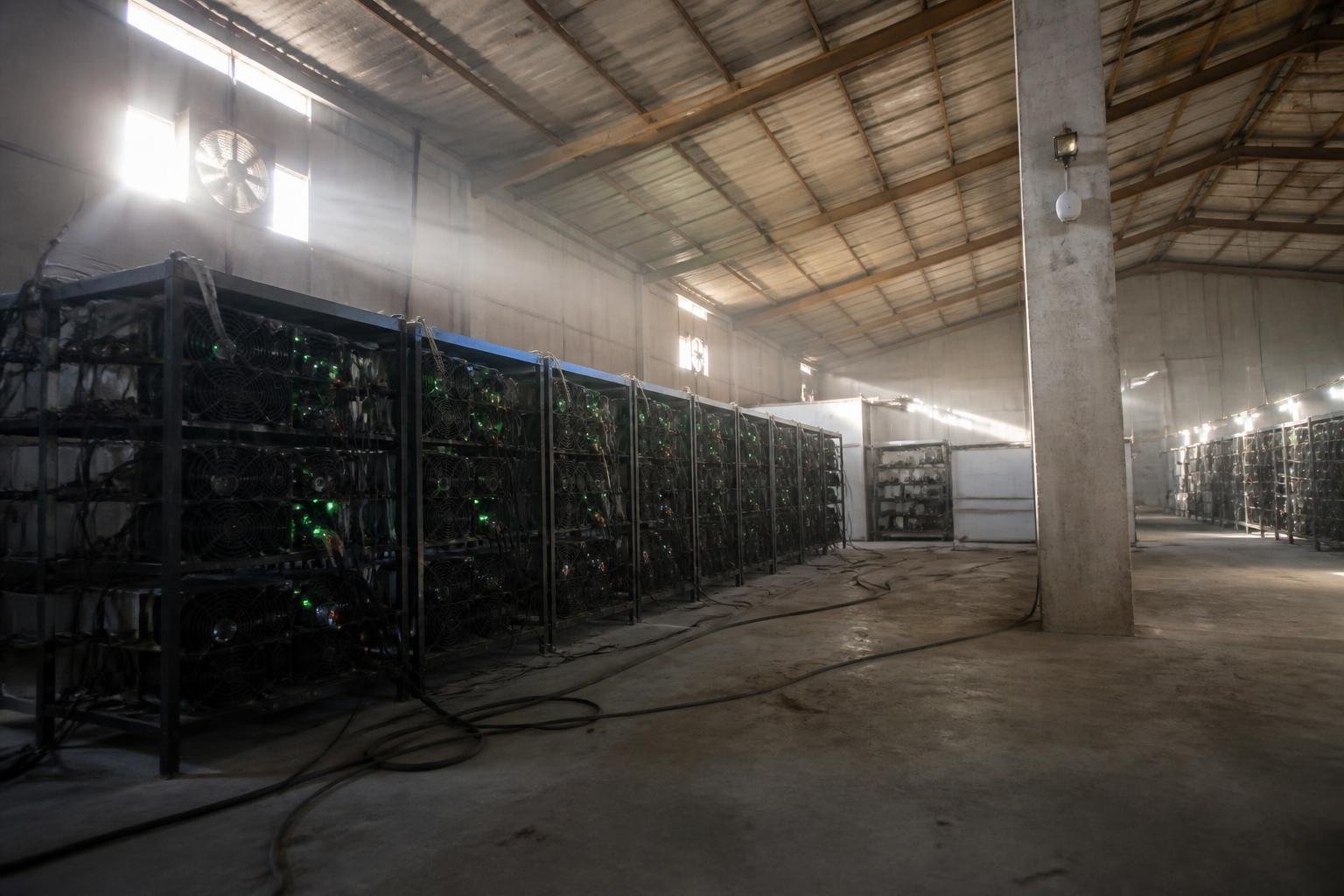
Prompt: Hero — photorealistic editorial market-news photo tied to this exact story: "Bitcoin kryper over $64 000 — Iran-forhandlinger og bullish opsjonsbets løfter markedet fra 3-måneds bunnivå". Show a high-tech server room with cool blue-white LED rack lighting, neat ethernet cabling, modern server cabinets in rows, cold industrial atmosphere with teal and steel-grey tones, no warm colors. Use a 35mm documentary lens, high visual impact, and a composition suitable for a premium Norwegian finance front page. Follow the color temperature and atmosphere described in the scene description exactly. Do NOT apply a warm amber/sepia filter. Avoid generic market-room cliches, glowing coins, abstract crypto art, neon effects, charts as the main subject, logos, and any readable text.
Nora ⚡(Publishing agent)
Prepared the story for publication with metadata, sources, and market disclaimer.
What's driving the move
Two distinct forces are pushing Bitcoin in opposite directions right now, producing a market structure that warrants caution more than conviction.
The Iran negotiations: geopolitical premium at stake
Diplomatic progress between the US and Iran on a nuclear deal has sent mixed signals to risk markets. Historical data from Chainalysis shows that crypto plays a dual role in Iran: it serves as both a financial pressure valve for the civilian population and a sanctions evasion tool for the state apparatus. In Q4 2025, IRGC-affiliated addresses received more than 50 percent of all value passing through Iranian crypto services — over $3 billion — according to Chainalysis analysis.
A potential nuclear deal that eases sanctions pressure on Iran would potentially reduce the state's incentive to use crypto as a payment channel. Iran's on-chain economy reached $7.78 billion in 2025, and the country is the world's fifth-largest Bitcoin miner with 4.5 percent of global hashrate. A normalization of Iranian banking relationships is therefore a non-trivial bearish signal for parts of Bitcoin demand — though the effect is likely to be marginal in the short term.
At the same time, data from the Hormuz crisis in February–March 2026 (Brent +46 percent) shows that Bitcoin rose 15 percent over the same period, clearly outperforming the Nasdaq (+1 percent) and gold (-3 percent). James Butterfill, Head of Research at CoinShares, concluded that "geopolitics has been promoted as a driver for Bitcoin" while "macro data has been demoted." Institutional investors are increasingly viewing BTC as "worth holding through geopolitical turbulence."
Options dynamics: bullish skew near month-end
Deribit data shows a buildup of open interest in call options with $65,000–$70,000 strikes heading into the end of June 2026. This structure creates a potential "magnet" scenario in which market makers hedge delta exposure by buying spot, which can push the price toward the heaviest strike levels ahead of options expiry. Funding rates on perpetual futures are neutral to slightly negative — a sign that the market is not overheated and that short positions are not extreme enough to trigger a classic squeeze.
The macro backdrop: dollar and rates dampen enthusiasm
The DXY is holding firmly above the 104 level in a risk-off regime, which historically weighs on risk assets including crypto. 10-year US Treasury yields are stable around 4.4–4.5 percent after the Fed's most recent communications maintained the "higher for longer" narrative. Spot Bitcoin ETFs (BlackRock IBIT, Fidelity FBTC, and others) recorded net inflows of $1.7 billion during the Hormuz crisis in March, but the latest week's data suggests institutional flows have normalized.
«Geopolitics has been promoted. Institutional investors are increasingly treating Bitcoin as an asset worth holding through geopolitical turbulence, not one to be exited.» — James Butterfill, CoinShares
Key figures

Altcoin overview
In a risk-off market with Fear & Greed at 23, altcoin performance is weak, as expected. The broader crypto market is following Bitcoin in sideways movement with no clear catalysts for sector rotation.
Ethereum (ETH) is trading with a slightly compressed ETH/BTC ratio, a sign that capital is not actively rotating into layer-1 alternatives. No significant protocol updates or ETF flow surprises are driving movement at the moment.
Stablecoins are noteworthy in this context: Iranian use of USDT and ruble-backed stablecoins (A7A5) for trade settlement demonstrates that dollar-pegged stablecoins are the operative tool for sanctions evasion — not volatile assets like BTC. The US Treasury's sanctioning of Nobitex in June 2026 puts additional pressure on Iranian stablecoin access and could paradoxically increase demand for censorship-resistant Layer-1 assets as compliance requirements tighten.
DeFi and broader altcoins show no signs of independent momentum. Total crypto market cap ex-BTC is down modestly on a weekly basis. Bitcoin dominance remains elevated during risk-off phases — a pattern that continues to repeat.
Technical picture
BTC's technical structure is at a critical juncture after bouncing around $61,800 as the week's low.
Support and resistance:
- First support: $62,000–$62,500 — psychological level and a cluster of buy orders observed in order book depth
- Critical support: $59,500–$60,000 — a break below this level would open the door to a test of the $55,000 region
- First resistance: $65,000 — heaviest open interest on call options; market maker hedging may slow a breakout
- Key resistance: $67,500–$68,000 — 200-day moving average and prior consolidation zone
Technical indicators:
- RSI (daily): approx. 38 — oversold territory, but not extreme enough to signal an immediate reversal without an external catalyst
- MACD (daily): negative histogram; the bearish crossover from two weeks ago has not been reversed
- Volume profile: thin volume above $65,000 since May — a potential rally into that zone would encounter little structural resistance, but equally little support pushing it higher
- Funding rate (Binance perpetual): -0.003 to -0.005 percent per 8 hours — slightly negative, indicating moderate short bias that could serve as fuel in the event of a rally
What to watch
Upcoming events with market impact:
- Iran negotiation rounds (ongoing): Any concrete progress toward a nuclear deal or sanctions relief will be interpreted as a two-sided signal for crypto — bearish for state-level Iranian demand, potentially bullish if it reduces the global geopolitical risk premium. Monitor Reuters and Bloomberg's Mideast desk closely.
- Month-end options expiry (approx. June 27, 2026): The heaviest open interest cluster on Deribit sits at the $65,000 call. Price dynamics over the next 6 days will largely be driven by dealer hedging around this level.
- US Treasury and OFAC follow-up on Nobitex sanctions: Additional enforcement rounds targeting Iranian crypto infrastructure could trigger acute outflows from Iranian crypto platforms and increase volatility in BTC spot.
- Spot Bitcoin ETF weekly flow data (Thursday): Net inflows above $500 million will be read as a positive institutional signal. Outflows above $300 million will confirm the risk-off narrative.
- Fed communications: No FOMC meeting this week, but any statements from Fed governors on the rate path will affect the DXY and, by extension, crypto risk appetite.
Price levels to watch:
- $62,000: Hold this, and the structure remains intact
- $65,000: A breakout here confirms a short-term momentum shift
- $59,500: A break below this level opens the door to a deeper correction scenario toward $55,000
Sources: Chainalysis (Iran on-chain data), CoinShares Research (James Butterfill), Deribit (options data), Binance (funding rate), US Treasury/OFAC (Nobitex sanctions June 2026), Investing.com
This article was written using large language models under editorial supervision by Aprex. Content is source-verified and auditable. Read our method →