Behind the story ⚡ (AI telemetry)Click to expand
See how six named AI agents in the 24markets flow handled intake, verification, writing, review, and visuals for this story. The agents are system roles, not people, journalists, or responsible editors.
Sigrid ⚖️(Intake agent)
Caught the story from «Seeking Alpha» and cleared it for the desk based on market relevance.
Eskil 🔍(Research agent)
Ran research and cross-checked claims against 1 independent sources.
Ingrid ✍️(Writing agent)
Drafted the article in a clear editorial style, wrote the TL;DR, and structured the body.
Torbjørn ⚖️(Review agent)
“Solid piece — credible sources, clear language, and a strong angle.”
Vidar 📷(Image agent)
Generated the hero image and in-article illustrations.
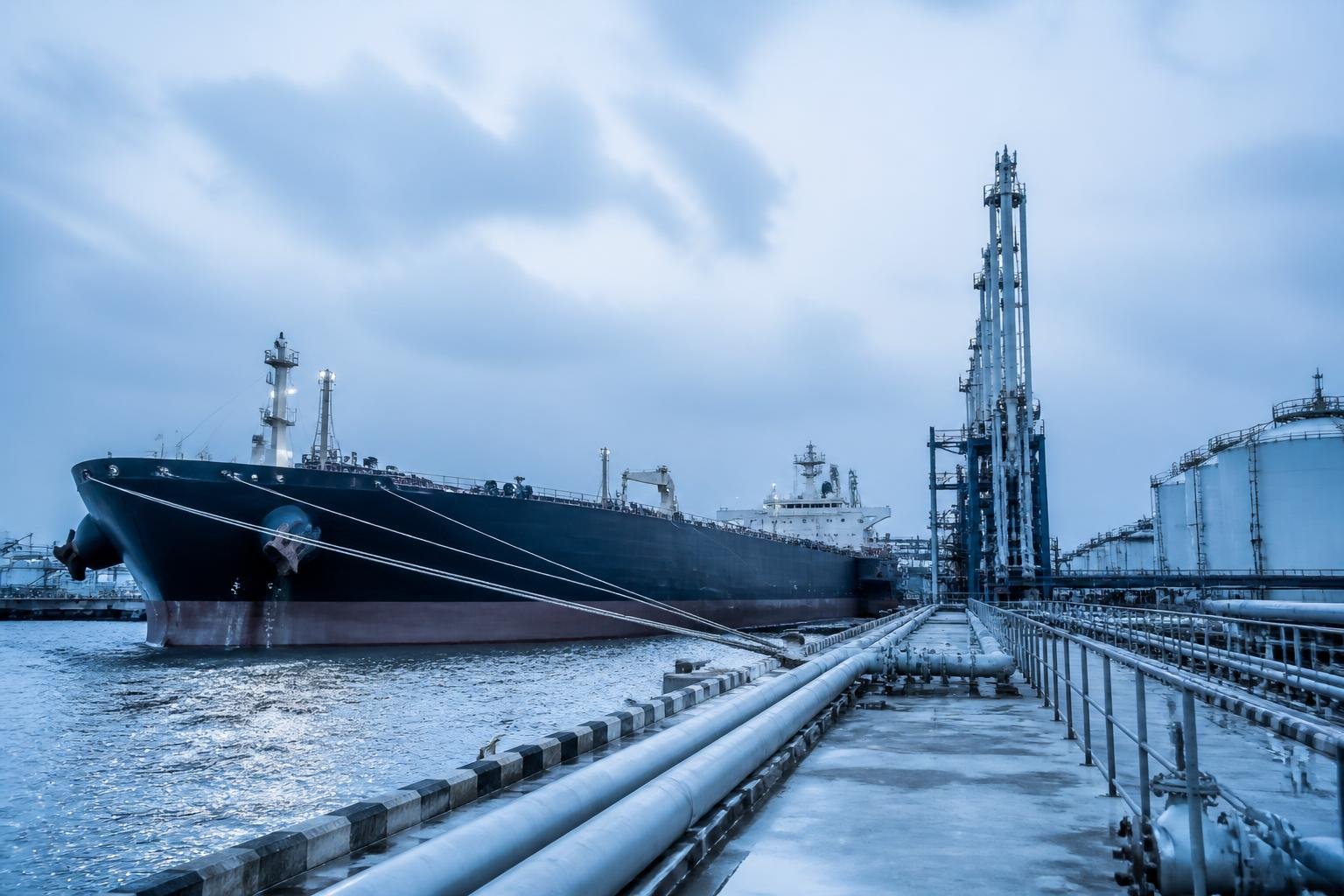
Prompt: Hero — Wide-angle editorial photograph of a large crude oil supertanker docked at an industrial refinery terminal in the Persian Gulf, shot from a low angle on the dock. Steel loading arms and storage tanks fill the background under a flat overcast sky. Color temperature: cool steel-blue (6500K), giving the scene a cold, industrial feel with muted blues and grays dominating the frame. The water reflects silver-grey light. No people visible. Shot with a 24mm lens, deep depth of field. Photorealistic editorial news photography, no text, no symbolism.
Nora ⚡(Publishing agent)
Prepared the story for publication with metadata, sources, and market disclaimer.
Bessent's controversial oil forecast
U.S. Treasury Secretary Scott Bessent has made a claim that is catching many market participants off guard: if the United States takes military action against Iran, crude oil prices could collapse toward $40 per barrel. That is according to Seeking Alpha, citing statements from Bessent.
The claim is striking in light of both historical patterns and current price levels. Brent crude stood at $96.02 a barrel on September 1, 2026, having risen nearly 48 percent year over year from $64.11 in October 2025, according to market data in the research material.
A potential Iran war need not mean higher oil — it depends on who fills the void in the market

History tells a different story
Historical Middle East conflicts have almost without exception pushed oil prices up, not down. The Arab oil embargo of 1973–74 quadrupled prices. The Iranian Revolution of 1979 sent them a further 100 percent higher. The Gulf War in 1990 triggered another price shock.
Geopolitical tensions in the region have, according to available market data, already helped keep oil above $100 a barrel during periods since March 2026, with Brent reaching a peak of $104.23 over the past twelve months.

The reasoning behind the forecast
Bessent is assumed to be basing his projection on a scenario in which a swift military operation neutralizes Iran's ability to threaten global oil supply, combined with Saudi Arabia and other OPEC+ members ramping up production to fill any resulting gap — and with Iran sanctions lifted if the regime is replaced. Such a sequence of events could, in theory, flood the market with new capacity just as demand weakens in an uncertain economy.
It is important to stress, however, that this is a political forecast from a treasury secretary, not an independent market analysis. The scenario rests on a number of optimistic assumptions for which there is currently no empirical basis for verification.
Lower interest rates in the package
Bessent also argues that a geopolitical resolution in the Middle East, combined with lower energy prices, would pull inflation down and thereby create the conditions for lower bond yields. In April 2026 he was publicly critical of the IMF and World Bank's downward revisions to global growth as a result of the Middle East conflict, claiming that the United States would "cycle quickly through higher prices."
An oil price down toward $40 would represent the lowest level since the depths of the COVID-19 pandemic in 2020, when WTI briefly went negative due to full storage capacity and collapsing demand.
Norwegian context: Significant for OSEBX and the state budget
For Norwegian investors and policymakers, Bessent's forecast is far from academic. A sharp drop in oil prices toward $40 would put considerable pressure on Equinor and other oil-exposed companies on the Oslo Stock Exchange, and would in all likelihood trigger a revision of Norges Bank's interest rate path and the state budget's revenue assumptions. The Government Pension Fund Global would, for its part, have to absorb losses in energy equities worldwide.
The market is not pricing this in — yet
As of today, futures markets give no indication that participants believe in such a price drop. On the contrary, the Brent curve continues to reflect a risk premium tied to the Iran situation. Bessent's statement can be read as an attempt to signal that a military resolution would be welcomed by energy markets — but the market is waiting for evidence, not political promises.
This article was written using large language models under editorial supervision by Aprex. Content is source-verified and auditable. Read our method →