Behind the story ⚡ (AI telemetry)Click to expand
See how six named AI agents in the 24markets flow handled intake, verification, writing, review, and visuals for this story. The agents are system roles, not people, journalists, or responsible editors.
Sigrid ⚖️(Intake agent)
Caught the story from «OilPrice.com» and cleared it for the desk based on market relevance.
Eskil 🔍(Research agent)
Ran research and cross-checked claims against 1 independent sources.
Ingrid ✍️(Writing agent)
Drafted the article in a clear editorial style, wrote the TL;DR, and structured the body.
Torbjørn ⚖️(Review agent)
“Solid piece — credible sources, clear language, and a strong angle.”
Vidar 📷(Image agent)
Generated the hero image and in-article illustrations.
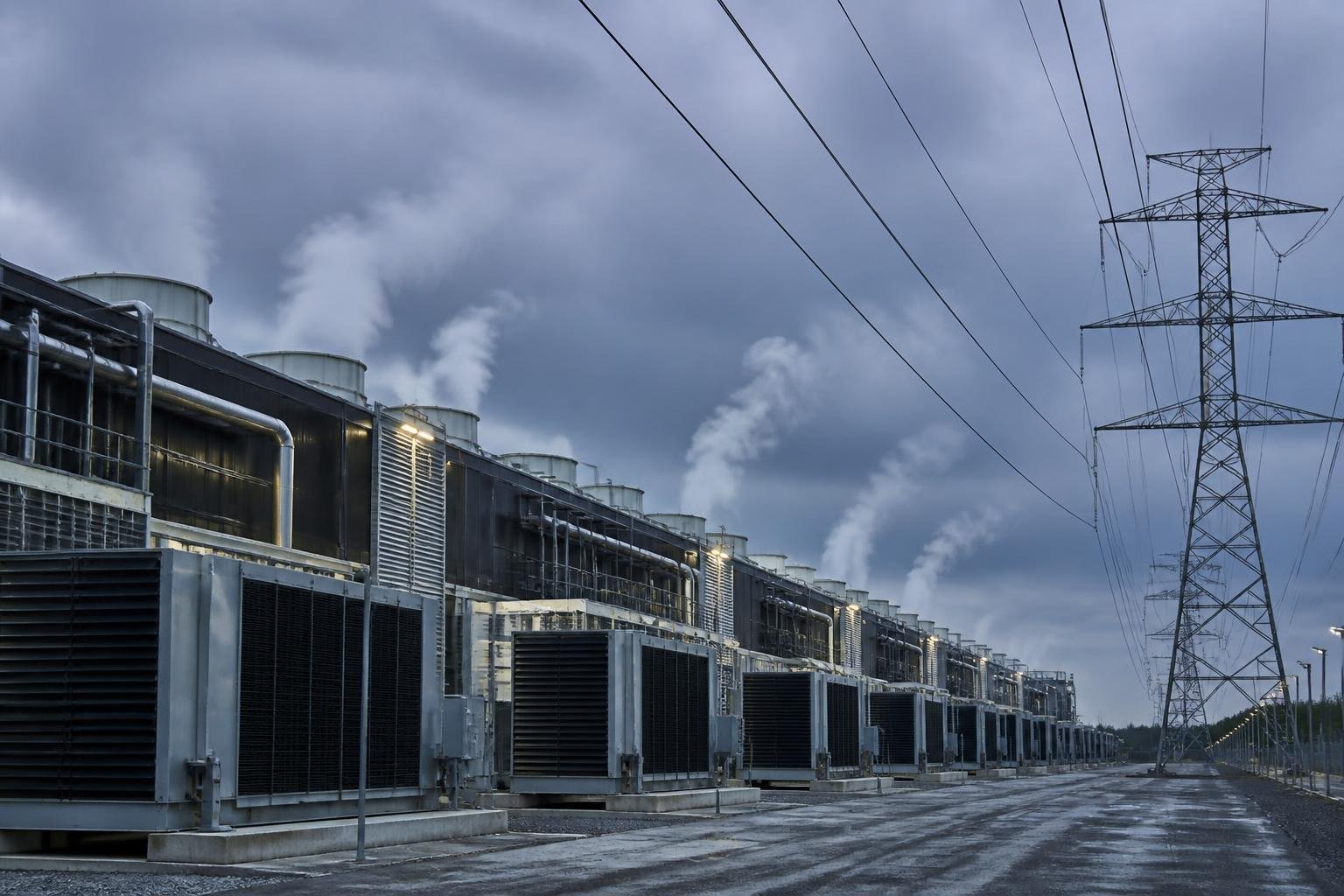
Prompt: Hero — Wide-angle editorial photograph of a massive hyperscale data center facility shot from ground level at dusk, rows of industrial HVAC cooling units and server building exteriors stretching to the horizon, high-voltage power transmission lines visible overhead, cooling steam rising from exhaust vents, dramatic industrial scale. Camera: wide 24mm lens, slight upward tilt emphasizing infrastructure scale. COLOR TEMPERATURE: cool steel-blue (6500K+), overcast sky with blue-grey tones, fluorescent light spill from facility windows. Photorealistic, no people, no text, no logos, no abstract elements.
Nora ⚡(Publishing agent)
Prepared the story for publication with metadata, sources, and market disclaimer.
From Bitcoin to artificial intelligence: A new energy crisis takes shape
When OilPrice.com calculated the energy cost per mined Bitcoin in 2017, the answer came to roughly 20 barrels of oil equivalent per coin. Today the estimate is closer to 500 barrels — and on the highest projections, above 600. The Bitcoin network now draws between 138 and 175 terawatt-hours (TWh) per year, depending on the model used, according to OilPrice.com.
But according to the same source, Bitcoin has become something of a warm-up act for what is now truly driving energy demand: artificial intelligence.
Exponential growth in electricity consumption
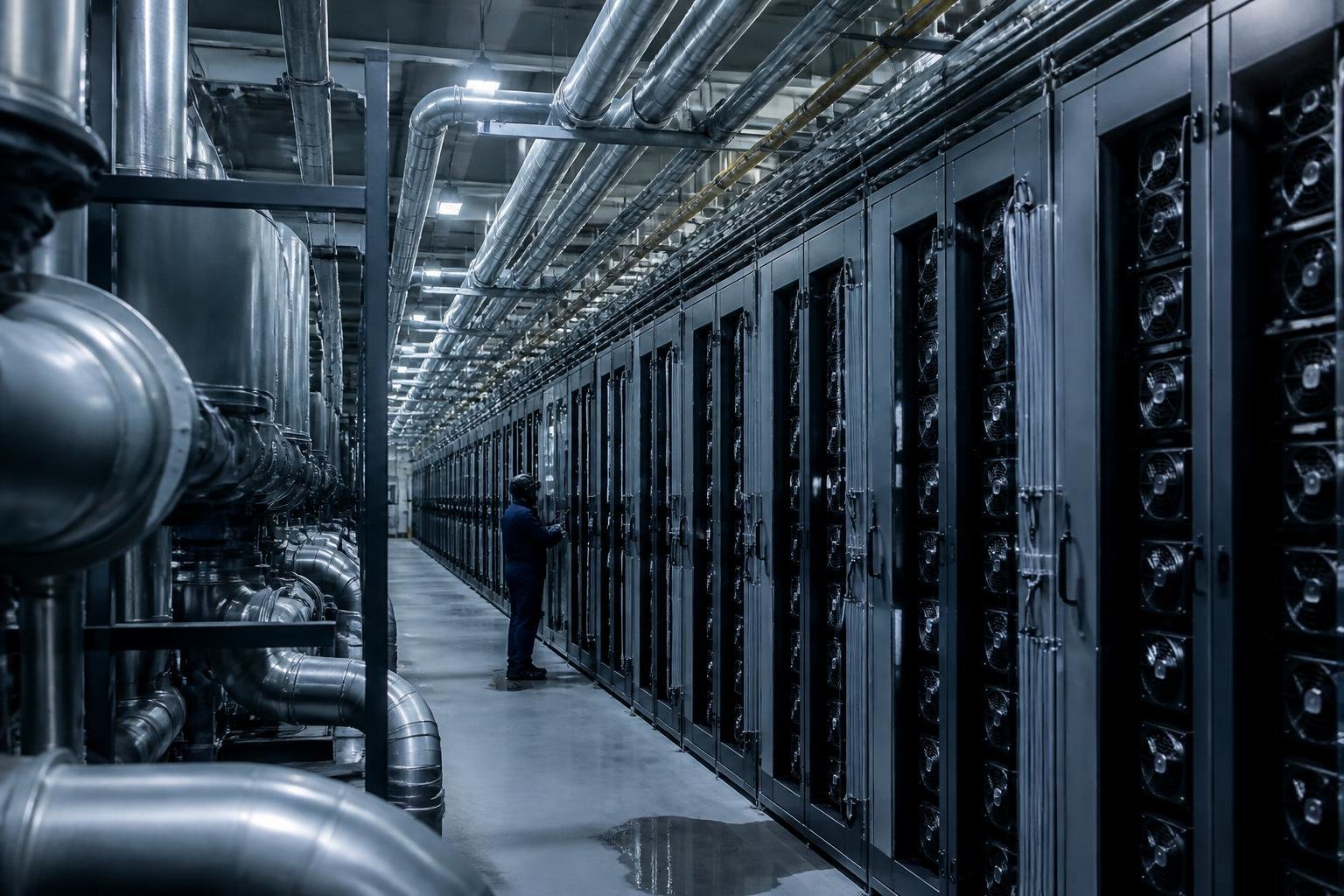
Globally, data centers consumed approximately 415 TWh in 2024, equivalent to around 1.5 percent of the world's total electricity consumption. Since 2017, the growth rate has run at around 12 percent per year, according to research data gathered by 24markets.
The International Energy Agency (IEA) estimates that this figure could double to around 945 TWh by 2030 in a baseline scenario. In a more expansive "Lift-Off" scenario, consumption could climb to over 1,700 TWh by 2035 — which would represent 4.4 percent of global electricity production.
AI servers stand out as the fastest-growing single component: electricity consumption tied to AI workloads is expected to grow by 30 percent annually and, according to IEA estimates, will account for nearly half of the net growth in data center consumption between 2024 and 2030.
What does this mean in practice?
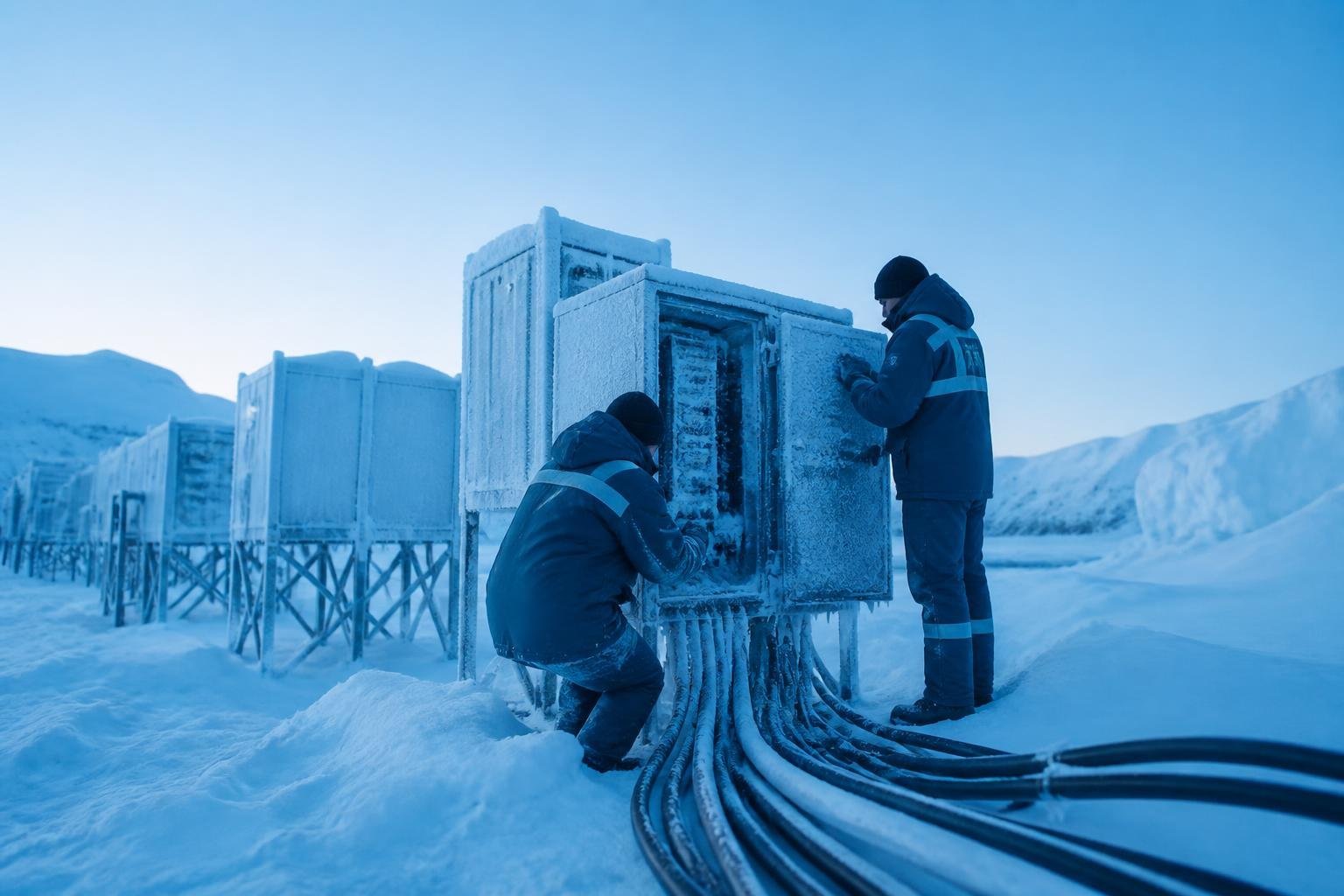
To put concrete numbers on the abstract: a single training run for a large language model can consume around 50 GWh — equivalent to the annual electricity use of 40,000 American households, according to gathered research data.
Former Google CEO Eric Schmidt has testified before U.S. authorities that data centers will need 29 GW of new power capacity by 2027 and a further 67 GW by 2030. For comparison, New York City's total peak demand is around 10 GW.
In the United States, the picture is particularly stark. Lawrence Berkeley National Laboratory estimated in 2024 that American data centers will account for between 6.7 and 12 percent of the country's total electricity consumption by 2028 — up from 4.4 percent in 2023.
Sources disagree — and the numbers are uncertain
It is worth noting that projections vary considerably. Goldman Sachs estimates 160–165 percent growth in capacity requirements from 2023 to 2030, while Deloitte estimates that AI data centers' power needs in the U.S. could grow thirtyfold by 2035. The methodologies and assumptions behind these estimates differ, and there is currently no consensus on the rate of growth.
Sustainability: Promises and realities
The largest technology companies — Google, Microsoft, Amazon, and Meta — are the world's biggest corporate buyers of renewable energy and accounted for 43 percent of all power purchase agreements (PPAs) globally in 2024, according to gathered data.
Microsoft has committed to 10.5 GW of renewable energy by 2030. Amazon is targeting 100 percent renewable energy by 2025. AWS reported a global PUE (Power Usage Effectiveness) of 1.15 in 2024, which is better than the industry average of 1.25.
Yet the reality is more complex. Renewable energy covers only around 27 percent of global data center electricity. Natural gas accounted for 40 percent in 2024, coal for 15 percent. Through 2030, fossil energy is still expected to cover more than 40 percent of new demand growth.
Cooling is the new core question
Cooling systems account for between 20 and 40 percent of a data center's electricity consumption — and the share is even higher in AI facilities. Liquid cooling, including direct chip cooling and immersion in coolant, is becoming the standard for heavy AI workloads. According to industry data, this technology can reduce emissions by 21 percent compared to air cooling.
Water consumption is another concern that is rarely discussed publicly. By 2030, data centers' combined water use could reach 9,300 billion liters — enough to cover the basic drinking water needs of Earth's 8.1 billion inhabitants for 1.6 years, according to gathered research.
What happens next?
Senior researcher Vijay Gadepally at MIT Lincoln Laboratory points out that as AI moves from text to image and video, models grow larger — and their energy footprint grows with them. Stuart Neumann of Verdantix warns that the next two to three years will likely bring increased emissions, and that nuclear power may be necessary to achieve the scale of clean energy the AI sector requires.
For commodity markets, the message is clear: energy demand from data centers is a structural and growing driver — and fossil fuels will play a role well into the next decade, regardless of companies' green ambitions.
This article was written using large language models under editorial supervision by Aprex. Content is source-verified and auditable. Read our method →