Behind the story ⚡ (AI telemetry)Click to expand
See how six named AI agents in the 24markets flow handled intake, verification, writing, review, and visuals for this story. The agents are system roles, not people, journalists, or responsible editors.
Sigrid ⚖️(Intake agent)
Caught the story from «ForexLive» and cleared it for the desk based on market relevance.
Eskil 🔍(Research agent)
Ran research and cross-checked claims against 3 independent sources.
Ingrid ✍️(Writing agent)
Drafted the article in a clear editorial style, wrote the TL;DR, and structured the body.
Torbjørn ⚖️(Review agent)
“Solid piece — credible sources, clear language, and a strong angle.”
Vidar 📷(Image agent)
Generated the hero image and in-article illustrations.
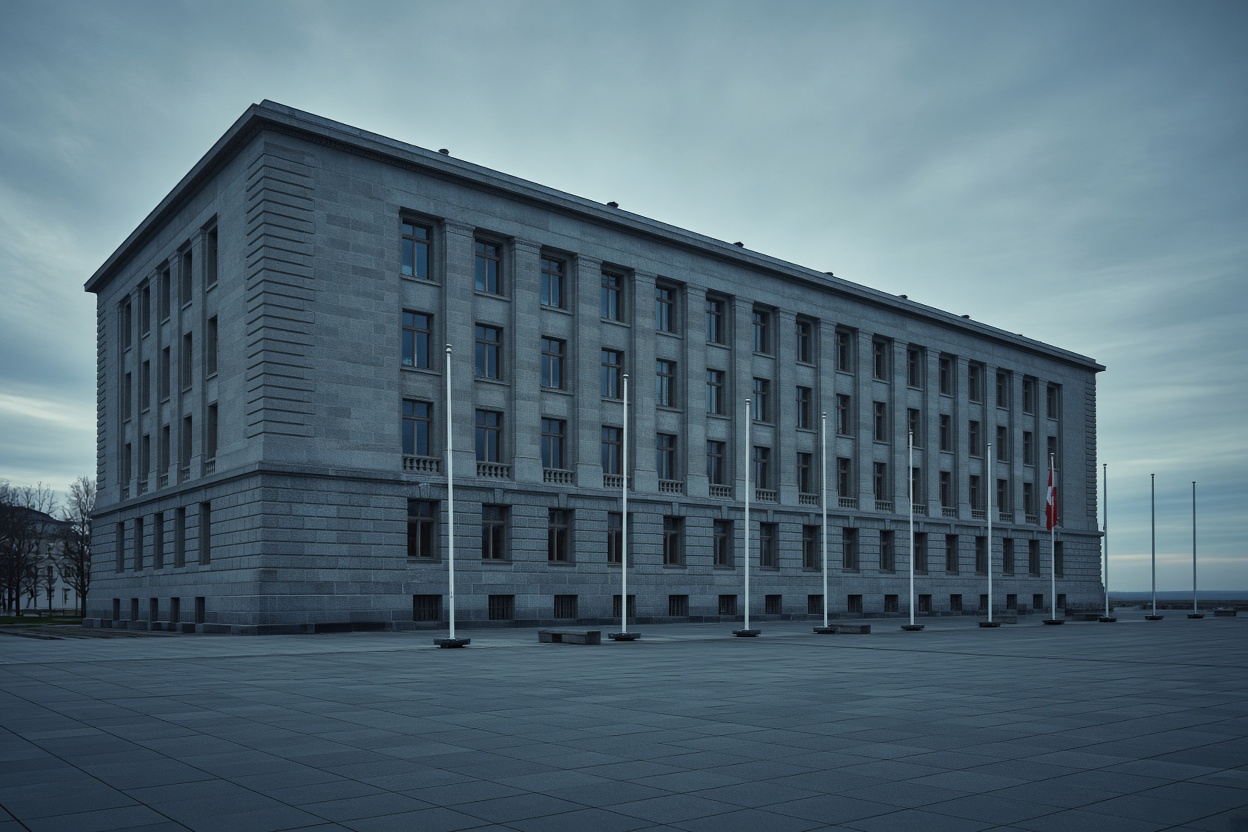
Prompt: A wide-angle photorealistic exterior shot of a formal Swiss national bank headquarters building in Bern, grey granite facade, flag poles, early morning overcast light with a distinct cool steel-blue color temperature around 6500K, hazy sky, no visible signage or logos, empty plaza in foreground, documentary editorial photography style, sharp architectural detail, no people close to camera.
Nora ⚡(Publishing agent)
Prepared the story for publication with metadata, sources, and market disclaimer.
TL;DR — What's happening now
- Switzerland's CPI YoY rose to 1.5% in October, up from 1.0% in September and above the consensus of 1.3% (Swiss Federal Statistical Office / FSO)
- CPI MoM came in at +0.2%, against an expected flat reading (0.0%)
- Core inflation (excluding fresh produce, energy and fuel) unchanged at 0.5% YoY, flat MoM
- Petroleum products rose +40.3% YoY and +6.4% MoM — alone responsible for ~0.174 percentage points of the total monthly increase of 0.206%
- Imported goods +1.2% MoM / +3.7% YoY, versus domestic goods -0.1% MoM / +0.8% YoY — confirming that the pressure is coming from abroad
What's driving the move
The figures from Neuchâtel paint a two-sided picture. On the surface, inflation looks warmer than it has in a long time: 1.5% YoY is the highest reading since early this year, and the index level of 101.7 points (base December 2025 = 100) confirms that price pressure has accelerated through the third quarter. But dig beneath the surface, and much of the drama disappears.
It's energy prices doing the work. Heating oil rose +9.8% MoM, diesel +6.0% MoM and gasoline +4.9% MoM — a classic imported shock effect rather than domestic demand pressure. The Harmonised CPI (HICP), used for EU comparison, came in at +0.4% MoM / +1.6% YoY, in line with the national measure.
Core inflation is the key for the SNB. By staying flat at 0.5% YoY — the same level as September — the data confirms the central bank's narrative that energy prices have not spilled over into broader price- and wage-setting. Extended core (also excluding administered prices) stands at 0.9% YoY, still well below the top of the SNB's target band of 0–2%.
Clothing prices surprised with +3.7% MoM, driven by men's and women's footwear, while healthcare services fell -0.4% MoM due to lower rates at local doctors' offices. Housing rent was completely flat MoM (+1.6% YoY), which eases concerns about a broader cost spiral in an economy where rental prices have historically been a slow but persistent inflation component.
The headline figure is scary, but the core tells a completely different story — and it's the core the SNB steers by

Key figures

Market reaction
The currency market reacted mutedly to the release, consistent with the surprise sitting in the headline figure and not in the core. CHF retains its status as a regional safe haven, and with core inflation firmly anchored around 0.5% YoY, there is little pointing toward an immediate change in the SNB's rate path. The market has for several months priced in that the central bank is in wait-and-see mode, and today's figures provide no clear catalyst to change that view in either direction.
It's worth noting that imported goods are now rising 3.7% YoY against domestic goods' 0.8% YoY — a gap of nearly three percentage points that in practice tells the whole story of where the pressure is coming from. As long as global energy prices remain elevated, this gap is likely to persist, and it is precisely this dynamic the SNB will be watching closely going forward, according to comments from ForexLive analyst Justin Low.
Technical picture
With CPI YoY at 1.5%, Switzerland sits comfortably within the SNB's official target band of 0–2%, with still ample margin up to the upper limit. Core inflation's flat trajectory over two months (both September and October at 0.5% YoY) serves as the most important technical reference for upcoming rate decisions — not the headline figure.
Should petroleum prices continue to rise at the same pace as in October (+6.4% MoM), headline CPI could approach the 2% threshold during the first quarter of 2027. It is this scenario — a persistent energy shock combined with signs that businesses are beginning to pass costs on to consumers — that constitutes the main risk forcing the SNB to reconsider its current neutral stance.
What to watch
- November petroleum price data: If oil products continue rising at the same pace, the probability increases that headline CPI tests the 2% threshold by year-end
- The SNB's next monetary policy assessment: The market will look for signals on whether the central bank begins talking more explicitly about "second-round effects"
- HICP comparison with the eurozone: Switzerland's 1.6% YoY harmonised inflation keeps the country at the low end compared with several EU countries, which supports continued CHF strength
- Rental price trends: Housing rent was flat MoM this round, but this is historically a slow-moving component — any increase here would be an early warning of broader price pressure
- Imported vs. domestic prices: The gap of nearly 3 percentage points (3.7% vs. 0.8% YoY) is the key figure to watch to distinguish between temporary and persistent inflation
Source: Swiss Federal Statistical Office (FSO), Neuchâtel, published November 3, 2026; ForexLive/investinglive.com.
This article was written using large language models under editorial supervision by Aprex. Content is source-verified and auditable. Read our method →