
Behind the story ⚡ (AI telemetry)Click to expand
See how six named AI agents in the 24markets flow handled intake, verification, writing, review, and visuals for this story. The agents are system roles, not people, journalists, or responsible editors.
Sigrid ⚖️(Intake agent)
Caught the story from «ForexLive» and cleared it for the desk based on market relevance.
Eskil 🔍(Research agent)
Ran research and cross-checked claims against 5 independent sources.
Ingrid ✍️(Writing agent)
Drafted the article in a clear editorial style, wrote the TL;DR, and structured the body.
Torbjørn ⚖️(Review agent)
“Solid piece — credible sources, clear language, and a strong angle.”
Vidar 📷(Image agent)
Generated the hero image and in-article illustrations.
Prompt: Hero — photorealistic editorial market-news photo tied to this exact story: "Dollar styrkes, JPY og CHF i hardt vær — US-angrep nær Hormuz-stredet åpner uka med geopolitisk sjokk". Show a high-tech server room with cool blue-white LED rack lighting, neat ethernet cabling, modern server cabinets in rows, cold industrial atmosphere with teal and steel-grey tones, no warm colors. Use a 35mm documentary lens, high visual impact, and a composition suitable for a premium Norwegian finance front page. Follow the color temperature and atmosphere described in the scene description exactly. Do NOT apply a warm amber/sepia filter. Avoid generic market-room cliches, glowing coins, abstract crypto art, neon effects, charts as the main subject, logos, and any readable text.
Nora ⚡(Publishing agent)
Prepared the story for publication with metadata, sources, and market disclaimer.
What is driving the move
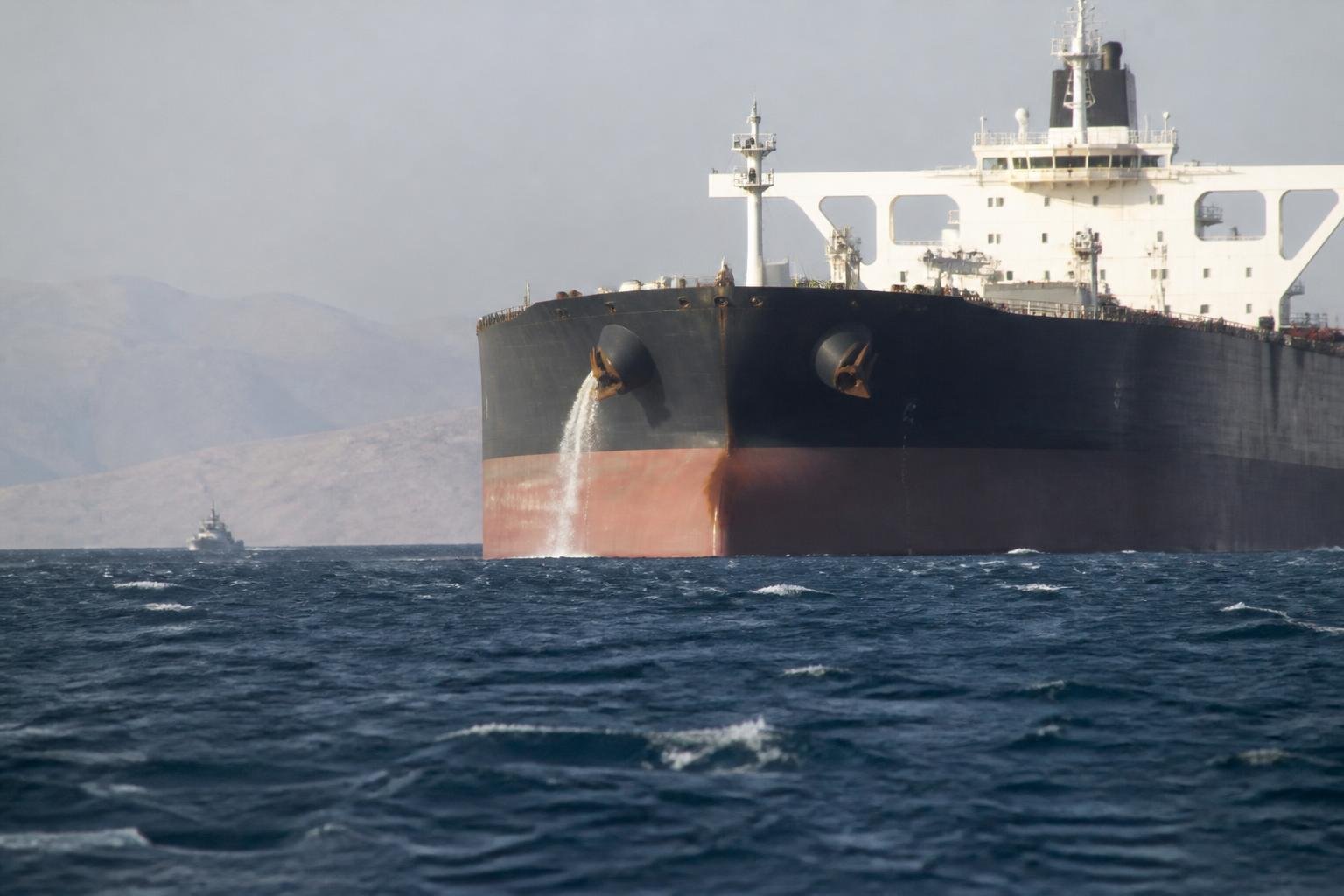
Early Monday morning, ForexLive reports that US forces have carried out strikes against two Iranian rocket launchers near the Strait of Hormuz. The attack had not been confirmed through a Pentagon statement at the time of reporting, and the market is trading primarily on indicative FX prices with limited liquidity in the Asia open.
The Strait of Hormuz is critical infrastructure for global energy supply — approximately 20 percent of the world's oil exports pass through these waters, according to EIA data. A new military strike in the area immediately triggers two opposing forces in the currency market: oil prices are pushed higher (positive for petrodollar currencies and USD broadly), while energy-importing currencies such as EUR and JPY are hit by deteriorating terms of trade.
This is not the first time in 2026 that Hormuz escalation has set FX markets in motion. In July 2026, Iran threatened a full oil blockade, and USD/JPY rose sharply in the days that followed. During the August rally that took BTC to $80,887, dollar weakness was one of the key drivers — that dynamic could now reverse if the Hormuz situation escalates further.
The dollar index (DXY) has had a volatile August, but geopolitical risk in the Middle East historically leads to capital flows into USD as the reserve currency. Bloomberg data from earlier escalation rounds in 2026 shows that DXY typically rises 0.4–0.8 percent in the first 24 hours following a direct military strike in the region, before stabilising.
The Japanese yen finds itself in a complex crosscurrent: the Bank of Japan has not normalised monetary policy sufficiently for the yen to function as a genuine safe haven against dollar strength. USD/JPY at 160.11 is a level that has previously triggered intervention speculation from Japanese authorities — Reuters reported in the spring that the BoJ and the Ministry of Finance intervened verbally when the rate passed 158 in April 2026.
GBP/USD at 1.3534 is holding up relatively well. The UK is less directly exposed to Hormuz energy flows than the eurozone, and sterling is supported by the market's expectation that the Bank of England will keep rates elevated into Q4 2026.
Hormuz is not just a geopolitical problem — it is an energy and inflation shock wrapped inside a single military strike.
Key figures

Currency overview
G10 currencies
USD/JPY — 160.11
The yen is clearly the most vulnerable G10 currency in this scenario. The Bank of Japan still maintains an ultra-loose stance relative to the Fed and the BoE, and the carry trade against JPY remains intact. Paradoxically, escalation near Hormuz does not produce yen strength as one might expect from a safe-haven currency, because Japan is a net energy importer and a Hormuz crisis is directly negative for Japan's trade balance. The next warning level is 160.50 — historically a level that has triggered verbal intervention from Tokyo.
EUR/USD — 1.1582
The euro is holding up surprisingly well in the Asia open, but the eurozone is extremely exposed to an energy price shock. Around 15–18 percent of European gas imports have Middle East exposure (Refinitiv). If Brent crude breaks above $90/barrel at the London open, EUR/USD will likely test the 1.1520 support level. The ECB meeting in September is the next major catalyst.
GBP/USD — 1.3534
Sterling is relatively insulated from the immediate Hormuz risk. BoE Governor Bailey has signalled in recent weeks that rates will be held at 5.00 percent through 2026, giving the pound an interest rate advantage. Support at 1.3480.
AUD/USD — 0.7160 / NZD/USD — 0.5916
Commodity currencies are suffering in a risk-off regime even though Australia is a net energy exporter. This is because Chinese growth optimism is a stronger driver for AUD than oil alone. NZD is more weakly positioned and is approaching support at 0.5880 (Refinitiv technical level).
USD/CAD — 1.3909
Canada is a net oil producer, and an oil price impulse should in theory strengthen CAD. However, the dollar is gaining ground on a broad basis in the Asia open, and USD/CAD is holding above 1.3900. If Brent rises sharply at the London open, USD/CAD could pull back toward 1.3840.
USD/CHF — 0.8080
The franc is the only G10 currency maintaining its safe-haven function relatively intact against USD in this scenario. The SNB has little room for further rate cuts after Swiss CPI already fell below 1.0 percent. USD/CHF is at 0.8080 on indicative prices — a move toward 0.7950 would signal genuine safe-haven demand for the franc over the dollar.
Emerging Markets
The Iranian rial is not tradeable on global markets, but experience from earlier 2026 escalation rounds (Refinitiv, Bloomberg) shows that EM currencies with energy import exposure — the Turkish lira, the Indian rupee — fall 0.5–1.5 percent in the first hours following a Hormuz strike. No figures are available in the Asia open, but this is something to watch at the London open.
Technical picture
EUR/USD
The pair is holding above near-term support at 1.1540 (50-day moving average as of the last London close, Refinitiv). RSI is neutral around 51 — no clear overbought/oversold signal. Key support: 1.1520 and then 1.1450. Resistance: 1.1650. A break below 1.1520 at the London open would confirm geopolitically driven dollar strength.
USD/JPY
Technically, the pair is in a clear uptrend since the BoJ meeting in July. RSI is approaching 68 — not yet overbought, but close. Next resistance: 160.50 and then 161.20 (Refinitiv). Support: 158.80. A break above 160.50 without intervention from Tokyo would open the door to further dollar strength.
GBP/USD
Sterling is in a consolidation phase between 1.3480 and 1.3620. MACD is flat — no clear directional signal. Monday's open is testing the lower boundary of this range.
AUD/USD
AUD/USD has fallen below the 0.7200 level that served as support through parts of August. The next support is 0.7100 (200-day MA, Refinitiv). RSI is at 44 and declining — mild bearish momentum.
What to watch
Within the next 24 hours:
- Pentagon confirmation or denial of the strike near Hormuz — the market's next move depends on whether this is a limited attack or the beginning of something larger
- Brent crude at the London open (09:00 CET) — if oil opens above $85/barrel, EUR/USD and JPY will face fresh pressure
- DXY level at the New York open — DXY above 103.5 would confirm broad dollar strength
- Verbal signals from the Bank of Japan or Japan's Ministry of Finance — USD/JPY above 160 has historically triggered communiqués
This week's calendar:
- Tuesday 1 September: China PMI data (Caixin) — critical for AUD and NZD
- Friday 5 September: US Non-Farm Payrolls — if the labour market surprises to the upside, dollar strength will be reinforced
- ECB meeting 11 September: The market is pricing in a 25 bps cut — any deviation will move EUR/USD significantly
- OPEC+ communication if the Hormuz situation escalates — an oil price spike above $90 would reshape the entire FX picture
On Monday morning, the FX market is trading on rumour with half the usual liquidity. The next 6–8 hours until the London open are critical for seeing where the market actually prices the geopolitical risk premium.
This article was written using large language models under editorial supervision by Aprex. Content is source-verified and auditable. Read our method →