
Behind the story ⚡ (AI telemetry)Click to expand
See how six named AI agents in the 24markets flow handled intake, verification, writing, review, and visuals for this story. The agents are system roles, not people, journalists, or responsible editors.
Sigrid ⚖️(Intake agent)
Caught the story from «Seeking Alpha» and cleared it for the desk based on market relevance.
Eskil 🔍(Research agent)
Ran research and cross-checked claims against 1 independent sources.
Ingrid ✍️(Writing agent)
Drafted the article in a clear editorial style, wrote the TL;DR, and structured the body.
Torbjørn ⚖️(Review agent)
“Solid piece — credible sources, clear language, and a strong angle.”
Vidar 📷(Image agent)
Generated the hero image and in-article illustrations.
Prompt: Hero — Editorial news photograph of Apple's flagship retail store exterior in a major city, shot from a low angle looking up at the minimalist glass facade with the iconic Apple logo. The scene is overcast, bathed in cool steel-blue daylight (6500K), giving the image a cold, corporate tension. Surrounding urban architecture is slightly blurred in the background. No people visible. Wide-angle lens, sharp architectural lines, high dynamic range. The mood conveys institutional pressure and geopolitical stakes without any text or symbolic elements.
Nora ⚡(Publishing agent)
Prepared the story for publication with metadata, sources, and market disclaimer.
Washington tightens its grip on Apple's supply chain
The US government has, according to the Wall Street Journal, issued Apple a direct warning not to enter into procurement agreements with Chinese memory chip manufacturers. The message is informal, but nonetheless clear: Washington does not want the world's most valuable company to help strengthen China's semiconductor industry.
The warning comes at a time when the technology rivalry between the two superpowers is intensifying on nearly every front — from artificial intelligence to advanced chip design and manufacturing equipment.
Escalating decoupling with global ripple effects
US export control measures, significantly tightened from October 2022 and expanded throughout 2025, target China's access to advanced computing technology and semiconductor manufacturing. Now it appears the pressure is also being directed at the procurement side of American companies.
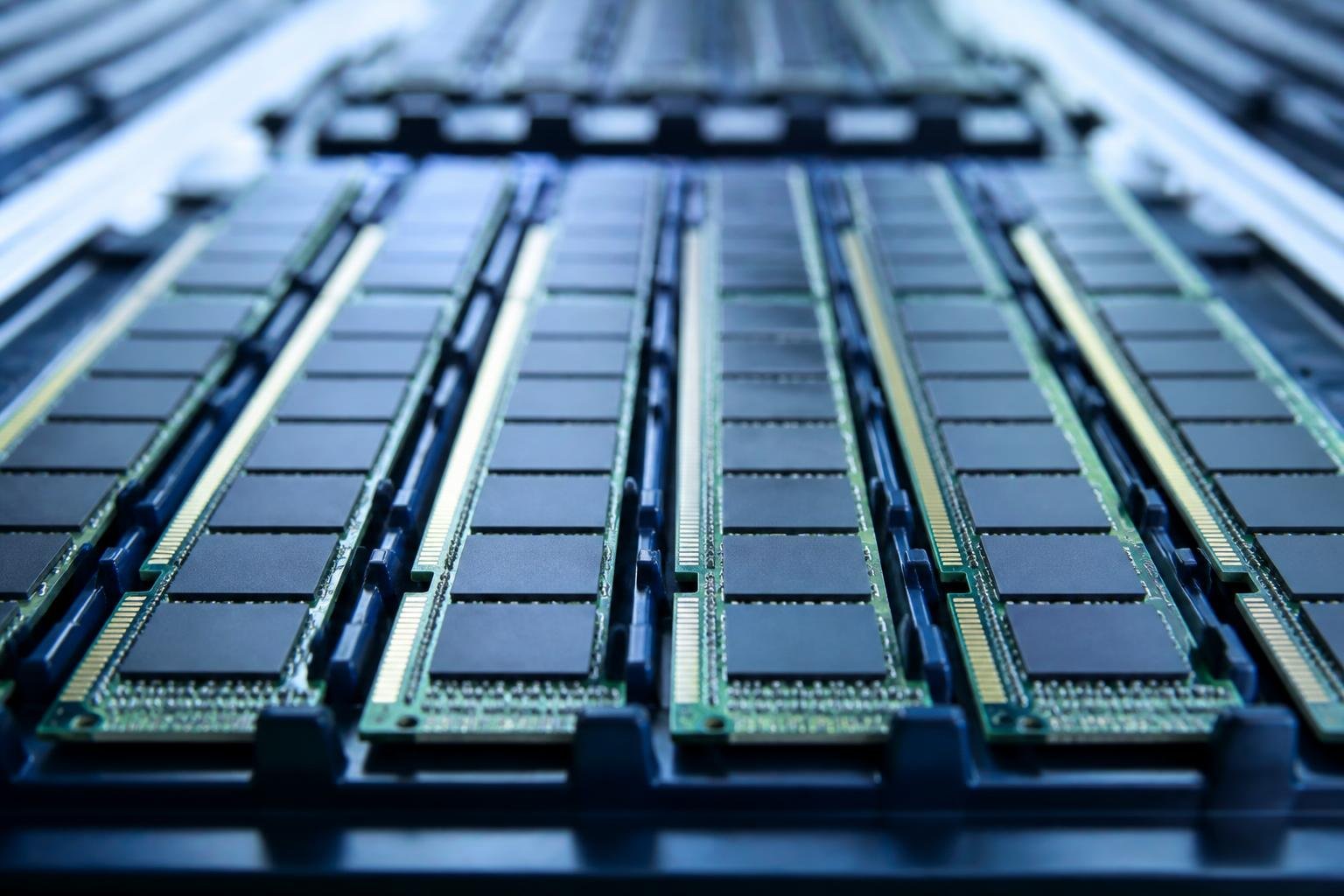
For Apple, this is far from straightforward. The company has spent years working to diversify its supply chain, including shifting parts of its production to India and Vietnam. But memory chips — such as DRAM and NAND flash — are a segment where Chinese players like CXMT and YMTC have grown rapidly and offer competitive pricing.
China responds with billions in state funding
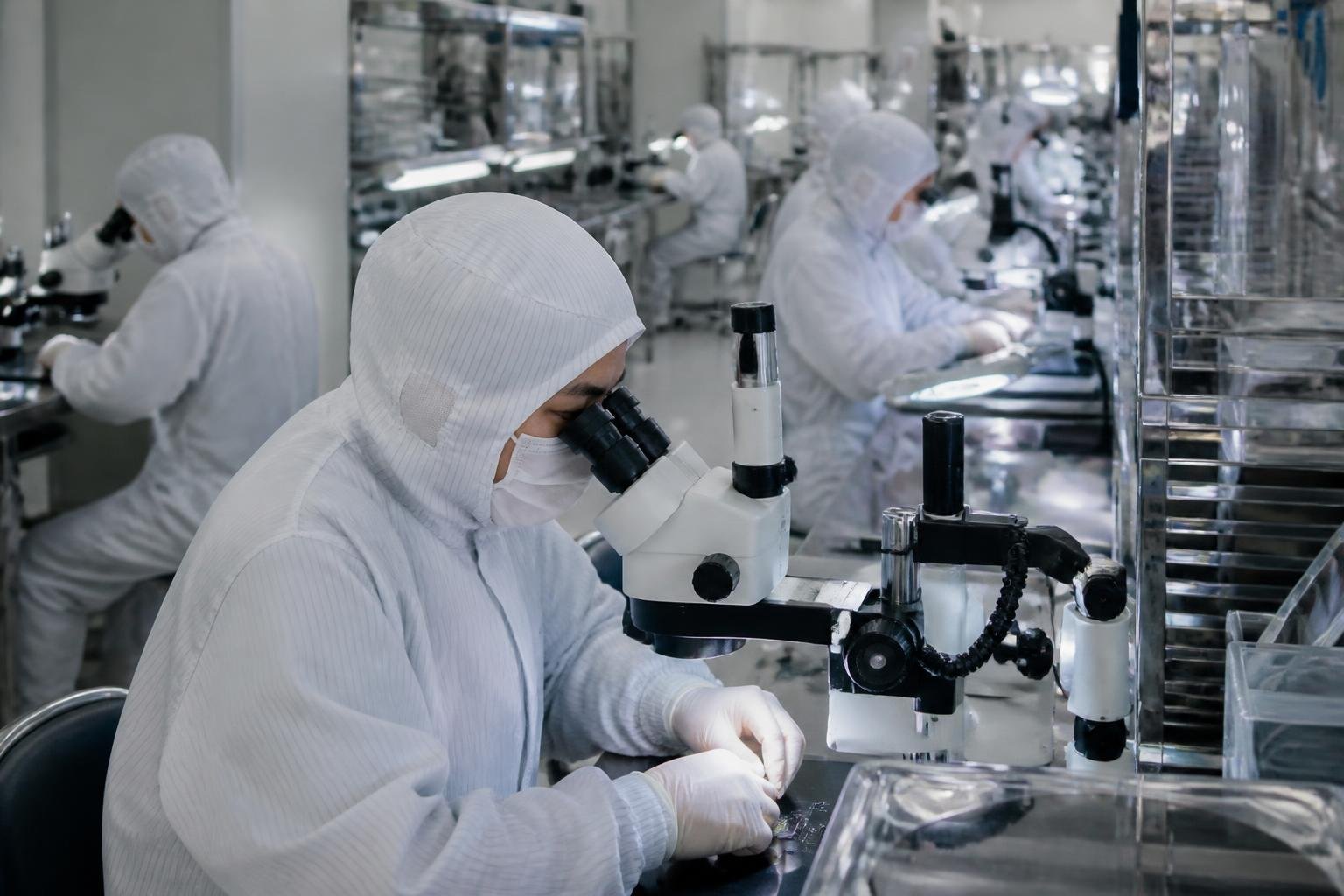
Beijing has not been standing still. China's response to the growing American pressure has been massive financial support for its own semiconductor sector. The state's third investment phase — the so-called "Big Fund" — plans to allocate $27 billion to processor development, according to research data cited by several analytical institutions.
In addition, China has introduced a 50 percent domestic procurement requirement for manufacturing equipment in chip factories, with ambitions to reach approximately 50 percent self-sufficiency in manufacturing equipment by 2025 — up from 13.6 percent in 2024.
What does decoupling cost?
The consequences of a hard technological decoupling are well documented, though the figures vary depending on assumptions. According to a model from the Information Technology and Innovation Foundation (ITIF), a one-time complete decoupling from China could initially cost American semiconductor companies around $77 billion in lost sales. The US Chamber of Commerce estimates the potential annual loss at $83 billion, combined with the elimination of 124,000 jobs and a drop in R&D investment of at least $12 billion.
Boston Consulting Group (BCG), for its part, warns that a hard decoupling could cost American companies 18 percent of their global market share and 37 percent of their revenues.
Fragmentation of global supply chains
For the global semiconductor industry, this is no longer just about the US and China. According to the underlying research, Taiwanese companies could potentially gain $14 billion in sales from a full decoupling, South Korean companies approximately $21 billion, EU companies $15 billion, and Japanese players $12 billion.
Srabanti Chowdhury, professor of electrical engineering at Stanford University, notes that even if the US were to ease export restrictions, companies would likely continue to spread risk across geographies, customers, and supply chains. She also believes China will keep pushing for self-sufficiency, as any easing of restrictions will be viewed as temporary.
CSIS analysts question whether current US policy is actually protecting the technological edge, or whether it is gradually undermining it by cutting revenues, accelerating Chinese domestic investment, and conflating commercial competition with existential threat.
What does this mean for Apple?
Apple is not legally bound by Washington's warning — for now. But the signal is clear, and the company's supply chain decisions will likely come under close political scrutiny going forward. If the US formalizes restrictions through new export controls or sanctions, Apple's room to maneuver could be significantly curtailed.
For investors tracking the semiconductor sector, the case underscores that geopolitical risk remains a central variable — not a passing factor.
This article was written using large language models under editorial supervision by Aprex. Content is source-verified and auditable. Read our method →